Filed under: Experience

New York photographer Spencer Tunick is looking for thousands of Australians to disrobe in the name of art on the steps of the Sydney Opera House.
The photographer, who has produced almost 100 installations around the world, wants to create an installation involving nude volunteers on the steps of the Sydney Opera House on Monday, March 1.
Tunick is hoping at least 2,000 people will get involved in the photograph to be called The Base.
“In a way, I’m making a base for the structure, a base for the architecture – and by combining straight and gay and lesbian people I’m weaving the different sexes and society together to form this wonderful fabric that holds up this gorgeous building,” he said.
Stolen from TIGS tumblr
I just fell in love with this video…and then I dug a little further.
It’s a call to action to apply for the Rethink Scholarship here :
The Communication and Ideation Design (CID) program is a modern educational approach to the Graphic Design, Art Direction, Advertising and creative industries. It provides a design education where each class builds upon the previous one to expand the creative process. Particular attention focusses on ideation, which is the process of initiating, developing, and refining ideas. Ideation is an integral part of the design process.
Classes are structured around a wider approach for today’s modern designer. The curriculum incorporates communication for design and human interaction, with regards to digital (web pages) and physical realms (graphic and information design print, publication, wayfinding, exhibition and experiential design).
Noice. Wayfinding. Someone’s thinking about the future of our industry then….
I’m a bit fond of the entry mechanism:
We’ll be judging the winner based on one thing: a sketchbook.
Remember not to worry about filling out the whole book, because a few brilliant ideas are always better than a huge pile of mediocre work.
Your job is to put your most interesting ideas into that sketchbook to demonstrate what you can do. Your book should also tell us something about who you are.
Love this insight on how they’ll pick the winner:
Plain and simple, we want a book that amazes us. Here’s a few criteria we’ll be judging the books on:
– Clarity. Both in your idea(s) and your execution.
– Relevance. Keep in mind the program you’re applying to.
– How fresh the thinking is.
– Quality not quantity. Don’t show us every idea you’ve ever had please.
– The craft and execution of your work.
Can’t help but think that’s how work ‘wins’ in my world too.
Check out the site: http://www.rethinkscholarship.com. The video showcase of last year’s entries are worth a look.
Filed under: Great Stuff
One of the best things about having little people about is quite surprising.
It’s not what you get to pass on.
It’s what you get to learn.
Filed under: Great Stuff
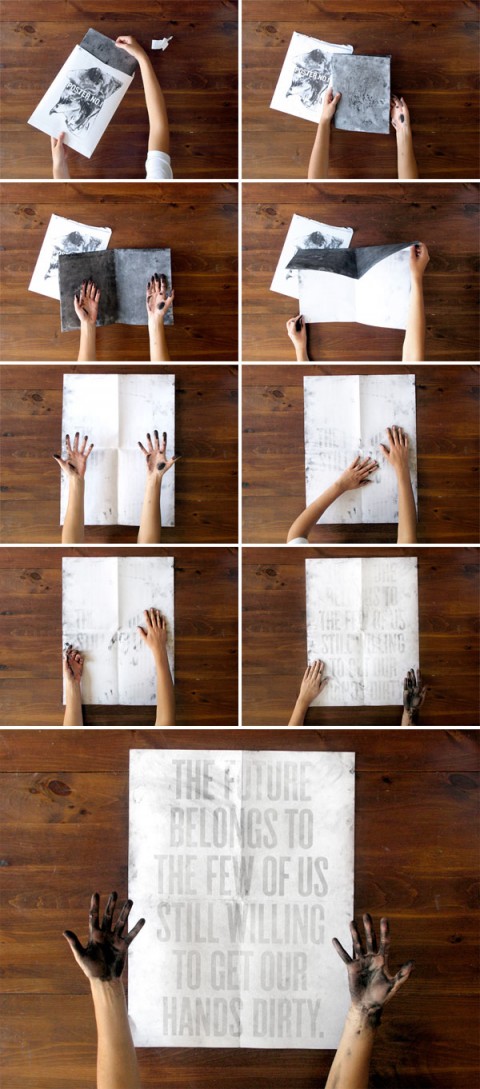
Gasp for air — this is so amazing! As Sub-Studio explains the Dirt-Poster:
Designed by Roland Reiner Tiangco, Dirt Poster requires your participation to complete it. The back side of each poster is covered with a layer of ink, which you need to “paint” onto the front side the poster, to reveal the message that has been spot-varnished onto the paper. Awesome! The poster is limited edition and can be bought for $80.
Filed under: Experience

I have a half a library of notebooks that have acted as drawing boards and kept me company all throughout this year.
My favourite is the one I use on Fridays.
Fridays for me are for compassion and conversation- being there, in the moment, for both. I’ve been fortunate in this downturn to have the opportunity of a four day week, and all the sums seem to have turned out in my favour. That extra day to play and give back….
Here are some snippets of the conversation notes:
- (note): expectations are premeditated resentments (SHARE!!!)
- (note): what effects/ impacts handwriting on a day-to-day basis?
- (note): eating wild boar prosciutto with an ex vegan chef talking fish and chipocrates
- haiku and origami
- (List): Something fun, funny, relevant, timely. Entertain and Inform. Stuff that matters. Generosity, giving, sharing, real experiences, genuine interactions. Belive in something. Progress+ Passion+Playfulness
- (coffee morning list): Cognitive Edge/ Dave Snowden, Top 50 Arts videos on YouTube , Rolling Stone interview between William Burroughs and David Bowie, Laurie Lock Lee, Nancy White, Johnnie Moore, Dave Pollard
There’s a lot of organic flow chart diagrams unpopulated with text- empty buckets quickly drawn that I must have been using to explain a concept to someone. They all look completely mad though now.
The compassion scribbles are different. They’re witness to time spent in wards and waiting rooms:
- (List): scrabble, a bag of furry ears, 2 word dictionary, Julia + Julia
They’re longer, they’re less visual and more first person. The time between breaths. Pen and paper can bind, can help close open wounds. Reading these notes reminds me how fresh those scars are. Luckily I’m a big believer in scars. They are a map of how you came to be and a measure of who you are.
Filed under: Experience
BBH London has posted a series of “audio walks” on the Johnnie Walker Web site, in which folks like Richard Branson, Ranulph Fiennes and, yes, John Hegarty are heard ruminating about life and work while walking around places that mean something profound to them, personally or professionally.
In the clip, BBH founder Hegarty strolls through Carnaby Street and Soho in London, recapping his career. He covers lots of ground—why he was petulant and angry as a young creative, his advertising philosophy now, the interplay between inspiration and fear, what he learned about business from playing tennis,
Filed under: Experience
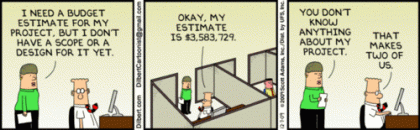
I’m sure that everyone is under the ‘oh… can you get back to me before Christmas’ pump right now.
While it’s awesome for revenue that people are realising the ‘if you don’t use it you lose it’ nature of most marketing budgets it is astounding to me that rigour and strategy can tend to go out the window.
Like trying to find a present at the last-minute, trying to come up with innovation and excitement for a blue sky briefing in 24-48 hours (even for a six or seven-figure budget) is kinda hard. Bowerbird ways and kaizen ‘how can we do this better next time’ practices can help build a cache of ideas and tactics that can pay real dividends on their investment.
I’m more than happy to spend other people’s money. I’m really glad to have thinking already charted up and mostly costed that as ‘value ads’ that never got the time of day…which only need the current context so that they can now contribute to the bigger picture
Don’t be afraid of the zeros at the end of your estimates. Big thinking doesn’t cost you more and sometimes there is a big present under the tree waiting to be unwrapped.
Filed under: Experience
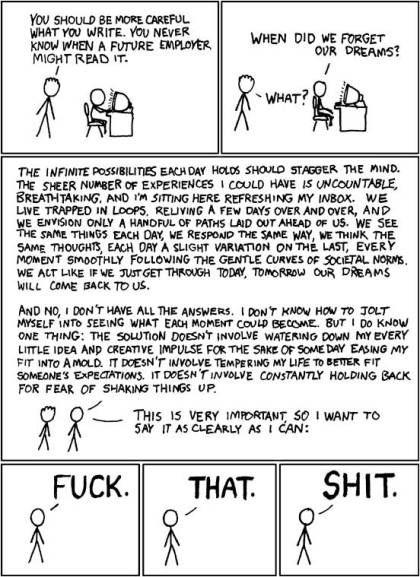
Maybe the greatest art director ever was Helmut Krone. At the end of his life, someone asked him why advertising had become so predictable.
“We were anti-establishment. But nowadays the kids want to be part of the establishment.”
It reminded me of a Picasso quote:
“When the avante garde becomes the establishment, you’re in trouble.”
And the wrong kind of trouble. The dull, boring kind.
Now there’s more reason and more opportunity than ever to create controversy, and free advertising.
Isn’t that what creative people enjoy?
“It’s more fun to be a Pirate than to join the Navy.”
Filed under: Digital Strategy
| Michael Jackson 10.3 million fans |
Barack Obama 6.9 million supporters |
Vin Diesel 6.6 million fans |
VIPS | Ashton Kutcher 3.9 million followers |
Ellen DeGeneres 3.6 million followers |
Britney Spears 3.6 million followers |
| Face•book n. 1: A service that “gives people the power to share and make the world more open and connected.” — Facebook 2: A “cyberland of rampant narcissism and wasted time.” — Andy Ostroy, The Huffington Post |
Twit•ter n. 1: “A real-time short-messaging service that works over multiple networks and devices.” — Twitter 2: “A playground for imbeciles, skeevy marketers, D-list celebrity half-wits, and pathetic attention seekers.” — Daniel Lyons, Newsweek |
|||||
| 300 million users. Valuation: $10 billion. “Cash-flow positive,” in 2009. | STATUS | 20 million users. Valuation: $1 billion. “We spend more money than we make.” | ||||
| Share information with a closed group of friends. | WHAT USERS DO | Broadcast information to the world. | ||||
| Landing page, fan page, custom tabs for support, shopping, and feedback. | TOOLS FOR BRANDS | Live search, direct replies to people tweeting about the brand. | ||||
| Users surf the Best Buy inventory on the store’s fan page, then click “Get Advice” to solicit feedback from all of their friends, via a news-feed post, about the products they’re considering. | DOING IT RIGHT | Gabika99 @Starbucks Is there going to be a mobile app for those of us out here that avoid buying iPhones and iPods? Starbucks @Gabika99 Yes, we’re working on mobile apps on other platforms as well. |
||||
| Procter & Gamble’s Pringles has nearly 3 million fans but hasn’t used any special tools or tabs — and hasn’t posted since July. | MISSING OUT | Dell has more than 30 accounts (@DellOutlet, @StudioDell, @TeamDell, etc.), dividing followers and clogging feeds. | ||||
| Burger King’s Whopper Sacrifice app, which had users unfriend 10 people for a free Whopper, set the blogosphere ablaze. Before the app was disabled, more than 230,000 users were sacrificed. | BUILDING BUZZ | For 10 days, Web-site builder Moonfruit offered users who mentioned its name the opportunity to win a MacBook Pro. Its brand was Twitter’s top trending topic for days, beating the Iran election. | ||||
| Hasbro forced the hugely popular Scrabble knockoff app off Facebook and sued its creators. Thousands of users joined protest groups, such as Save Scrabulous and #$@(*& off, hasbro. | BIG-NAME BLUNDER | When Fox aired episodes of Fringe and Glee with a live Twitter-feed overlay, viewers tuned out and bloggers called it “annoying” and “intrusive.” The experiment was discontinued. | ||||
Loving the binary definitions…..
Chart from Fast Company
For crazy amounts of case studies- be sure to explore Peter Kim’s lists, with 500 examples in each Master List 1, Master List 2 and Master List 3.
Filed under: Experience
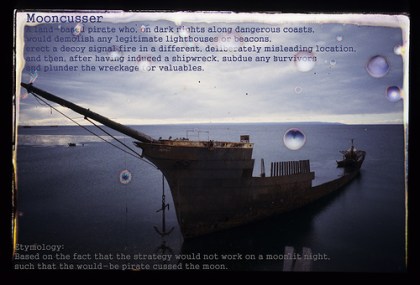
I’m a bit of a bricoleur – I love collecting random facts and lists and etmymologies and anything that will add colour and movement to the improvisational nature of most of my expressions whether it be my paid work or cooking or scaring people at dinner parties…well anything really.
@charlesfrith: New etymology last night. Conspire = breath together; con spire. Sweet eh?
You can’t make good decisions unless you have great choices, and I’m a big fan of stocking up on those. Adding articles into Delicious is a great example that kind of bowerbird behaviour, and this combined with feeding my favourites on Flickr, my Google reader starred items and other caches of bits and pieces that have caught my eye helps me create collages pretty quickly.
It means that you need to have the discipline to contribute to your stock pile every day- but when fast strategy is required it really does become a pirate’s treasure just waiting for you to dig up. Tag ho!

Dr. Lene Nielsen outlines her approach to developing personas:
Having worked with personas before the method ever came to be known as personas there are, from my research and practical experience, three important areas that have to be considered: the data material, engagement in the personas descriptions, and buy-in from the organization which is part of the development process whether it is redesign or a development from scratch. This is the rationale behind my development of 10 steps to personas, an attempt to cover the entire process from initial data gathering to ongoing development.
You can have a look at the entire article here, and see a larger version of her chart here.
Thank to Ian Lyons for the find.
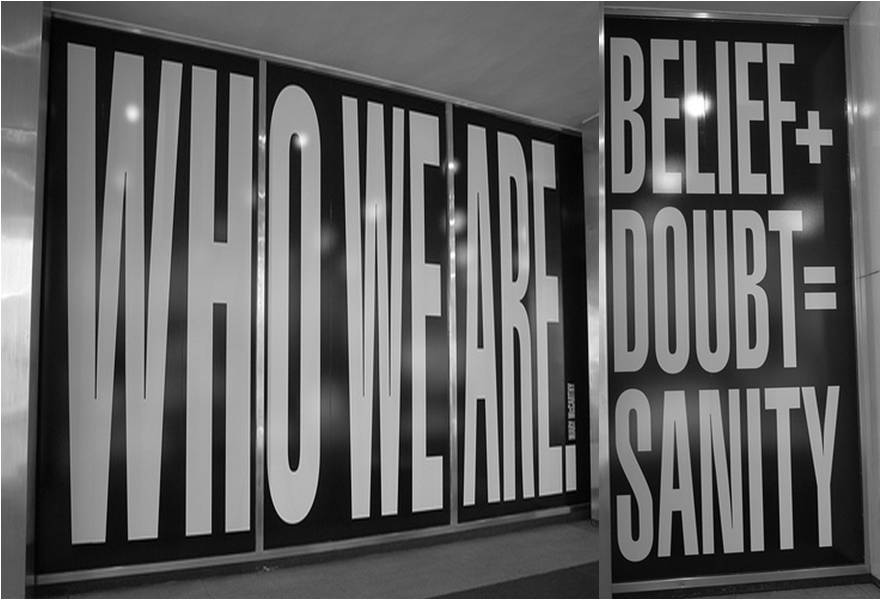
In the West Wing episode “Constituency of One” the VP says to Will:
“I admire speech writers. They have to have the tendency to doubt and the capacity to believe in equal measure….”
and I can’t help but think that these are one of the base pairs in the DNA strands of planners.
I often have people ask if I need to 100% believe in the product I’m working on- or if cynicism feeds good work.
Yes and no.
You need to doubt that the problem put in front of you is the one that need solving, you need to doubt that you have enough insight into a group of people of which you are not part and whose behaviour and reactions you’ll need to understand. You need to doubt the ‘known knowns’.
You also need to believe- that what you’re doing can help keep businesses sustainable, can create great culture and good working environments inside of organizations and that the siren call of the manifestations of our entrepreneurial spirits will write the kind of future we’ll want our kids to live in. You need to believe in answers.
As for the balance between the two? All things in moderation- including moderation. Passion will out. Know what feeds yours.

Productive stupidity means being ignorant by choice. Focusing on important questions puts us in the awkward position of being ignorant.
One of the beautiful things about science is that it allows us to bumble along, getting it wrong time after time, and feel perfectly fine as long as we learn something each time. No doubt, this can be difficult for students who are accustomed to getting the answers right. No doubt, reasonable levels of confidence and emotional resilience help, but I think scientific education might do more to ease what is a very big transition: from learning what other people once discovered to making your own discoveries.
The more comfortable we become with being stupid, the deeper we will wade into the unknown and the more likely we are to make big discoveries.
I was out with some friends the other night and we were having a chat about licensing – and I was being pretty vigorous about supporting copyright holders in their efforts to make sure they got paid.
My thought is basically this:
When it’s your IP that someone else is making money off, you’ll understand
from why i am not afraid to take your money, by amanda fucking palmer:
listen.
artists need to make money to eat and to continue to make art.
artists used to rely on middlemen to collect their money on their behalf, thereby rendering themselves innocent of cash-handling in the public eye.
artists will now be coming straight to you (yes YOU, you who want their music, their films, their books) for their paychecks.
please welcome them. please help them. please do not make them feel badly about asking you directly for money.
dead serious: this is the way shit is going to work from now on and it will work best if we all embrace it and don’t fight it.
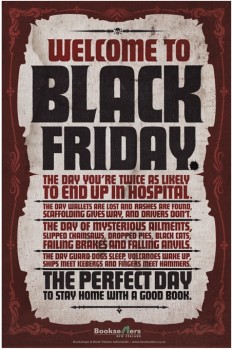
I can see a lot of the thinking that might well have been inspired by the presentation given by Matt Jones at Design by Fire 2009 called “we have all the time in the world” – but Bud has taken this seed, personalized it, brought it to life within the context of message creation and the potential of the ideas of how we experience ‘time’ to help craft more effective opportunities for calls to action.
Seriously- lovely work.
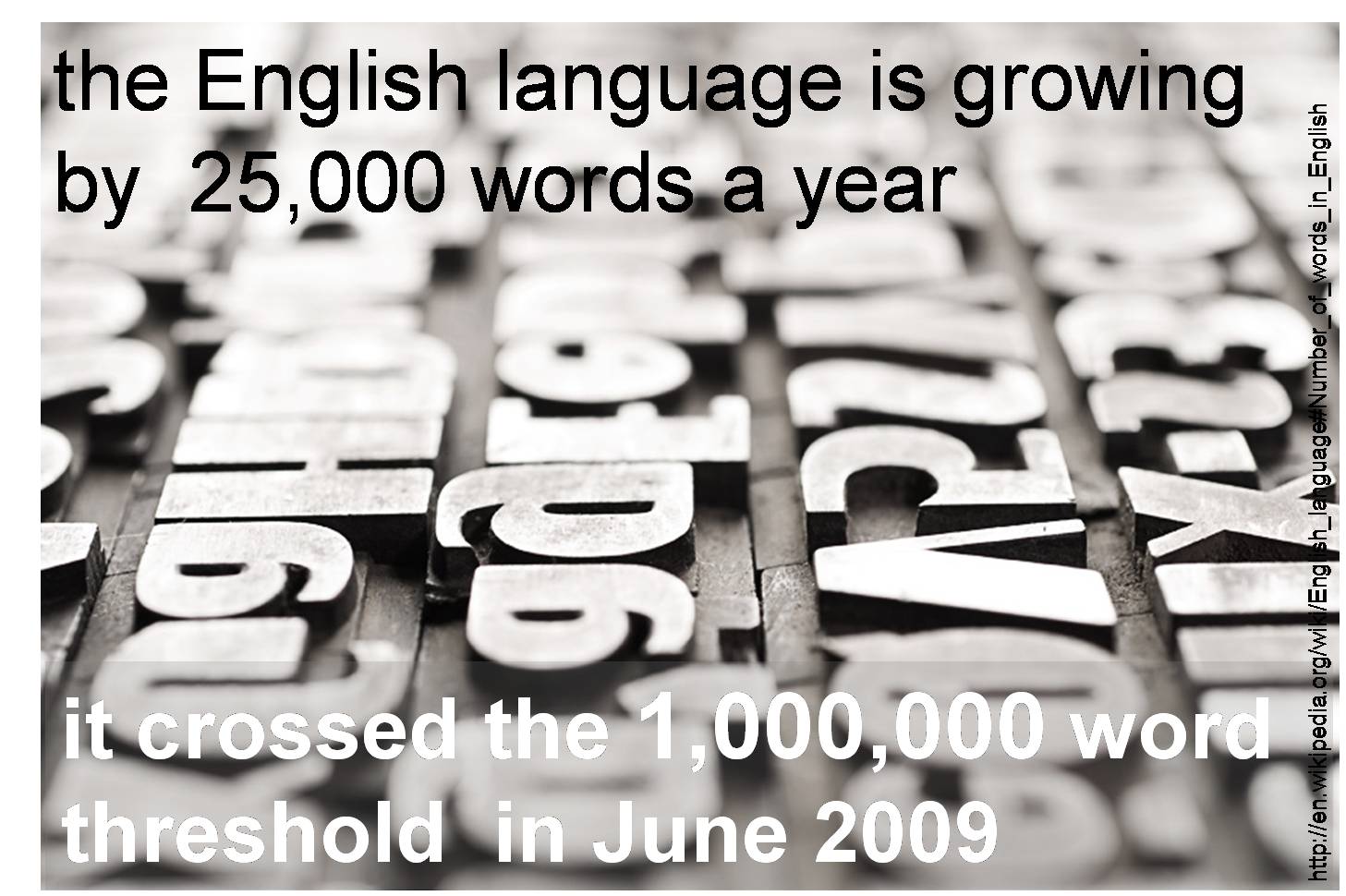
Filed under: Great Stuff
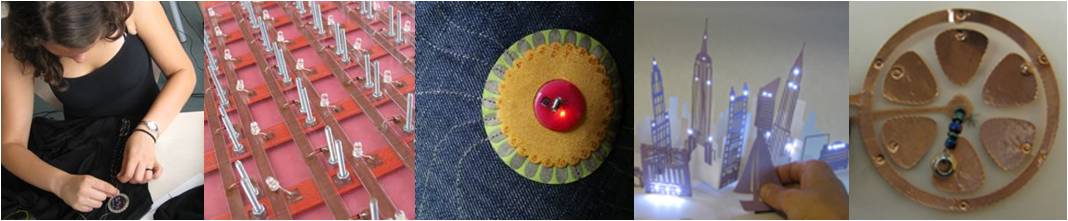
I’m a bit fond of innovation and I have quite a big crush on the MIT High-Low Tech group.
It seems they’ve tasked themselves to integrate high and low technological materials, processes, and cultures.
What I love about this aim is that they’re engaging diverse audiences in designing and building their own technologies- paper architects, fashion and textile designers as well as the usual suspects. By situating computation/ technology/ agile deployment in new cultural and material contexts they’ve created a wonderful story that might just facilitate the democratisation of engineering.
The project demonstrates a belief that the future of technology will be largely determined by end-users who will design, build, and hack their own devices.
The goal is to inspire, shape, support, and study these communities. To this end the group explores the intersection of computation, physical materials, manufacturing processes, traditional crafts, and design. And they ask themselves bloody good questions.
Have a look at some of the projects (a complete list so far here):
- living wall: project site
- This project experiments with interactive wallpaper that can be programmed to monitor its environment, control lighting and sound, and generally serve as a beautiful and unobtrusive way to enrich environments with computation.
- teardrop: a kit for paper computing: project site
- What interfaces might we build if we could sketch functional systems directly on paper? What will circuits look like when they are painted or drawn instead of etched or machined? This project explores the creative and practical potentials of paper-based computing.