


Filed under: Great Stuff
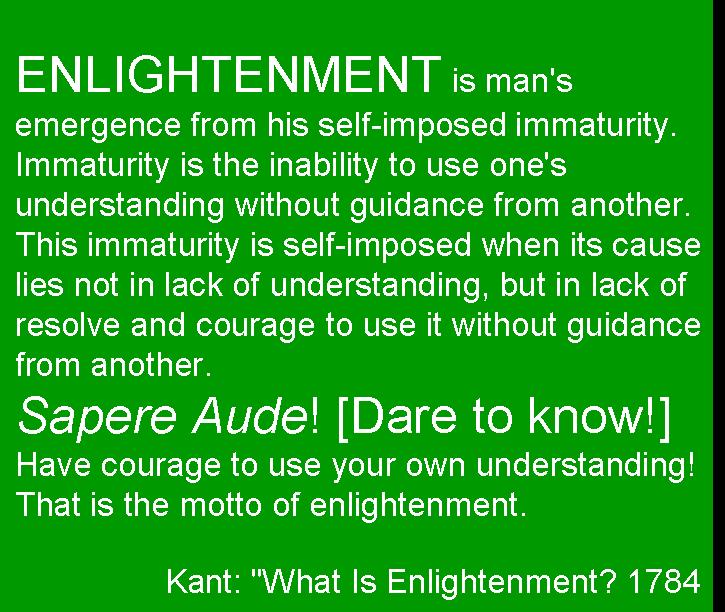
From religious fundamentalism to pseudoscience, it seems that forces are attacking the Enlightenment world view – characterised by rational, scientific thinking – from all sides. The debate seems black and white: you’re either with reason, or you’re against it. But is it so simple? In a series of special essays, New Scientist looks more carefully at some of the most provocative charges against reason. The results suggest that for all the Enlightenment has achieved, we still have a lot of work to do.
How to make reason more reasonable
The 21st-century passion for “Enlightenment values” owes a lot to the 18th century. Philosopher A. C. Grayling discusses where those values come from and what they mean today.
1: Reason stands against values and morals
Shaping a moral and humane world requires more than reason, says Archbishop Rowan Williams.
2: No one actually uses reason
If we had to think logically about everything we did, we’d never do anything at all, says neuroscientist Chris Frith. Watch a related video
3: I hear “reason”, I see lies
Science is routinely co-opted by governments and corporations to subvert people’s ability to make their own decisions, say sociologist David Miller and linguist Noam Chomsky.
Watch a related video.4: Reason excludes creativity and intuition
Reason is lost without art, says Turner prizewinner Keith Tyson. Watch a related video.
Real people don’t live their lives according to cold rationality, says bioethicist Tom Shakespeare. Watch a related video.
Even in formal mathematics, reason breaks its own rules, says mathematician Roger Penrose. Watch a related video.
7: Reason is just another faith
Unconditional reliance on a single authority is never sensible, says philosopher Mary Midgley.
1 Comment so far
Leave a comment


Loved this. Tom Shakespeare’s Who’s reason is it anyway? most of all. One point:
…People understand the world in stories, not dry rationality. It’s not that they are unreasonable, it’s that we need ways to look at the world which are both as empirically accurate and rationally sustainable as possible, but which also speak to everyday experience and do not exclude as mere superstition or irrationality the ways most people most of the time live their lives. The trouble is we don’t seem to know how to do this…>
I hear ya. Propagandists, preachers, and cult leaders do too. “Jesus” is stories, parables, after all. The hero cult, so big in late antiquity, was the “virtual” version of the long-standing system of enculturation: the great memorized epic. Homer, the Greek and Roman’s Bible.
Of course, THEY ALL knew it was story. In our electrified positivistic post-Teller age, where we plug machines into walls, click around the net, flip open the phone, people become so far removed from reality that the world become magical. High dependence on instruction manuals and techs comes with it, just to make it all work. We sit back. Abandon ourselves to it. Forget to steer. We BELIEVE.
No wonder simple folks crave a magic book from God, a literal and unassailable truth of all, angels whispering in ears and all else the devil. The great instruction manual of the universe!
Phone home. How can I extend my warrantee?
Comment by deborah conner February 19, 2009 @ 3:20 pm