


Filed under: Great Stuff
I hope you’re sharing something lovely with people you care about today.
Filed under: Great Stuff
Tim Minchin’s stunning performance of his beat poem ‘Storm’ Eloquently and wittily honouring reason, science and life appreciation and debunking homeopathy, psychics, alternative medicine, religion etc.
Love Tim Minchin. Love.
Filed under: Digital Strategy
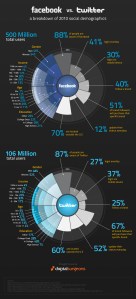
click through to Visual Loop for full size
Filed under: Great Stuff
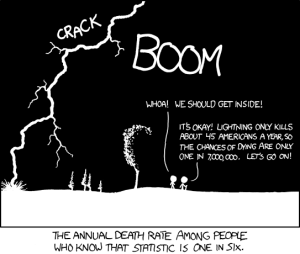
Sometimes questions are better than facts:
“The most important maxim for data analysis to heed, and one which many statisticians seem to have shunned, is this: Far better an approximate answer to the right question, which is often vague, than an exact answer to the wrong question, which can always be made precise”
Tukey
Filed under: Digital Strategy
Last night at Digital Citizens I asked the panelists who presented three responses to briefs:
#digicitz with respect my q to all is: what is the difference between a list of tactics and a strategy
Check out the live stream to find the responses
My call is (in this context)
a list of tactics is what could be done, the strategy is what should be done
Filed under: Digital Strategy
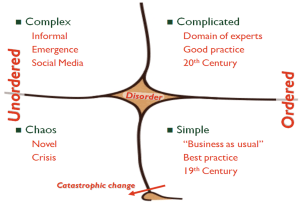
Jye has asked me to recreate a Coffee Morning rant. I’ll do my best….
We were talking about ‘social media experts’.
Now I no opinion on what people to choose to call themselves in the workplace. I’m no big fan of titles or labels but do agree that it would be very nice if people would curtsy when they’re introduced to you…anyhoo.
The notion I want to explore here is: “Is it possible to be an expert in social media?’
We’re trying to talk about an emergent discipline. We’re all still making up the language as we go. This means there’s a lot of new nonsense, heaps of obscure semantics, and quite a bit of confusion as our taxonomy is not set, we haven’t agreed on the discourse…we’re all still a bit muddled and unordered in our thinking because what (I think) we’re doing is in the Complex and Chaotic realms.
In the light of this my answer on the possibility of expertise is: No.
To add to the verbiage mentioned above, here’s my supporting case. I’m a huge fan of Dave Snowdon’s Cynefin framework which puts forward some really interesting thinking on how to make sense of complex environments
- It would seem to me that you could only be an expert in systems that are ordered, where cause and effect are repeatable and the relationship between cause and effect can be known
- This is better explained by Dave himself in his story about how expert fought against the idea of Longitude
- It would further seem to me that social media sits in the unordered realm, where cause and effect are coherent only in retrospect and where results are unpredictable
- You couldn’t be an expert in a Complex environment as no good or best practice documentation can be handed over to another practitioner with the guarantee that they will get the same results for any tactic/experiment
- What I believe you can be is a ‘practitioner with experience’, someone who understands the ‘probe-sense-respond’ agility that is required in this non-linear unpredictable (superfun!) environment
- There is no frickin’ spoon- try it it will make your life quite a bit easier.
Filed under: Experience
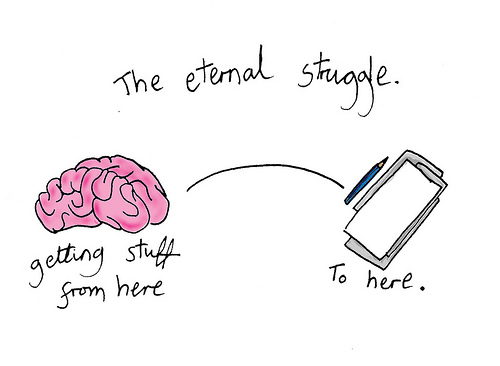
I was thinking just how much of our best work gets done when you don’t colour in inside the lines, and this has lovely tension with the notion “a picture tells a thousand words, but you can’t control the order”.
It’s always a challenge to try to tell the story, to create a jumper out of all the wooly information you might have.
Forget the blank page. Bring your scrapbook, let people into your process, put forward building blocks of stimulous and create the destination together.
Filed under: Get Activist
It’s very easy to forget how privileged I am.
Recently I sat in my father’s kitchen in Mexico defending against the idea that the world is a darker and crueller place.
I had to laugh. I’d travelled across continents alone to be there, stopping along the way to have my voice heard and opinions sought. For me it isn’t dark. I have economic, intellectual, sexual and social freedoms not afforded to almost the entirety of womankind ’till now. But that only means that I have the responsibility to share a bit of the light to those that need it most.
I vividly remember my mother having to get my Dad to co-sign the loan on her first business. As a result every Kiva loan I have supports a woman in the developing world trying to support her family by her skills brought to fruition through having access to a sewing machine.
‘Because I am a Girl’ is Plan’s global campaign designed to fight gender inequality, promote girls’ rights and lift millions of girls out of poverty. Across the globe, girls are at the bottom of the social ladder, deprived of the same opportunities as boys. For example,research has shown that girls are more likely to suffer from malnutrition; be forced into an early marriage; be subjected to violence or intimidation; be trafficked, sold or coerced into the sex trade; or become infected with HIV.
The campaign is based on a series of reports titled Because I am a Girl: The State Of The World’s Girls. To be published between2007–2015 from Plan International, these reports examine the rights and needs of girls throughout their childhood, adolescence and as young women – and how they are uniquely placed to break the cycles of intergenerational poverty gripping many people in developing countries.
Six of the eight Millennium Development Goals – the goals set by the world’s governments in 2000 to halve world poverty by 2015 – are unlikely to be achieved unless there is a greater international commitment to the fight against gender discrimination.Plan recognises that we have to address gender discrimination as a priority if we want to tackle the root causes of child poverty.Therefore we have made the commitment to ‘address gender inequality and the numerous ways in which the rights of girls and women are particularly denied and violated’ (Plan Program Framework, 2009–2013). This is the focus of the ‘Because I am a Girl’ campaign and will better enable Plan to achieve our overall mandate as a child-centred community development organisation, committed to child poverty eradication and all children accessing their rights.
You can download the 2010 Because I am a Girl report, ‘Digital and Urban Frontiers: Girls in a Changing Landscape’
You can find out how to support Because I’m a Girl here
And you can remember. You can be aware that the ease and access you enjoy now was built by the strength and sacrifice of generations before you. You can’t repay them but you can acknowledge your debt by lighting bridges of hope, access and equality for others. Shiny.
Filed under: Great Stuff
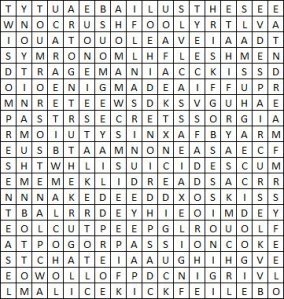
So apparently, our psychological state allows us to see only what we want/need/feel to see at a particular time.
I’ve checked this out...
On Friday I saw: naked, lust, crush,
Today I see : secrets, malice, rage, deed
What do you see?
Filed under: Digital Strategy
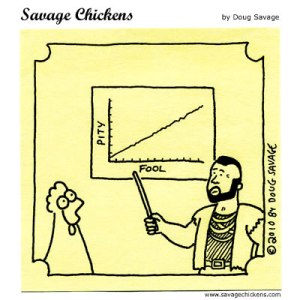
from i love charts– mmm daily goodness
Click the image to watch The Unseen Sea by Simon Christen– it’s intensely beautiful.

This collection of time lapses taken around the San Francisco Bay Area was roughly shot over the period of one year. It got me thinking about ebb and flow. About our own unseen seas. (thanks Stig)
I’m fascinated by people choosing to live their lives with passion, truth and rigour. Setting sail on uncharted waters but with an internal lodestone and a clear eye on the imagined destination. Charting by the stars. People who take the time to know themselves and have the courage to be themselves.
Mark shared a link to this wonderful story of the journey that TK recently went through to reduce the gap between his desired and current realities the process of making a principled and conscious life decision:

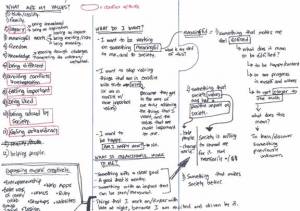
If you squint at the picture, you’ll see the rough process that he followed:
- Starting by answering “What are my values?”
- Based on my values, then “What do I want my life to be about?”
- Thinking hard about what the first two columns meant and elaborating on the things that had the likelihood of being buzz-wordy, undefined, or just plain untrue.
- You can’t see this part in the picture, but I then thought through where I am now in my life and reconciled the differences between what I want and where I am today.
- Finally, I formulated a plan that would allow me to make the changes I need to make to my life to get to what I want in and out of my life.

Happy sailing my friend.
Filed under: Experience
Love this site: http://www.goodfuckingdesignadvice.com/
Some of the hardest things I ever learned to say are “I don’t know” and “I don’t understand”. As a maker upperer I can fill in a lot of gaps- and my dad-fact-ability is pretty frickin’ high. What this means that I can have blind spots.
It’s a constant battle to cut that shit out.
The greatest enemy of knowledge is not ignorance, it is the illusion of knowledge. Stephen Hawking
I also like this one:
Walk in stupid Wiedenisms: rules we live by
In both work and play, for your own good, ask questions. Don’t pretend you have to know.
Filed under: Experience
Love discovering a new blog….in this presentation Alexander Chung highlights a lovely piece of insight from Aaron Dignan
“one of the great unsettling revelations of the digital age is that we are not snowflakes, that humanity comes in just a few hundred models”
An earlier post examines Experiments without consequences
In 1994, David Hahn began building a nuclear reactor. He would eventually receive international recognition for his work, and a nick-name to boot: the ‘radioactive boy scout’.
Indeed, David was a teenager playing with radioactive materials in his mother’s backyard shed. And his recognition was for creating an environmental hazard not a new source of energy.
In later life, his bootstrap experiments led to some emotional and physical harm–exposure to radiation leaving severe scars all over his face.
The need to discover is usually a positive trait.
But, when your subject matter is dangerous and your lab doesn’t protect you or others, experiments are a bad idea.
My impression of this David Hahn chap is that with the addition of those scars he was radiating more than just the breakdown of nuclear particles he was also clearly communicating one of Nature’s Natural Warning Signals. Stay Well Away is loudly written across his face.
In my head then, these two pieces started to create a harmony with an earlier post of mine: foundations of taxonomy
In the Amazon….. hunters who could smell animal urine at forty paces and tell you what species left it behind. You look at the Polynesian seafarers who could, just by reading the ocean like a series of rivers which is how they saw the currents, by looking at the rhythm of the waves, they could sense the presence of a distant atoll far beyond the horizon. You talk about how, even the taxonomy of the Amazonian shaman, when they begin to characterize and systematize creation, particularly with some of their sacred plants. For example, one of the most important Amazonian plants is something called Ayahuasca, which is a Liana and, to the botanical eye, there’s one main species that’s used. But that species is actually, by at least one tribe that I know, the Sienna Sequoia(?), they recognize 17 different types of it. Now, to our scientific taxonomic eye, they’re all referable based on morphological traits to the same species. Indistinguishable. They consistently distinguish them and from great distances in the forest. And you ask them what is the foundation of their taxonomy? And they’ll say to you, “Well, you take each one on the night of the full moon and it sings to you in a different key.”
The notion that I’m chewing on is taxonomies of humanity how the ‘few hundred models’ of people could be a visual map, how you could gauge a person with a ‘taxanomic eye’ and be able to parse morphological and behavioral traits and be able to consistently distinguish species.
I’m thinking that it’s pretty handy to use a practice of bricolage and pirate treasure to start to characterize, systematize and distinguish not only the person but the context that holds them. I can’t help but notice that it’s only by shining the light on behavior in context (or ‘by the light of the full moon’) that allows you to hear the song that they’re singing.
Was reading William Gibson Talks Zero History, Paranoia and the Awesome Power of Twitter over at Wired and loved this…
Gibson: Well, I discovered Twitter while I was writing the novel, and I immediately saw its odd potential for being a tiny, private darknet that no one else can access. I’m always interested in the spooky repurposing of everyday things. After a few days on Twitter, what was most evident to me is that, if you set it up right, it’s probably the most powerful novelty aggregator that has ever existed. Magazines have always been novelty aggregators, and people who work for them find and assemble new and interesting stuff, and people like me buy them. Or used to buy them, when magazines were the most efficient way to find novel things.
But now with Twitter, after following people who have proven themselves to be extremely adroit and active novelty aggregators, I get more random novelty every day that I can actually use. A lot of it just slides by, but a lot of it is stuff that I used to have to go through considerable trouble to find. And a lot of it is so beyond the stuff I used to be able to find, which is good.
Jonah Lehrer reports why thinking too much causes us to focus on variables that don’t matter:
When it comes to judging jam [the focus of the studies], we are all natural experts. We can automatically pick out the products that provide us with the most pleasure.
When researchers added extra analysis to the study, asking participants to explain the why of their jam preference and justify their decisions, the “extra analysis seriously warped their jam judgment:”
“[T]hinking too much” about strawberry jam causes us to focus on all sorts of variables that don’t actually matter. Instead of just listening to our instinctive preferences, we start searching for reasons to prefer one jam over another.
And it’s not just jam:The new science of morality
[The researchers] have since demonstrated that the same effect can interfere with our choice of posters, jelly beans, cars, IKEA couches and apartments. We assume that more rational analysis leads to better choices but, in many instances, that assumption is exactly backwards.
The larger moral:
[O]ur metaphors for reasoning are all wrong. We like to believe that the gift of human reason lets us think like scientists, so that our conscious thoughts lead us closer to the truth. But here’s the paradox: all that reasoning and confabulation can often lead us astray, so that we end up knowing less about what jams/cars/jelly beans we actually prefer. So here’s my new metaphor for human reason: our rational faculty isn’t a scientist — it’s a talk radio host.
As Howard Moskowitz, expert researcher on Prego spaghetti sauce and other foodstuffs once declared, “The mind knows not what the tongue wants.”
I’m liking the space in between novelty aggregator and “extra analysis seriously warped their jam judgment”. We don’t know why we like what we do, or even what we’ll like but tasty new stuff is what we’re after….
Filed under: Great Stuff

Dan Cobley is a Marketing Director at Google, who found his first love in physics. He recently spoke at TED about how some of the key principles of physics also offer insights and lessons to the less scientific discipline of marketing:
- Newton’s Law states that force = mass x acceleration. In layman’s terms, a large item requires a larger force in order to change direction. Similarly, in the realm of brands, it’s generally safe to say that the larger a brand, the more difficult it is to reposition it. This is why a company like Arthur Andersen needed to spin off Accenture, or why L’Oreal might need both L’Oreal and Lancome, or why Coca-Cola may need Nestea and Gold Peak. A larger company may need smaller brands within its portfolio in order to allow them to act ’smaller’ – even if they’re owned by a corporate behemoth.
- Heisenberg’s uncertainty principle says that it’s impossible, by definition, to measure exactly the state (i.e., the position and the momentum) of a particle because the act of measuring it changes it. In the marketing realm, the same can be said of consumers – the act of observing them changes their behavior. Anyone that has been involved with marketing research – and the ubiquitous focus group – will recognize that there is oftentimes a wide gap between stated intent and actual behavior. For example, participants in an ethnography or focus group may overstate their healthy dining choices. Yet the continually high sales of fast-food restaurants proves this is not always the case.
- The scientific method states that you cannot prove a hypothesis through observation; you can only disprove it. You may be able to gather more data that will strengthen your hypothesis, but you cannot unequivocally prove it. However, it can only take one observation to disprove a theory. The parallel to marketing is that one incident – like an oil spill, a recall, or public relations snafu – can undermine your brand indefinitely, even after years or decades of investment in building and maintaining that brand image. The lesson? Avoid these ‘accidents’ and take actions that are true to the image you’ve fostered.
- The second law of thermodynamics states that entropy – a measure of disorder of a system – will always increase. The same is true of marketing. In the not-s0-distant past, one message controlled by one marketing manager could define a brand. Today, the increasingly fragmented media landscape – and particularly digital media – has facilitated a brand becoming dispersed, and sometimes even chaotic. Consumers can actually take a stake in your brand message, make it their own and change or build upon it (sometimes for better – others, for worse). This distribution of energy from a single source to many ultimately democratizes your brand, putting it closer to consumers. The lesson? Your brand cannot be controlled – it can be built, shared and supported – but it cannot be fully controlled if you want to involve consumers in the exchange, and become part of their culture.
Looking outside of one’s own discipline can provide fresh perspective to a challenge, or inspiration for a more creative approach and solution. The combination of physics and marketing certainly sounds more relevant than we’d initially think.
TED Blog: “What physics taught me about marketing: Dan Cobley on TED.com”
Filed under: Great Stuff
For Paul Rand’s posthumous induction into The One Club Hall of Fame, Imaginary Forces created this short film, combining original animation with a videotaped interview of Rand himself, that encapsulated his unique and timeless contribution to the design community.
(via swissmiss)
I also enjoy following Angry Paul Rand on twitter
That scary, panicked feeling when you start a project and just have a blank page? That’s graphic design Viagra
Spec work is like going to a strip club; you get all excited, but it almost never pays off in the end.
You are a designer. If a client just wants someone who can push a mouse around, they can get a fucking cat.
Filed under: Great Stuff
thanks Charles
Journalist and designer, David McCandless (who also blogs about infographics), and infamous graphic designer of our times, Neville Brody bash out a debate on over design vs information design.
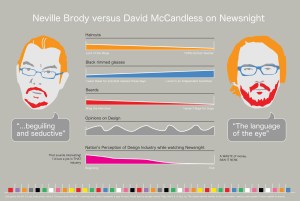
…well worth the time.
Filed under: Great Stuff
The Creative Beast has a downloadable PDF workbook. Get one, print it, and draw all over. Enjoy! http://betsystreeter.blogspot.com/p/us8.html


