


Filed under: Digital Strategy
The Age of Conversation 2: Why Don’t They Get It? (book)
Print: $19.95
Download: $12.50
This book is a daring challenge to the business community. Gone are the top-down, command and control messages that held sway through the 20th Century. In are a raft of new techniques that start with listening, responding and action that set the scene for a continuing and evolving dialog about brands, experience, business and community.
Filed under: Digital Strategy

- Be good at cutting and pasting
- Be able to deconstruct the craft
- Be able to expand (and contract) to fill the space available
- Be a good, and patient, educator
- Be cyber-optimist and a hyper-cynic
- Use the forces of geekdom
- Don’t hate business, it’s your friend
- Do things, make stuff
- Be Non-Stick and Wipe-Kleen
- Love what you do
- Be humble.
- Good on you if you are omniscient- well done. For the rest of us mere mortals the more you learn the more you realise that digital is an ever expanding medium, and you just can’t keep up with it all. Once you get on top of this fact , you might realise that you’re not alone- we’re all stupid when it comes to the internet.
- Ask lots of questions
- Lots. Ask your clients. Creatives. The HTML team. Your peers. Your neighbour’s kids. Everyone has a piece of the puzzle.
- Really understand that you are not your audience. Really.
- No, you are not a single mum with two kids, a Grey Nomad sea-changer and a time poor operations manager on the lookout for enterprise solutions. Ask: ‘what, specifically, do different people do?. What do they get out of their digital experiences?” How could you make that experience better?
- Be a slut for information.
- Read. Read. Read. Read. Read. Go to as many industry events as you can. Join a coffee morning, or start one of your own.
- Share.
- Be concise. Be expansive.
- Be able to tell the same story in 30 seconds, 3 minutes and half an hour. Without notes.
- Be inquisitive.
- Have random adventures. Tyre-click. Enlist. Join communities. Contribute. Play all kinds of games. Ask yourself: “What’s this all about?”
- Make maps
- How can you describe regular daily digital journeys? How about a tribe’s ecosystem? How about how a joke spreads across a tight knit group of friends as they sit at their desks? Or how a mortgage or a dining chair or a holiday is purchased? What’s value exchange- how is it created? Practice visual thinking.
- Be kind.
- People don’t know what you know, and punching them in the face won’t get them on your side. Give back. Mentor. I often don’t really know what I think about something until I try and explain it to someone else. Accept all offers to teach. It’s terrifying- but it’s better for you to be terrified than have others too scared to approach you. Then your ideas go nowhere.
- Have vision.
- Make predictions. Call trends. Extrapolate. Put a stake in the ground, a line in the sand. Shift it often. What are the differences between probable, possible and preferable futures? How are they different? Have a position: what does it takes to make stuff great.
Rightio- what do you reckon? What’s missing?
Filed under: Digital Strategy
UPDATE:
Who’s behind the “Wassup 2008” Obama ad? Not Budweiser.
Posted by: Burt Helm on October 27
The “Wassup 2008” Obama video: two questions sprung to mind. First, who paid for this thing? The production values are very high – one person from Budweiser’s ad agency, DDB, estimated it could have cost as much as $750,000 (she also said DDB had nothing to do with the video). Second, how could Budweiser possibly be cool with such a clearly partisan advertisement?
After some digging, Burt found out. First, it cost way less than $750k. Second, Budweiser had no clue it was happening until after the video hit YouTube on Friday.
The man with the answers? Charles Stone III, the director of the original “Wassup” commercial and the movie Drumline (and the guy who answers the phone in the first frame of the video). He decided to make it about two weeks ago, he told me, with a crew of about 50 volunteers (all professionals working pro bono). They put it together in 9 days.
It was all possible, Stone says, because Budweiser never owned the rights to the idea. He’d originally made it as a short film independent of the brand, and Budweiser had only leased the rights, paying a mere $37,000 for five years of use. Back then, people gave him a hard time about the low price. Now Stone, a diehard Obama supporter, says it’s more than paid off. “That I’m able to use an idea distributed by a huge company, who made a lot of money off it, so that now when I put out what I want to say, it’s recognizable, and it sparks — that’s worth $1 million to me.”
It came together after emailing with friends about ways they could make a video supporting Obama. Once they’d settled on the concept, he got on the phone with the original cast (all friends of his, who are now actors living in New York, Philadelphia, and LA), and called up his Director of Photography from Drumline, Shane Hurlbut, who brought in his crew. He also signed up Gerard Cantor and Maurice Marible, from commercial production house Believe Media, who co-produced. They shot over two days. The war-torn Iraq setting is actually a preexisting set in Santa Clarita, CA.
After they finished, they uploaded it to YouTube with distribution company 60Frames, set up a website, wassup08.com, and sent links to everyone they knew. As of writing this, it’s been viewed almost 1.8 million times, and picked up across the blogosphere, including on BoingBoing, Daily Kos, and Huffington Post. The final price tag? About $6500 out of his own pocket, Stone says.
Filed under: Digital Strategy

Please give me your thoughts! Are they different from who your clients would find inspiring? What would that list be?
Filed under: Digital Strategy

In honour of Blog Action Day I’ve made a Kiva loan to Mrs. Hem Chenda’s Village Bank Group Bakery, in Cambodia, who has asked for a loan to buy sticky rice to make Khmer cake.
Kiva is one of the world’s first person-to-person micro-lending websites, empowering individuals to lend directly to unique entrepreneurs in the developing world. These entrepreneurs use their loans to start businesses that lift them and their communities out of poverty. It doesn’t take much and the majority of loans are fully repaid!
- In order to track Blog Action Day fund raising, you can join the Blog Action Day Lending Team!
- Start Loaning Now
You don’t need to donate money to make a difference today, you could simply donate your time. Free Rice is a game which will allow the donatation of 20 grains of rice to the United Nations World Food Program.
The rice you donate makes a huge difference to the person who receives it. According to the United Nations, about 25,000 people die each day from hunger or hunger-related causes, most of them children. Though 20 grains of rice may seem like a small amount, it is important to remember that while you are playing, so are thousands of other people at the same time. It is everyone together that makes the difference. Thanks to you, FreeRice has generated enough rice to feed more than two million people since it started in October 2007.
Go and play for five minutes and see how many dishes of rice you can send. Then pick up your own banner and spread the word here.
Filed under: Digital Strategy
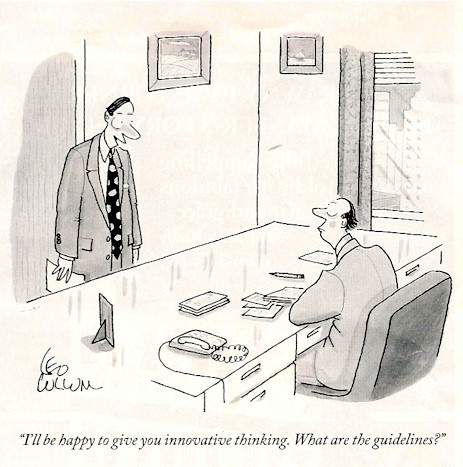
The word innovation is ubiquitous in modern business and political life. Every organisation projects itself as innovative; every country strives to be innovative to compete in a world changing at a dizzying pace.
I was lucky enough to go to the launch of Inside the Innovation Matrix – Finding the hidden human dimensions a book prompted by the Australian Business Foundation . It’s a collection of 14 papers from eminent business people and academics explores the hidden human dimensions of innovation, beyond scientific discovery, entrepreneurial flair or just plain creativity.
- Innovation can give firms a great competitive edge, but it sometimes needs to be prompted by collaboration rather than competition. How can you foster learning networks?
- Innovation in Winning Organisations in Australia: Myths and Realities
- How Australia can maximise the economic and other benefits of our skilled citizen diaspora
- How Intangible Networks Can Boost the Innovation Odds
- New Tools to Map and Manage Innovation Networks
- How an organisation can embed innovation in its very DNA
- The role of innovators and stabilisers
- Facilitating unlearning
You can download the individual chapters here or the entire book Inside the Innovation Matrix (all chapters) (1 MB PDF)
Filed under: Digital Strategy
Brilliant! Thanks Jessica:

Filed under: Digital Strategy

Tyler Durden has never been a more accurate soothsayer our time (as we, perhaps, seem to be viewing the collapse of financial history) and while his darkly funny neo-fascist dialectic puts its fists against the value system of advertising, perhaps we can learn a little from what he has to say.
- Bit of respect.
- “Look, the people you are after are the people you depend on. We cook your meals, we haul your trash, we connect your calls, we drive your ambulances. We guard you while you sleep. Do not… fuck with us.”
- Learn. Change. Grow.
- “I say never be complete, I say stop being perfect, I say let… lets evolve, let the chips fall where they may.”
- Talk about something other than yourself.
- “You are not a beautiful or unique snowflake”
- Have some perspective.
- “We are not special. We are not crap or trash, either. We just are. We just are, and what happens just happens. And God says, “No, that’s not right.” Yeah. Well. Whatever. You can’t teach God anything”
- Fundamentaly- don’t be fake
- “Sticking feathers up your butt does not make you a chicken.”
We need to let brands be. Not leave them alone. But let them be human, allow the humans that tell the stories of brands be the brand. If you let go you might just have a near life experience.
Filed under: Digital Strategy
I’m building a presentation about the benefits of tapping into the vibrant thinking community in Sydney- I’ll share that soon.
In my travels, I have found that there isn’t really a site that already aggregates all the event-y get-together-y zeitgeist-y goodness that this fine city has to offer- so I’m going to (as per Gav’s crystal ball) chuck something together so that all this info comes together in a readily available place.
These are the sources I’m looking to- please make your additions!:
- http://www.slatteryit.com.au/events.html
- http://www.techevents.com.au/events/category/nsw/
- http://wipa.org.au/events/
- http://webstandardsgroup.org/meetings
- http://www.techevents.com.au/events/category/nsw/
- http://webstandardsgroup.org/meetings
- http://www.digitalministry.com.au/events/events.html
- http://www.aimia.com.au/
- http://www.sydneytalks.com.au/ (this is pretty excellent)
- http://www.aftrs.edu.au/aboutus/NewsEvents/Events/
- http://ice.org.au/
- http://www.popcorntaxi.com.au/
Filed under: Digital Strategy

Microblogging paints a picture, originally uploaded by shareski.
Filed under: Digital Strategy

I’ve been thinking about gifts. Again.
I am a believer that you are what you give away. And, in addition, ” Bis dat qui cito dat,” meaning “You give twice when you give quickly”.
I love sharing a research piece, a presentation, an insight. I often have to defend this trait, as many believe that it can make you vulnerable, that you’re giving away your advantage.
But information is everywhere. And it’s free. And it’s freely available.
Showing you my cards doesn’t give them away.
Kevin Kelly in his magnificently observed piece on the next 5000 days of the internet puts it this way:
- Copies have no value
- Value is in the uncopyable
- Media wants to be liquid
- Network effects rule
- Attention is the currency
As Kelly observes that there are 8 things that are better than free:
- Immediacy
- Personalisation
- Interpretation
- Authenticity
- Accessibility
- Embodiment
- Patronage
- Findability
It’s never been about what data you have access to- it’s always been how you use it.
Filed under: Digital Strategy

I’ve got a serious girl crush on The Bloggess. Check out this exchange from one of her recent posts
Me: Hey, do you know what a “haberdasher” is? Because I just found out I’ve been using it wrong for…my entire life.
DJ: I use that word all the time and I have absolutely no idea what it means. I just randomly yell it at people as an insult, like“You insolent haberdasher!” Like a Victorian alternative to “asshole”. Isn’t it a ‘hat dealer’ or something?
Me: That’s what I thought, but I totally got called out for using the word incorrectly.
DJ: Hmm…google it.
Me: Okay… ”Haberdasher: A dealer in notions.” Dude. I’m a dealer in notions.
DJ: Me too! I deal in notions all the fucking time. We’re freaking haberdashers, dude. Kick-ass.
Ok- I’m stealing referencing that as often as I can.
Through the vagaries of online researchiness I also came across this jem Novelty Makes Brains Creative
Discoveries by neuroscientists studying the brain say that novel experiences are key in increasing brain power and creativity. When the brain experiences, or imagines a familiar situation, it already has a shortcut to understanding – it’s got that categorized in a neat little mental box. Novelty, new experiences and stretches of the imagination keep the mind limber, and more creative.
Fast Company reports:
Most corporate off-sites, for example, are ineffective idea generators, because they’re scheduled rather than organic; the brain has time to predict the future, which means the potential novelty will be diminished. Transplanting the same mix of people to a different location, even an exotic one, then dropping them into a conference room much like the one back home doesn’t create an environment that leads to new insights. No, new insights come from new people and new environments — any circumstance in which the brain has a hard time predicting what will happen next.
Fortunately, the networks that govern both perception and imagination can be reprogrammed. By deploying your attention differently, the frontal cortex, which contains rules for decision making, can reconfigure neural networks so that you can see things that you didn’t see before. You need a novel stimulus — either a new piece of information or an unfamiliar environment — to jolt attentional systems awake. The more radical the change, the greater the likelihood of fresh insights.
Fresh hot insights- get ’em while they’re hot: they’re lovely!
Filed under: Digital Strategy
I was reading this today and was reminded that:
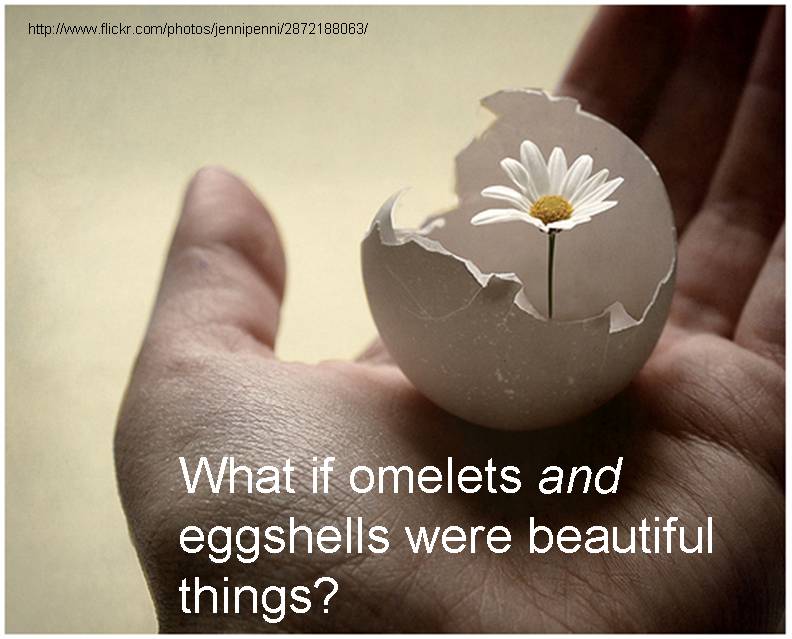
existing corporate structure(s) doesn’t allow for making mistakes and yet humans do that all the time, so unless we want brands to sound artificial we’re going to need some human contribution at some point….
I’d take it a little bit further- you just can’t have an emotional connection with perfection. You could never be friends with anyone that doesn’t have doubts, make mistakes, have cracks and the ability to laugh at those moments in life when things have gone significantly broader at the base.
Vulnerability connects. It makes brands human.
Unless we allow brands to innovate, iterate, royally stuff up and learn from listening we’re never going to be able to build real, long term relationships.
And the stats are in: people love brands that admit a mistake and change course better than walled gardens.
It’s time to take the legal team out to lunch.
Filed under: Digital Strategy
I’m sure everyone gets asked these kind of questions:
Overview:
A website that allows users to view local content and upload their own content.
Questions:
1. The sites profitability comes from the selling of highly targeted ad space, and the effective media cut through on offer to advertisers targeting this demographic.
We are going to register both a .com and a .com.au
But want to know if we should have a version of the site for Australia, US, Uk etc, so that the advertising we sell will be at a premium to target customers in each county. (but obviously unique user numbers and site traffic potential will be limited)
Or if we should just focus on one global .com site, the advantage being that it will grow much faster in terms of traffic (ie the whole world vs a potential 20 million for Aust.), but will not be able to deliver the same relevance and targeting in terms of advertising. Or can media agencies know what country a user is from and still deliver premium relevant ads?
Just looking for advice as to which track to go down?
2. How many site visits and subscriber numbers do we need to have to become a serious site on the radar for advertisers in Australia.?
Any advice you can give is much appreciated.
My answer:
Guys: my advice is that you seriously research your offer. And that you really spend some time looking at the social media skills you will need to build a community around your site.
A simple Google search results about 16,900,000 in your content area. So you have 17 million competitors.
Check these out: The Australian Index http://theaustralianindex.com
There are a number of sites that already do what you want to do- and you will need to a comprehensive understanding of you competitors to differentiate.
The most important question you can ask yourself right now is not how you will monetize- it is how you will launch, build an audience and create enough value for them to keep coming back.
The Cool Hunter is an Australian outfit that has done a brilliant job of this, and now has geo specific versions of its content. But it’s taken years and years to build.
You will not get on an advertiser’s radar with out compelling content and a loyal audience.
Adserving can geo target an IP address. Your best bet is Google Adsense (ads will be contextually served onto your site) and you can do this from day one.
There is no tool in Australia available for media planning that can even see a site with under 100,000 uniques a month. After you have built a decent audience (say 30,000) you might be able to contact one of the Ad Network resellers.
And on an end note: an old fashioned piece of advice. Write a business plan. No one else need see it- but planning is a key ingredient of success. It will walk you through all of the steps that you need to make, allow you to clearly articulate your offer, evaluate your competitive set and work out your business model. Good Luck!
Anything I’ve missed out? What are your tips for online start ups?
UPDATE: Here’s product marketing guru/VC/advisor/author Guy Kawasaki’s The World’s Shortest Marketing Plan, Version 2.0 Click here to get the document. It’s a Word document so that you can fill in the cells with your answers.
Filed under: Digital Strategy
Every week the white agency get together in teams for a little collaborative and competitive thought sharing in an initiative called 3 x 3.
Each team member has three minutes to present three trends. If you’ve been following my twitter stream you’ve seen this come together this week. Enjoy!
P.S. I see that Jenny Williams has a much longer, much smarter take on the challenges and approach to managing digital transformation. She has kindly shared her presentation “Managing change in the digital environment” from this week’s iMedia Brand Summit on Slideshare. I wasn’t able to get away, but I’ve been following the tweemstream here: http://twemes.com/imed08.
BTW. I like the term “MyFace” better than “Facespace” – it’s ruder and gets a laugh. But you can’t say “I want to get on MyFace” in a three minute presentation. You loose the crowd…
oh and the quote about competency and change comes from Seth Godin.
UPDATE: here is the match report of the White Team 3×3.
Filed under: Digital Strategy

I have always worked in an industry where my parents have been in the dark about my day to day life. I’ve worked in online longer than Google has been around (ouch!) and love the way that the landscape changes as you look at it….and that’s its challenge.
We work in a field where we are trying to make sense, of not only new technology, but new behaviours, new habits, new tribes and a new sense of identity as well.
And so we make up words to try to describe these new things. And as a consequence very few people can understand what the hell we’re talking about.
I know that I never learnt how to program a VCR and that I still have battles with our printer and I won’t go anywhere near a photocopier. These machines just don’t impact my life and I can live without ever having to acquire this technical knowledge.
But what I see is that social networking, in particular, is not a technology- it’s a behaviour. And as mega trends of community and simplification are driving people to connect and share their lives online it is my fate to try to teach my clients and colleagues all the whys and wherefores of our new world.
David Ogilvy said: “The consumer is not an idiot. She is your wife.”* What’s been helping me is to try to explain what I know, with respect and humour, is to imagine that I’m painting a picture for my Mum. (Now she’s a very hip, creative and switched on lady and someone who really wants me to succeed- so I’m sure she won’t mind if you need to borrow her for this occasion.)
Teaching requires creativity, patience and playfulness. It’s not about about dumbing anything down- it’s about using sophisticated metaphors and an inclusive structure so that questions are welcomed and embraced.
We need to believe that our clients want to understand change. We need to be able to create stories that they can understand and champion.
And am looking forward to my parents finally being able to brag about what I do.
* (Implicit in that remark, of course, is the idea that everyone being dressed down by Mr. Ogilvy was a man — and that all the men would be married. Sometimes, it seems the TV series “Mad Men” is a documentary rather than a drama.)

According to Chinese folklore, when a child is born they are connected by an invisible red thread (or string of fate) to all who will care about them. As the child grows, the thread becomes shorter, drawing them ever closer to people who will impact their destiny.
I’m loving this term and how it can relate to consumer centric design and service oriented architecture- that you can design systems which, as you move through them, will allow the objects that will help you evolve, be drawn to you.
Some of my recent pulled strings:
- a wonderful piece on the power of Information Architecture: The full realisation of the power of the information when you add an access layer to data.
- Jay Smooth’s ill Doctrine smart styling rap hip-hop video blog http://www.illdoctrine.com/ Is he talking about politics, rap or the nature of masculinity? Or all three?
- Gartner predicts that by 2010, social-banking platforms will have captured 10 per cent of the available worldwide market for retail lending and financial planning.
- Astound your friends and amaze your colleagues with Canuckflack’s cheat sheet post “I Am A Capable Strategist and Thoughtful Person”
- one of the best recent articles on designing brand utility Fun Way to Lose Weight: Turn Dieting Into an RPG which also has a link to Jane Mcgonigal’s opening address at SXSW.
- the growing ‘ambient awareness’, smashing the Dunbar number and the rapid growth of weak ties in the NYTimes article “I’m so totally, digitally into you: Brave New World of Digital Intimacy” by CLIVE THOMPSON – and get into the readers comments
Filed under: Digital Strategy
Filed under: Digital Strategy
Q: Everyone seems to be wired into the blogosphere as a way of exchanging ideas, opinions and industry gossip. As a senior exec at an advertising agency with virtually no blogging experience, either as a reader or author, am I missing out? Is “amateur media” the way of the future?
A: I’m not convinced that advertising and marketing blogs could be called ‘amateur media’. After all there’s quite a difference between the opinion of a professional practitioner and that of a professional observer.
I’ve been blogging for a couple of years now and have found the practise to be invaluable; not only to my professional development, but as an introduction to a global community of people and to places that has made my personal life richer too. My online adventures, into campaigns, applications and technology, have been more than met with real world opportunities that have taken me to New York, Barcelona and Marrakesh and have helped create local experiences like Interesting South.
So what are you missing out on? What’s the ROI?
As with anything that’s going on in social media, it’s all about the Risk of Ignoring:
- As a reader of blogs: Can you afford not to be informed about the latest thinking in your discipline? Can you afford not to learn from some of the brightest minds and most passionate advocates in the industry?
- And as a writer: Can you afford not to keep a notebook of your online reading? Can you afford not to contextualise and have an opinion on what’s going on in advertising?
- And ultimately, as an ad-exec: Can you afford not to have experiences that would help you understand people’s behaviour in the social media space?
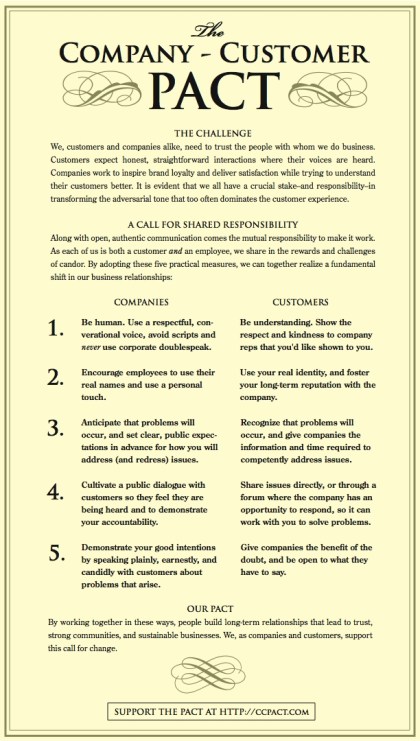
And for Julian, here is the link to The Blog Council and their best practices tool kit.

