

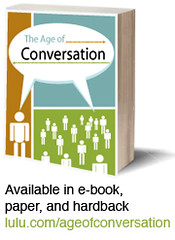
The completely adorable Jasmin Cheng brings us this investigation on the effectiveness of the Creative Brief as a tool to generate brilliant advertising solutions.
She’s interviewed a whole bunch of really smart people and brought her conclusions to life with some of the most charming drawings I’ve seen in a while. One to watch….
This e-mail is making the rounds. I’d reblog it from someone, but that would seem pointless. What I really like are the bits about the Flaming Lips and “saying yes”:
The thing is, I really like saying yes. I like new things, projects, plans, getting people together and doing something, trying something, even when it’s corny or stupid. I am not good at saying no. And I do not get along with people who say no. When you die, and it really could be this afternoon, under the same bus wheels I’ll stick my head if need be, you will not be happy about having said no. You will be kicking your ass about all the no’s you’ve said. No to that opportunity, or no to that trip to Nova Scotia or no to that night out, or no to that project or no to that person who wants to be naked with you but you worry about what your friends will say.
No is for wimps. No is for pussies. No is to live small and embittered, cherishing the opportunities you missed because they might have sent the wrong message.
…
What matters is that you do good work. What matters is that you produce things that are true and will stand. What matters is that the Flaming Lips’s new album is ravishing and I’ve listened to it a thousand times already, sometimes for days on end, and it enriches me and makes me want to save people. What matters is that it will stand forever, long after any narrow-hearted curmudgeons have forgotten their appearance on goddamn 90210. What matters is not the perception, nor the fashion, not who’s up and who’s down, but what someone has done and if they meant it. What matters is that you want to see and make and do, on as grand a scale as you want, regardless of what the tiny voices of tiny people say.
Do not be critics, you people, I beg you. I was a critic and I wish I could take it all back because it came from a smelly and ignorant place in me, and spoke with a voice that was all rage and envy. Do not dismiss a book until you have written one, and do not dismiss a movie until you have made one, and do not dismiss a person until you have met them. It is a fuckload of work to be open-minded and generous and understanding and forgiving and accepting, but Christ, that is what matters. What matters is saying yes.
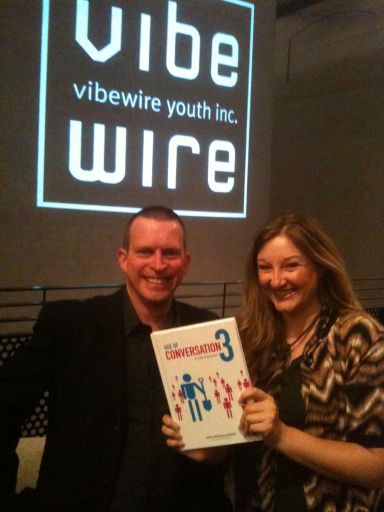
The proofs of the new Age of Conversation 3 have arrived in Australia with Gavin bringing one hot of the presses. He was kind enough share the hardcover version at Fastbreak on Friday.
Jye spoke about Innovation: Changing People’s Stories. He made me cry. It was awesome. (He also took the photo above.)
Just waiting on an announcement of when we all can order…should be soon.
And I believe that there were whispers of a launch party in Sydney….will let you know
I’ll be sharing company in the book with a bunch of smart thinkerers:
I wrote a piece a while back, ‘user pays’, that explored how artists can now use technology to directly pay for their work. This would seem to be a good thing and an example where you can put ‘good business’ into practice. You are the client when you consume art/content/stuff that someone else/an artist/musician has made. You expect to be paid for your work why shouldn’t artists?
It cause quite a bit of commentary:
How many artists have kids and a mortgage?? If it is an ‘artist’ – truly – then demographic stereotypes are shifty and illusory
Comment by lucy November 24, 2009
artists aren’t demographic stereotypes they’re people
I think the point might be: why shouldn’t artists have kids and mortgages? Why shouldn’t productive, creative, innovative people producing work that people want be able to have an income that provides a sustainable lifestyle?
Comment by katiechatfield November 25, 2009

Love micropayments – but nanopayments? LastFM pays $0.005 per play. As music lovers: where are our boundaries for this new kind of serfdom to music distributors?
I was on the phone with a dealer who’d reached out to me about some kind of business proposal. At the end of the conversation I thanked him and said that it was a nice change of pace to have someone reach out to me, because most dealers haven’t exactly been receptive to what we’re doing. And he said, “Are you kidding? I fucking hated what you were doing when I first heard about it. I thought it was horrible and bad for the art world. But the more I looked at what you were doing and how, I realized that it’s the future of the business.” That was awesome.
I want everyone to collect art. I want people to be embarrassed if they don’t have a collection that they’re proud of and can talk about. Because that means that their homes will be happier, and that artists are being supported on a grand scale which will make for a better society. And I believe it’s the first time in history that it’s possible.
I’m looking forward to seeing how projects like Fundbreak might seed a little change here. It’s a crowdfunding platform developed for artists, musicians, filmmakers, journalists, designers, entrepreneurs, inventors to raise funds and give the project creators the break they need to realise their goals and aspirations.
Again it will mean that artists will be asking you to fund art. Until then: maybe it’s time for a boundary check. How much does art contribute to your life? And how much are you willing to pay to keep it?
Filed under: Great Stuff
Love this piece created for Life In 2050 where emerging visual artists from around the world have imagined what the future holds in a contemporary art exhibition created for the 9th SCI-FI-LONDON Film Festival.
For this edition of the festival, we put LIFE IN 2050 under the spotlight. We have put together a series of themed LAB sessions in which to investigate the future of science, society and culture over the next 40 years.
Looking forward to the films created for the 48 hour film challenge and having a listen to the podcasts The Problem of SF film making with directors – Marc Caro (Delicatessen, The City of Lost Children), Cory McAbee (Stingray Sam), Gerald McMorrow (Franklyn), Stuart Hazeldine (Exam) and Richard Jobson (A Woman in Winter).
I’m intrigued by the thought starter for the festival:
In 2050 what will we be nostalgic about?
While one of my favourite pessimists immediately went to ‘seeing my feet’, I wonder if there’s something a little more to be explored in the question. Bruce Sterling talks about ‘future nostalgia’ which is a notion that describes one of the bittersweet experience of living in the 21st century. It’s the the ‘where’s my jet pack?’ view of what we thought our lives would be like now when we were children and how we feel about the dissonance between our imagination and the reality. You can see an outline of his thoughts about the cultural temperament of the coming decade here Where did the future go?
I was watching The Young Ones on ABC2 last night. The episode was Nasty and one of the key phrases in it is: Have we got a video? I got me thinking: mostly when I think about the passage of time, I think about the additions to my life. The additions of technology, the additions of freedom and independence, the additions of access to information. And I’m not sure that those additions will slow down in the next 40 years.
Nostalgia would seem to be perceiving subtraction. I can’t help but think I might have less stuff, but I’m happy to let that go. I can’t help but believe that I might not be able to jump on a plane whenever I like to where ever I want. There will be all the very human thoughts about the passage of time on the body…but what culturally will I miss?
Still thinking. Love to hear your thoughts.
You can see my attempt at an answer here: Fire and forgetting
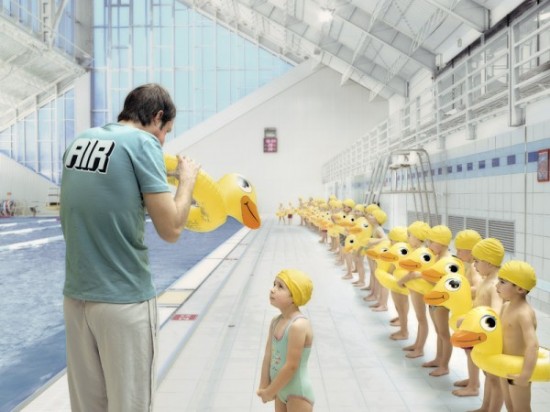
Love it live
- Experiential – from Live to LOUD
- Social media is having an explosive effect on experiential campaigns, creating the potential to multiply thousands of brand interactions into millions.
- Japanese landscape design studio EARTHSCAPE, have created a giant travelling human-shaped herb garden. Called Medical Herbman Café Project (MHCP), the garden arrives in shipping containers which convert into a shop and cafe at each location. Proceeds from the shop and cafe are used to build playgrounds in developing countries.
- For Sony Ericsson’s Hopper Invasion campaign a grid of inflatable ‘hoppers’ were constructed that were each connected to air pump devices. Fans of the event were encouraged to use the hashtag #prompt while tweeting what creative things they would like to do if they had hundreds of hoppers; these tweets triggered the inflation of the hopper grid, resulting in a real-space visualization of online activity associated with the event.
The business of show business
- Julia’s Bicycle :an online tool to measure a venue or event’s greenhouse gas emissions
- Check out the reviews of some European expos: PLASA for lighting & visuals, audio and motion control; ABBT for theatre tech; ProLight+ Sound
- The staging at the Brit Awards was mind blowing.
- See the versatility of the staging: Dizzee Rascal & Florence + The Machine and Jay Z & Alicia Keys
- Have a read of the how the 2009 Awards were put together
- See the versatility of the staging: Dizzee Rascal & Florence + The Machine and Jay Z & Alicia Keys
Innovation
- Sportpong is an interactive physical computer game where the field is projected on the ground and two (or more players) compete in teams. With a ‘paddle’ you hit the ball and try to strike a goal or defend your goal.
- Elie Zananiri’s Big Screams project featured an interactive screen displaying cartoon-like characters, each generated by, and linked to participants, who called into a specific number through their mobile. Each character battled the other participants in a game won by whoever screamed the loudest into their phone, the resulting audio pushing other characters off the screen.
- It may become possible to transform a variety of surfaces into a touch sensitive screen. Displax has created an incredibly thin, interactive film that can be applied onto surfaces both curved and flat.
- faderTouch 3.0, is a portable rear projection touchscreen interface. The display can be viewed from front and rear. Audio visual instruments are programmed in Processing triggering sounds in Ableton Live via MIDI.
- Augmented reality (AR)
- A short film about the social and architectural consequences of new media and augmented reality.
- A t-shirt houses an AR game of Paper, Scissors, Stone.
- 35 great examples of where Augmented Reality and their applications to the commercial and art world.
Show Business
· Check out the reviews of some European expos: PLASA for lighting & visuals, audio and motion control; ABBT for theatre tech; ProLight+ Sound
· The staging at the Brit Awards was mind blowing.
o See the versatility of the staging: Dizzee Rascal & Florence + The Machine and Jay Z & Alicia Keys
§ Have a read of the how the 2009 Awards were put together
· Julia’s Bicycle :an online tool to measure a venue or event’s greenhouse gas emissions
· Love the rambunctious jazz cabaret, twisted circus and burlesque performers that create the mayhem at Redbennies in South Yarra
Innovation
· Sportpong is an interactive physical computer game where the field is projected on the ground and two (or more players) compete in teams. With a ‘paddle’ you hit the ball and try to strike a goal or defend your goal.
· Elie Zananiri’s Big Screams project featured an interactive screen displaying cartoon-like characters, each generated by, and linked to participants, who called into a specific number through their mobile. Each character battled the other participants in a game won by whoever screamed the loudest into their phone, the resulting audio pushing other characters off the screen.
· It may become possible to transform a variety of surfaces into a touch sensitive screen. Displax has created an incredibly thin, interactive film that can be applied onto surfaces both curved and flat.
· faderTouch 3.0, is a portable rear projection touchscreen interface. The display can be viewed from front and rear. Audio visual instruments are programmed in Processing triggering sounds in Ableton Live via MIDI.
· Augmented reality (AR)
o A short film about the social and architectural consequences of new media and augmented reality.
o A t-shirt houses an AR game of Paper, Scissors, Stone.
o 35 great examples of where Augmented Reality and their applications to the commercial and art world.
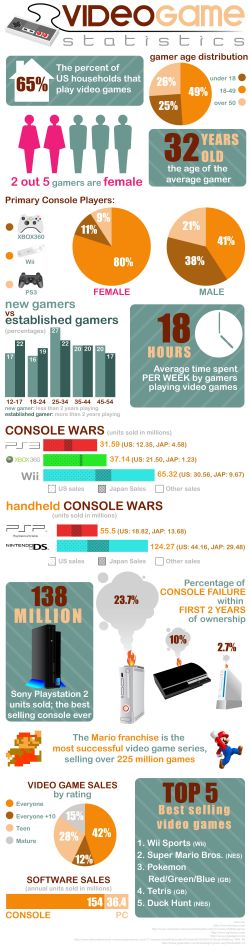
Got to love visualisation.
Also check out the video game time line here.
You can search the timeline by person, technology, business, console, accessory, game or cultural.
The timeline starts at Charles Babbage in 1792 with some key turning points games development, like the establishment of Milton Bradley in the 1860’s and the launch of Nintendo in 1889.
1947 is believed to be the first year when a game was designed for playing on a Cathode Ray Tube (CRT). This very simple game was designed by Thomas T. Goldsmith Jr. and Estle Ray Mann. A patent application was filed on January 25th, 1947 and U.S. Patent #2 455 992 issued on Dec 14th, 1948.
Spacewar! is one of the earliest known digital computer games. Steve “Slug” Russell, Martin “Shag” Graetz and Wayne Witaenem of the fictitious “Hingham Institute” conceived of the game in 1961. It took approximately 200 hours of work to create the initial version.
Anyways- there’s loads of history geekiness – and some really useful launch dates and synopsis of most of the major games up to 2010.
Filed under: Great Stuff
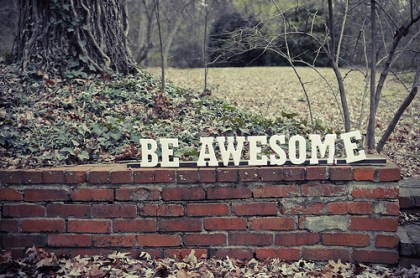
Some bits and pieces for inspiration and information- from the sublime to the ridiculous
- Google Search Stories:
- These super short videos show how people are using search technology to achieve their goals
- Your investment: maybe a couple of minutes
- 1500 examples of social media marketing from various corporations – a wiki of social media marketing examples.
- It’s searchable by company, type of social media, industry and country
- Your investment: maybe a couple of minutes today- useful forever
- How IBM Uses Social Media to Spur Employee Innovation
- How do you pull off “authentic” while maintaining the company brand message?
- Your investment: maybe a couple of minutes
And for the super keen
- Deloitte’s Centre for the Edge: Measuring the force of long term change- the 2009 Shift index
-
- For those who haven’t seen the Shift Happens video:
- What’s going on with the media- what’s going to happen with technology
- Your investment: this is a 142 page dense read…but I really love the concepts of Foundation Flow and Impact.
-
- 2010 Trust Barometer
- Neilsen: The Global Online Media Landscape
- April 2009 – 20 pages
And for the silly
- Everything you ever needed to know about social media: simply explore this site for everything you ever needed to know about the client agency realtionship.
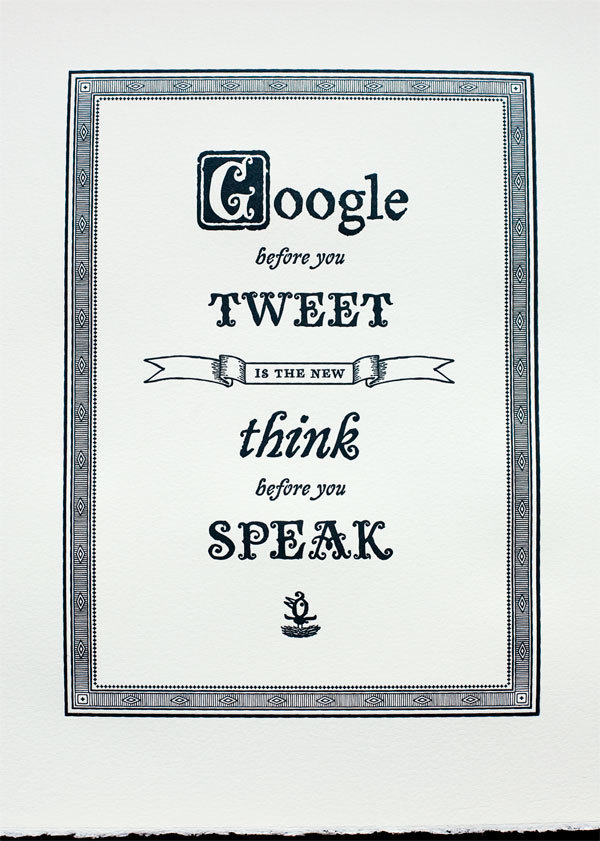
I’ve seen this all over the place- and I do love to track down the artist:
Letterpress print designed by Joe Newton.
Typeface: Olduvai by Randy Jones.
Paper: Somerset Velvet 300 gsm, soft white.
Size: 8.5″ x 11″ (approx A4).
Printer: Woodside Press, Brooklyn, NY.Signed and numbered limited edition of 100.
You can buy it for $15 at I Love Typography here.
We just forget how much we mean to people.
We forget how vulnerable and precious we are.
And yet I love how much this notion moves us and how powerfully we can express this without a word.
Take care out there everyone.
Filed under: Great Stuff
Red Riding Hood Remix is a primer for breaking out of a default story and finding ‘tools for telling taller tales.’
Jason Theodor explores the creative methods for innovating a ‘story’ (or project) by approaching it in different ways and from different perspectives using his Creative Method and Systems in the presentation below:
Stolen from TIGS tumblr
I just fell in love with this video…and then I dug a little further.
It’s a call to action to apply for the Rethink Scholarship here :
The Communication and Ideation Design (CID) program is a modern educational approach to the Graphic Design, Art Direction, Advertising and creative industries. It provides a design education where each class builds upon the previous one to expand the creative process. Particular attention focusses on ideation, which is the process of initiating, developing, and refining ideas. Ideation is an integral part of the design process.
Classes are structured around a wider approach for today’s modern designer. The curriculum incorporates communication for design and human interaction, with regards to digital (web pages) and physical realms (graphic and information design print, publication, wayfinding, exhibition and experiential design).
Noice. Wayfinding. Someone’s thinking about the future of our industry then….
I’m a bit fond of the entry mechanism:
We’ll be judging the winner based on one thing: a sketchbook.
Remember not to worry about filling out the whole book, because a few brilliant ideas are always better than a huge pile of mediocre work.
Your job is to put your most interesting ideas into that sketchbook to demonstrate what you can do. Your book should also tell us something about who you are.
Love this insight on how they’ll pick the winner:
Plain and simple, we want a book that amazes us. Here’s a few criteria we’ll be judging the books on:
– Clarity. Both in your idea(s) and your execution.
– Relevance. Keep in mind the program you’re applying to.
– How fresh the thinking is.
– Quality not quantity. Don’t show us every idea you’ve ever had please.
– The craft and execution of your work.
Can’t help but think that’s how work ‘wins’ in my world too.
Check out the site: http://www.rethinkscholarship.com. The video showcase of last year’s entries are worth a look.
Filed under: Great Stuff
One of the best things about having little people about is quite surprising.
It’s not what you get to pass on.
It’s what you get to learn.
Filed under: Great Stuff
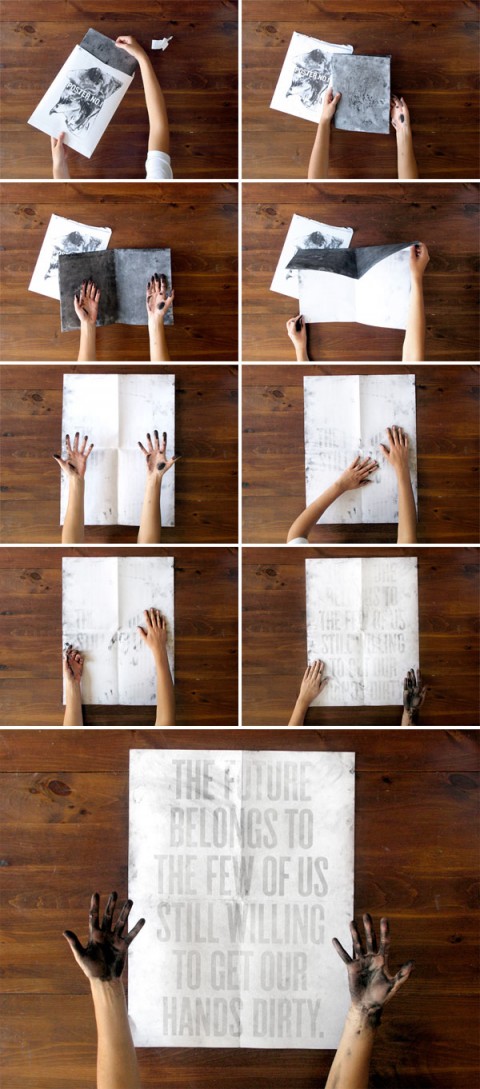
Gasp for air — this is so amazing! As Sub-Studio explains the Dirt-Poster:
Designed by Roland Reiner Tiangco, Dirt Poster requires your participation to complete it. The back side of each poster is covered with a layer of ink, which you need to “paint” onto the front side the poster, to reveal the message that has been spot-varnished onto the paper. Awesome! The poster is limited edition and can be bought for $80.

Productive stupidity means being ignorant by choice. Focusing on important questions puts us in the awkward position of being ignorant.
One of the beautiful things about science is that it allows us to bumble along, getting it wrong time after time, and feel perfectly fine as long as we learn something each time. No doubt, this can be difficult for students who are accustomed to getting the answers right. No doubt, reasonable levels of confidence and emotional resilience help, but I think scientific education might do more to ease what is a very big transition: from learning what other people once discovered to making your own discoveries.
The more comfortable we become with being stupid, the deeper we will wade into the unknown and the more likely we are to make big discoveries.
I can see a lot of the thinking that might well have been inspired by the presentation given by Matt Jones at Design by Fire 2009 called “we have all the time in the world” – but Bud has taken this seed, personalized it, brought it to life within the context of message creation and the potential of the ideas of how we experience ‘time’ to help craft more effective opportunities for calls to action.
Seriously- lovely work.
Filed under: Great Stuff
I’m a bit fond of innovation and I have quite a big crush on the MIT High-Low Tech group.
It seems they’ve tasked themselves to integrate high and low technological materials, processes, and cultures.
What I love about this aim is that they’re engaging diverse audiences in designing and building their own technologies- paper architects, fashion and textile designers as well as the usual suspects. By situating computation/ technology/ agile deployment in new cultural and material contexts they’ve created a wonderful story that might just facilitate the democratisation of engineering.
The project demonstrates a belief that the future of technology will be largely determined by end-users who will design, build, and hack their own devices.
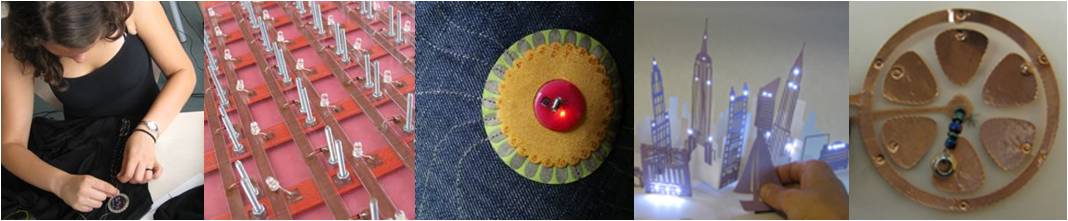
The goal is to inspire, shape, support, and study these communities. To this end the group explores the intersection of computation, physical materials, manufacturing processes, traditional crafts, and design. And they ask themselves bloody good questions.
Have a look at some of the projects (a complete list so far here):
- living wall: project site
- This project experiments with interactive wallpaper that can be programmed to monitor its environment, control lighting and sound, and generally serve as a beautiful and unobtrusive way to enrich environments with computation.
- teardrop: a kit for paper computing: project site
- What interfaces might we build if we could sketch functional systems directly on paper? What will circuits look like when they are painted or drawn instead of etched or machined? This project explores the creative and practical potentials of paper-based computing.


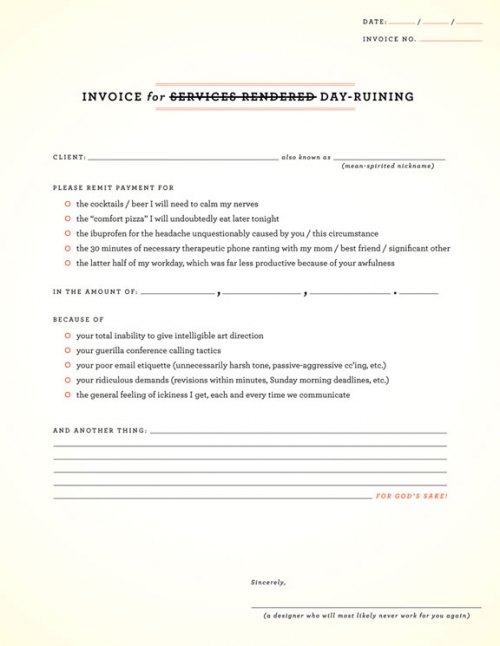
Spotted this on the great Kitsune Noir blog. It’s a design piece by Jessica Hisch.
I think you might use it like sending letters to Santa- fill it out and set it in fire.


