


Filed under: Zeitgeist

Would you call you clients experts in online?
Would they have spent 10,000 hours devoted to this understanding ?
How about you? Have you spent 10,000 hours?
Malcom Gladwell’s latest thinking in his book Outlier describes the conditions which bring about expertise. I think this can help shed light on why it can be so difficult to get an “I see. I agree” from a client.
It might be this experience lag- not an unwillingness to learn, not a love of another media channel, not an inability to grasp the concepts- that is preventing the uninitiated from embracing new ideas.
The biggest misconception about success is that we do it solely on our smarts, ambition, hustle and hard work. There’s an awful lot more that goes into it than we admit.
This idea – that excellence at a complex task requires a critical, minimum level of practice – surfaces again and again in studies of expertise. In fact, researchers have settled on what they believe is a magic number for true expertise: 10,000 hours.
You couldn’t say that it was a rocket science style observation that practice makes perfect, and that concentrated diligence on a task goes a long way to achieve mastery. For me the question is: how can you get people to understand new ideas when the experience gap is so large?
Cramming. The answer has to be: Tutor. Tutor. Tutor. You have to give your clients experience. So that they can get your experience. They won’t have time to practice.
“People don’t rise from nothing,” he writes. “They are invariably the beneficiaries of hidden advantages and extraordinary opportunities and cultural legacies that allow them to learn and work hard and make sense of the world in ways others cannot … It is only by asking where they are from that we can unravel the logic behind who succeeds and who doesn’t.”
You need to be the beneficiary for your clients, build extraordinary opportunities, be the hidden advantage to their success and help make sense of the world in the way that others can’t.
“We’ve been far too focused on the individual—on describing the characteristics and habits and personality traits of those who get furthest ahead in the world. And that’s the problem,” says Gladwell. “Because in order to understand the outlier I think you have to look around them—at their culture and community and family and generation. We’ve been looking at tall trees, and I think we should have been looked at the forest.”
Do more than look at the forest for the seeds of success. Plant one.
Filed under: Zeitgeist
Found here.
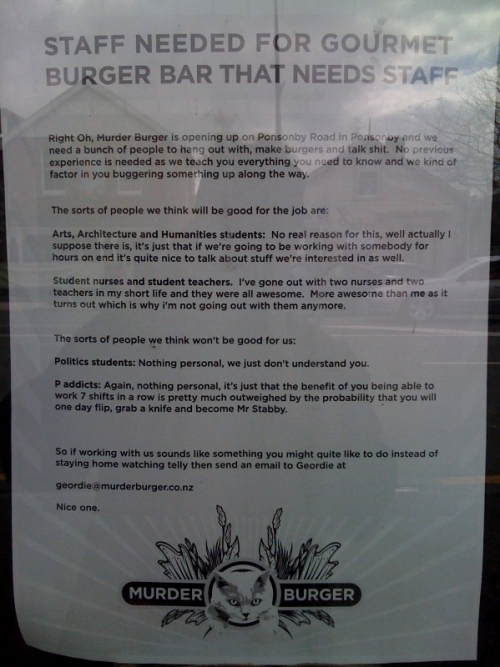
Click image. Read. Laugh.

According to Chinese folklore, when a child is born they are connected by an invisible red thread (or string of fate) to all who will care about them. As the child grows, the thread becomes shorter, drawing them ever closer to people who will impact their destiny.
I’m loving this term and how it can relate to consumer centric design and service oriented architecture- that you can design systems which, as you move through them, will allow the objects that will help you evolve, be drawn to you.
Some of my recent pulled strings:
- a wonderful piece on the power of Information Architecture: The full realisation of the power of the information when you add an access layer to data.
- Jay Smooth’s ill Doctrine smart styling rap hip-hop video blog http://www.illdoctrine.com/ Is he talking about politics, rap or the nature of masculinity? Or all three?
- Gartner predicts that by 2010, social-banking platforms will have captured 10 per cent of the available worldwide market for retail lending and financial planning.
- Astound your friends and amaze your colleagues with Canuckflack’s cheat sheet post “I Am A Capable Strategist and Thoughtful Person”
- one of the best recent articles on designing brand utility Fun Way to Lose Weight: Turn Dieting Into an RPG which also has a link to Jane Mcgonigal’s opening address at SXSW.
- the growing ‘ambient awareness’, smashing the Dunbar number and the rapid growth of weak ties in the NYTimes article “I’m so totally, digitally into you: Brave New World of Digital Intimacy” by CLIVE THOMPSON – and get into the readers comments
Filed under: Zeitgeist
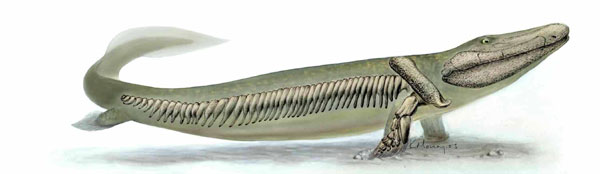
For all the God-like powers that video games have bestowed upon us — from slaying armies to pretending to be rock stars — it wasn’t until now that players could actually build life. Spore, designed by Will Wright of Sim City fame, is based on evolution: you start with microbes and customize on up. Seth Schiesel declares it “probably the coolest, most interesting toy I have ever experienced.” Go create your universe.
“Playing God, The Home Game,” by Seth Schiesel
“Gaming Evolves,” by Carl Zimmer
Contageous special report on gaming
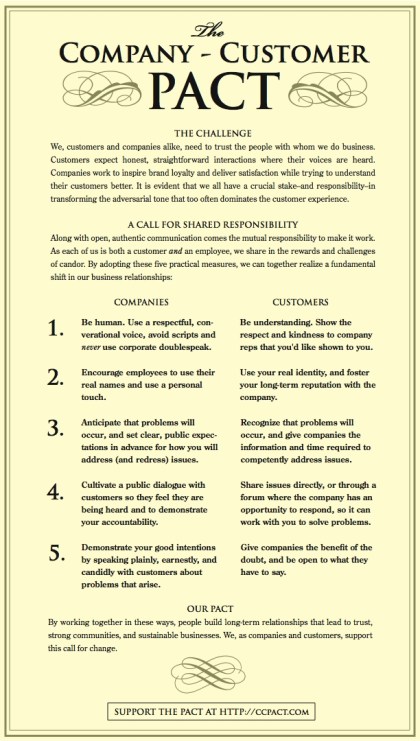
And for Julian, here is the link to The Blog Council and their best practices tool kit.

Interview with Sophie Peer , Amnesty International, about human rights in China, with a special focus on the Great Firewall of China. By Stilgherrian.
Other great tips from him:
- Empirical Analysis of Internet Filtering in China | Harvard Law School: An analysis of China’s Great Firewall which concludes that the blocking systems are becoming more refined even as they are likely more labor- and technology-intensive to maintain than cruder predecessors.
- Handbook for bloggers and cyber-dissidents | Reporters sans frontières: Tips and technical advice on how to to remain anonymous and to get round censorship, by choosing the most suitable method for each situation.
- The Great Firewall of China: how it works, how to bypass it
Filed under: Zeitgeist

How internet famous are you? Type in your name and find out.
Go here then scroll down.
Woot! I’m a 57.
Via: The American Copywriter Boys (and Pablo)

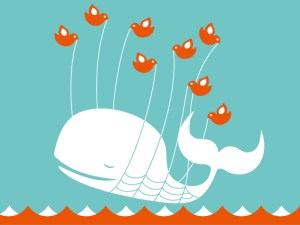
This stock licenced image ( a $5-10 fee) , an illustration by Yiying Lu, is the image you see when Twitter is down. It is called the “Fail Whale” and has moved as a meme into early adopter culture in a big way:
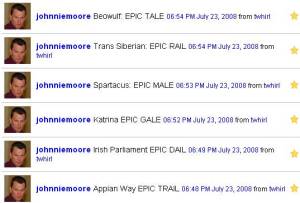
Wikipeda currently redirects searches to find information to the Fail Whale to the Twitter entry. Sensitive!
Using Compete.com, Garry Jenkin looked at Twitter’s analytics and saw that in April users had increased 42% and over 1,000% for the year. That’s some big time uptake.
BuzzFeed has a mass of links to follow including these:
- Fail Whale, the Fan Club– failwhale.com
- Fail Whale, the Gear– zazzle.com
- Fail Whale on Wikipedia
- What Twitter Users Are Saying -summize.com
Is the whale an endangered species? The Guardian‘s article last week”Twitter searches for the next step” mentions that “now might be a good time to grab one, before the fail whale swims out of sight for good.”
And really does it matter? Does it matter that a new technology is fragile and falls over through massive uptake? You can only be let down by something that you have already given your expectations to…
It reminds me of a great quote from the late great Randy Pausch:
When you see yourself doing something badly and nobody’s bothering to tell you anymore, that’s a very bad place to be. Your critics are your ones telling you they still love you and care.

Last Saturday, Sean Howard, Matt Moore & I got together for a rambling discussion around Zombie Marketing:
Show Notes:
00:00 – Interesting Moose
01:20 – Zombie Marketing 1: Crazy Rug Sale Marketing
02:40 – Zombie Marketing 2: Late Night Ads In The Early Evening
03:20 – SuperBowl
05:00 – Angelina Jolie’s Lips
08:30 – Mobile Advertising
09:00 – Pharmaceutical Mystery Stories
11:00 – Beauty Products & White Coats
12:30 – Science Montage Advertising
13:55 – The Justice League Of Brands
14:20 – Product Placement – Gossip Girl
16:00 – Product Placement – Drugs & Guns
17:00 – Clothing & Branding
20:00 – Anti-Zombie Marketing
21:30 – Not Letting You Love It
23:30 – Showers
26:30 – Phone Spammer Bus Burning Vacation
27:00 – AT&T Outbound Atrocity
Hosted and facilitated by Matt, it’s part of his ongoing podcast series check them out!
Filed under: Digital Strategy, Get Activist, Get Friendly, Great Stuff, Zeitgeist
Let’s get things straight here. They live on an island in Fiji. They (spear) fish, grow fruit and veg, compost their crap and drink a muddy narcotic and play guitars under the stars. That’s what they like to do.
And they won a big shiney silver wedge of a trophy. One that declares that Tribewanted is a more innovative and impactful social networking site than Skins on E4, and hold your breath…MySpace. Yes, MySpace, the world’s biggest online network, in a social networking competition. Bloody hell – how did that happen?
The team try to explain it here:
I think its hard to see it from the inside looking out – but here are the reasons the tribe members gave when we entered . I think it happened because we’re trying something different. And its starting to work. Very simply its about using a new and exciting way of communicating to make life better. And we’re not the only ones doing it either.
Not everyone can work on a project that is about building a sustainable island paradise. But we can all take inspiration in this vigorous enlistment of a community, the cleverness of building context in the clear signposts of their distributed messaging and consistently compelling stories.
John Dodds shared the American Marketing Association new definition of marketing:
Marketing is the activity, set of institutions, and processes for creating, communicating, delivering, and exchanging offerings that have value for customers, clients, partners, and society at large.
It’s a big ask to educate our clients on the ever changing world, but if Apenisa Bogiso (Tui Mali) the Chief of Vorovoro can understand it I’m pretty sure I can help my clients get it too.
*thanks Kris Hoet and Kneale Mann
Strategy
When the brief’s all wrong and you can’t go on
Its Stragedy
When the planner cries and you don’t know why
It’s Stragedy
It’s so hard to care
When no-one gets that it’s goin’ nowhere
Stragedy
When you lose control and the insight has no soul
Its stragedy
When the reason flies and the goals just die
Plan! It’s a dare!
With no-one to guide you you’re goin’ nowhere……
The extremely entertaining Mark Pesce presenting at the Next Wave festival.
More of his thinking on the 3.4 billionth phone, hisMAD twitter army and a social experience of the China earthquake.
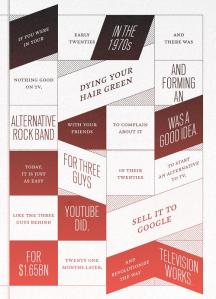
Over six weeks writers including Booker-shortlisted Mohsin Hamid, popular teen fiction author Kevin Brooks, prize-winning Naomi Alderman and bestselling thriller author Nicci French will be pushing the envelope and creating tales that take full advantage of the immediacy, connectivity and interactivity that is now possible. We Tell Stories begins with Charles Cumming’s Google Maps adventure. ‘He was the wrong man, in the wrong place, at the wrong time’. Now you can follow his adventures across the nation and across the world, step by step.
But somewhere on the internet is a seventh story, a mysterious tale involving a vaguely familiar girl called Alice. Readers who follow this story will discover clues that will shape Alice’s journey and help her on her way. These clues will appear online and in the real world and will drive readers to the other six stories where they will have the chance to win prizes, including The Penguin Complete Classics Library.
The gaming community has been awaiting the first project from SixtoStart and the next digital publishing initiative from Penguin whose last project, the wikinovel (http://amillionpenguins.com) generated 85,000 unique visitors in five weeks, arriving at a rate of 10 per second at one point.
Filed under: Zeitgeist
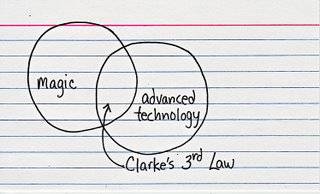
Jessica Hagy’s lovely requiem for Authur C Clarke He knew science fiction didn’t have to be an oxymoron.
Thanks Arthur:
- “Life is just one big banana. Science fiction allows us all to peel open the reality and discover the yellow truth inside.”
-
- “When a distinguished but elderly scientist states that something is possible, he is almost certainly right. When he states that something is impossible, he is very probably wrong.”
- “The only way of discovering the limits of the possible is to venture a little way past them into the impossible.”
- “Any sufficiently advanced technology is indistinguishable from magic.”
- “The truth, as always, will be far stranger.”
- “Sometimes I think we’re alone in the universe, and sometimes I think we’re not. In either case the idea is quite staggering.”
- “How inappropriate to call this planet Earth, when clearly it is Ocean.”
- Of UFOs: “They tell us absolutely nothing about intelligence elsewhere in the universe, but they do prove how rare it is on Earth.”
- “Somewhere in me is a curiosity sensor. I want to know what’s over the next hill. You know, people can live longer without food than without information. Without information, you’d go crazy.”
Filed under: Zeitgeist
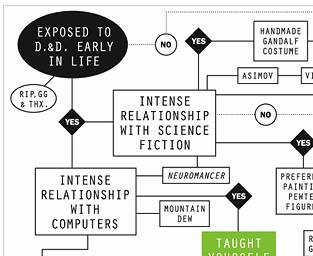
Wired’s Adam Rogers wrote a lovely, sweeping obit for Dungeons and Dragons creator Gary Gygax in this weekend’s New York Times that included this flowchart showing how D&D was a gateway drug into every kind of nerd-dom: great D&D geek love flowchart by Sam Potts.
Filed under: Zeitgeist

Coke Zero has launched in Brazil an extreme guerrilla marketing campaign using people’s tongues. Trendhunter reports that several shops in Sao Paulo, Rio de Janeiro, Porto Alegre and Salvador give free piercings with the brand logo, with the only condition of taking pictures to publish on the website which redirects to a Google Picasa Album set. It would seem that the promise is that the brand can do your talking for you while you can’t.
Filed under: Zeitgeist

“The children now love luxury; they have bad manners,
contempt for authority; they show disrespect for elders and love
chatter in place of exercise. Children are now tyrants, not the
servants of their households. They no longer rise when elders enter
the room. They contradict their parents, chatter before company,
gobble up dainties at the table, cross their legs, and tyrannize their
teachers.”
Sound familiar? It’s a paraphrase of a quote about two and a half thousand years old. Socrates knew that the more thing change……
- Think not those faithful who praise all thy words and actions; but those who kindly reprove thy faults
- True wisdom comes to each of us when we realize how little we understand about life, ourselves, and the world around us.
- We are what we repeatedly do. Excellence, then, is a habit.
- Philosophy begins in wonder.
These are all robust building blocks to create a sustainable CRM strategy, which can be seen as your philosophy for generating great relationships:
-
Value criticism
-
Know that you can’t learn without questioning
-
Excellence is not set and forget
-
Genuinely want to know the people that you communicate with, genuinely believe that your relationship can be better the more you learn
Filed under: Zeitgeist
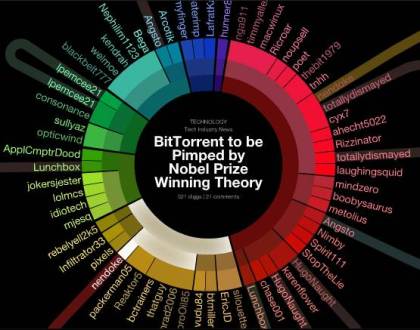
I went to a forum this week : Is online media dumbing down journalism? Liz Jackson (Four Corners), Peter McEvoy, Catharine Lumby, Dylan Welch (Sydney Morning Herald Online) and Jacqueline Breen (ElectionTracker.net) were on the panel put together by New Matilda.
I won’t summarise what was spoken about ’cause Tim does a great job here:
“What has happened to newspapers could be summed up as follows: once upon a time newspapers were sold as three course meals, and no one really knew what was being eaten – the entré, the main or the dessert (or all three?). Now we can measure readers, it turns out most people are just interested in the dessert. So does that mean you just focus on desserts and stop making nutritious mains? Or does it mean you have to work harder to make the mains more appetising?
It seemed to me the room last night was full of people that just love to eat vegetables. They know how good vegetables are for them and they’ve acquired a taste. Now they’re nervous – if people are only eating dessert, what does that mean for the health of democracy? or ‘public discourse’? And more importantly, if we’re the only ones eating vegetables, who’s going to be paying for them?”
My outtake was that it seemed to me that what was missing from the debate was any real vision of how the online medium might advance the essential offer of journalism which was put forward as ‘originality, credibility and analysis’.
The focus of the panel seemed to be on how online effects the economic model of a news masthead and then how that relates to the resources that are given to journalists in order for them to deliver their craft.
I’m into the notion that in the current explosion of data there is a valuable role to be played in an offer of synthesis of information, contextualisation with authority and transparency of agenda. In this scenario a newspaper might be seen as an umbrella brand with its journalists becoming brands of their own. The role of the newspaper is then to facilitate and add value to the relationship between the content created by the journalists and the audience.
An example of this might be a meme/topic tracker so that you can follow issues as they unpack over time or visualize how silos of news interact with each other (a finance story and a policy decision or a gossip piece and a media merger).
The Digg Arc model is a baby step towards this- imagine if you could colour code and navigate your way through topical information and see how it related and informed other silos of activity….
The ability of the online medium to tell stories and to allow journalists to create new ways of creating understanding and describing the agenda seems to be lost in the contemplation of dwindling revenue.
In response to will online “Shaft or Save?” journalism I come down on SAVE, so long as there is a willingness to innovate.
UPDATE: I watched the 2007 Andrew Olle Lecture given by John Hartigan broadcast last night on the ABC.
You can read the transcript here or listen to it here.(MP3 RealMedia 28k+)
Amazing. No really. Inspirational, visionary, passionate. Go check it out:
‘….journalism is in very good shape. In many ways, better than ever. There has never been a better time to be a journalist. And the value of good journalism has never been greater. ”
‘…digital technology is delivering a more diverse range than ever of wonderful journalism. Our audiences are capable of telling the difference. The one thing they don’t have is enough time to consume what’s available. This is why demand for high quality news from credible sources will grow, not decline.”
“Newspapers draw our attention to things we didn’t know we were interested in. The internet hasn’t induced passive browsing in the same way but I think the content that achieves this will attract a huge audience. As journalists we’ve never had more inducements to open our minds, stretch our imaginations or reach more people.”

