


I love it when you come across a sweeping statement that just takes your breath away.
In Australia there’s been a doozy this week- which you can follow here, particularly if you think that humor is a good way of addressing misogyny….
Anyhoo…and before I get well distracted….
I came across a notion that UX didn’t exist before digital – that the spirit utility, interaction and participation was ‘invented’ by introducing digital to brands.
A-hem.
It might be surprising that the discipline of mapping out optimal interactions between humans, machines and contexts has been around since the 1940’s. Participatory design’s been around since the ’60s.
I can’t help but agree with Jon Steel’s refutation of the statement
…these days everything has changed, planning has to change because advertising has changed, nothing is the way it used to be, everything is digital now and if you propose anything other than digital solutions then you’re old-fashioned and generally hopeless…you should drag your sorry old ass out of the business and work somewhere else.
I believe that’s completely wrong, because in the end in an analogue world, in a digital world the key to success is understanding the basics of human communication.
In order to most effectively influence a group of people “you don’t target them you engage them as willing accomplices”
I think the best brands have always inspired individuals to become willing accomplices…
Mr Steel also mentions the amazing work of Howard Gossage in the 1950s.
In short the example of Gossage has never been more possible to follow and more needed, particularly as dreary advertising drifts from our televisions to the places we spend time online, his idea that you should never confuse the product and the message becomes even more powerful. Howard would build his messages around something he thought would interest people and then weave the product into this story – the first international paper airplane competition for Scientific American being a brilliant example.
If you haven’t the slightest clue what all the fuss is about ….it would not be an exaggeration to say that Howard Gossage:
1) Invented interactive advertising (as opposed to direct response advertising) in which the audience is invited to get involved with the brand’s life and participate in its activities
2) Invented the idea of creating communities of interest around topics and then galvanizing those people into action through advertising
3) Invented the PR stunt as a marketing tool using advertising to catalyse and popularise the activity
4) Created the fee based remuneration model in place of the widely used but utterly discredited commission system
5) Invented the independent media planning agency with the Kick Back agency
6) Discovered Marshall McLuan and made him a household name in ‘60s America, a man who predicted the rise of the connected global village that we all live in today
7) Saved the Grand Canyon from flooding with advertising that changed the way that environmental campaigning forever
8) Helped create the modern environmental organisation and both named and housed the Friends of the Earth
9)Helped start the anti-globalisation movement
10) And almost won independence for Anguilla
And so to wrap up this rather long rant:
- If a brand wants want people to play with (and they do)
- Think
- What do we need people to do?
- Why would they do it?
- What are we going to make or do that will enable them to do it?
Filed under: The Rules
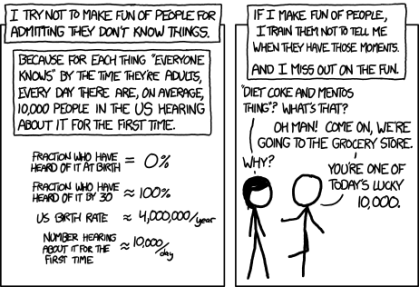
It is a planner/ creative strategist/ maker-upperer-with-rigor’s job to introduce people to things they don’t know.
One of your goals might be to create those moments and to make it safe (and fun!) for people to say ‘Hey, I didn’t know that’.
Try not to be a douche about having more knowledge than others. Strength requires responsibility and using your smarts to punch people in the face makes you a bully.
Celebrate and contribute to growth instead.
Filed under: Get Friendly
Penguins speak to me for so many reasons, and as a totem they embody my own aspirations
to have the ability to deal with that which does not truly matter
to launch into the unknown and ‘tee-hee’ while I’m doing it
to refine my six word story, “breathe. it will all be ok”
to something silly, active, positive and whimsical
and bring that mantra to the point of most powerful reduction
SLIDE
Filed under: Digital Strategy
Over at Paul Mcenany’s blog this week
As many of you know, I’m a big believer that the better the problem, the more likely you are to get to work that works. Wrongheaded problems leave us in a ditch. Boring problems invite uninspired solutions. And when you only ask advertising questions, unsurprisingly – you get lots of advertising answers. The best of the best understand the value in taking the time to get the question right.
Love the thinking in Paul’s presentation I got a load of value. I wonder, though, if it’s always time that is the missing component in getting the problem right.
One of my favorite stories of getting the problem right is this one:
Sainsbury’s planned to grow revenue by £2.5 billion, a huge target made tangible by redefining it as an extra £1.14 per transaction. Previously, Sainsbury’s had been trying to create a big change in behaviour amongst a small number of high-spending customers of other supermarkets. Now it proposed a small change in behaviour amongst a big number of existing and potential customers. Research showed that people were ‘sleep shopping’ because they found supermarket shopping routine. The strategy centred around earning the required extra £1.14 per transaction by building the brand around simple food ideas. The slogan was ‘Try something new today’, but the idea behind it permeated Sainsbury’s business, informing management ethos, point-of-sale creative and advertising campaigns. The idea helped accelerate Sainsbury’s growth, attracting 1.5 million extra customers, increasing profit by 43% to £380 million and growing revenue by £1.8 billion over two years – ahead of the three-year target.
What I like about this case is that not only was the question about behavior change (what would we need to get people to do to grow by 2.5 billion), but the stimulus for the question was held within the value of the owned media of the brand- the amount of customer interactions inside their retail environment.
So to reimagine Paul’s statement:
The best of the best understand that getting the question right delivers value.
An Australian example of this:
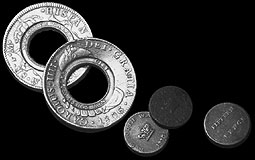
In 1813 Governor Lachlan Macquarie overcame an acute currency shortage by purchasing Spanish silver dollars (then worth five shillings), punching out the centres and creating two new coins – the ‘Holey Dollar’ (valued at five shillings) and the Dump (valued at one shilling and three pence). This single move not only doubled the number of coins in circulation but increased their total worth by 25 per cent and prevented the coins from leaving the colony.
Last night a holey dollar was sold $for 410,000 and 1813 New South Wales Colonial Dump sold for $100,000.
Filed under: Great Stuff
I renewed my complete crush on Jay Smooth’s smart styling hip-hop video blog Ill Doctrine today, which started for me waaaaay back in 2008 when I asked
Is he talking about politics, rap or the nature of masculinity? Or all three?
and today I saw this piece about Sexist Gamer Dudes passed around by blokes I like, respect and admire.
It reminded me what a talent Jay is- and kicking around his ‘allow me to reintroduce myself‘ section he demonstrated over and over again that we’re not alone:
and then I remembered:
procrastination is a lot like masturbation a lot of fun until the moment you realize you’re just fucking yourself
and got back to work.

We were put here as witnesses to the miracle of life. We see the stars, and we want them. We are beholden to give back to the universe…. If we make landfall on another star system, we become immortal. Ray Bradbury Speech to National School Board Association (1995)
Ray Bradbury died today. I love his work: his defense of books, his fight against censorship, and above all the notions of the miraculous future that would unfold before my eyes as I grew. He was one of the writers that made me excited about the future, made me more conscious of the dark dehumanizing side of technology, one of the architects of the “What Ifs” that still guide my daily creative explorations and the provider of some of the more accessible componentry of my moral compass.
Here’s one of my favourites, I posted this to David Gillespie just the other day: Doing is Being
Doing is being.
To have done’s not enough.
To stuff yourself with doing — that’s the game.
To name yourself each hour by what’s done,
To tabulate your time at sunset’s gun
And find yourself in acts
You could not know before the facts
You wooed from secret self, which much needs wooing,
So doing brings it out,
Kills doubt by simply jumping, rushing, running
Forth to be
The new-discovered me.
To not do is to die,
Or lie about and lie about the things
You just might do some day.
Away with that!
Tomorrow empty stays
If no man plays it into being
With his motioned way of seeing.
Let your body lead your mind –
Blood the guide dog to the blind;
So then practice and rehearse
To find heart-soul’s universe,
Knowing that by moving/seeing
Proves for all time: Doing’s being!
I was really intrigued this piece when I saw it over at swissmiss, which was created by W+K.
Its running as a pre-roll on YouTube, it’s over 2 minutes- and it’s been played (in addition to its ad spend) 1.775 million times since its launch in February.
It’s message:
Its 8 am… MILLIONS of EMPLOYEES.. show up each day..for their names on a register…. The world we see around us..countries..and ..continents..have been built.. on the back of these signatures.. The future too will be written by these signatures.. Signatures of the EMPLOYEES… You.. are an EMPLOYEE.. Your BOSS is an EMPLOYEE… …….. … TRUTH is every EMPLOYEE is a HERO… Enough said… Let’s go do…what we all do our best.. Let’s go to work.. A TRIBUTE TO THE MAKERS OF OUR WORLD.
It’s a big call. A very big call. Who are these HCL guys? Who are they to say they speak on behalf of the millions of employees who turn up to work each day? Who are they to champion the overworked and unsung?
A bit of digging….
Employees First Customers Second (EFCS) is a journey of experiments which HCL started in 2005. It is a simple philosophy that, at its heart, states that in the service industry, true value is not created by top management. Since employees are the closest interface with the customer, they are the new ‘value zone’ for companies: the place where value is truly generated for customers. And it is therefore the duty of the rest of the organization to foster and engender this value zone by creating the requisite enabling infrastructure.
Vineet Nayar (the head of HCL Technologies), wrote in Forbes that he does not do it to make his employees happy
The idea came from observing our company closely. We create value in one very specific place: the interface between our HCL employees and our customers. We call this the “value zone.” Every employee who works in the value zone is capable of creating more or less value. The whole intent of Employees First is to do everything we can to enable those employees to create the most possible value.
HCL decided:
- to put its employees first and made every effort to provide them with a work environment and culture that they can take pride in.
- employee development focused on giving people the tools and enabling the infrastructure they needed to succeed
Is it about employee engagement?
EFCS is not about making employees happy or comfortable. I don’t even really care if employees are happy. I don’t think that employee “satisfaction” is something a company should strive for. Satisfaction is a passive state, isn’t it? Satisfaction doesn’t produce change or improvement or innovation or much of anything.
As for employee “engagement,” that isn’t much better than satisfaction. I would hope that everybody, no matter what their job is, would be alert and paying some attention to what they do, would be engaged.
We have found that the Employees First approach produce s far more passion than any motivational or recognition program. Why? Because it proves that management understands the importance of the work being done by the employees in the value zone. It demonstrates that we are actively helping them in ways that make it easier for them to do their jobs. It shows that we trust them to do what needs to be done in the way they believe it should be done. And it shows that we respect them for the value they bring to the company.
We give them understanding, help, trust and respect–which is much better than potato salad and cold cuts.
The key enablers that made EFCS work –
- Smart Service Desk (SSD) was introduced to make the enabling functions accountable to employees and resolve any issues that they may have within a stipulated time.
- Directions, an annual interactive event, where the senior management along with the CEO meet employees to discuss company strategy, new processes and policies and what they think is the right agenda for HCL to adopt in the coming year.
- U&I, an online discussion forum where every HCLite gets an opportunity to raise issues, share thoughts and ideas, as well as debate directly with the CEO.
- Spot 360⁰ Feedback was launched to make the management accountable to employees and to increase organizational accountability. A system where anyone could rate managers on various aspects.
- Employee Passion Indicative Count (EPIC) assits employees in identifying their passion drivers – factors that drive an employee to excel at work.
Results?In the past three years,
- HCL grew at a CAGR of 24 per cent
- Market cap increased by 186 per cent
- Number of $10 Mn, $20 Mn & $50 Mn customers doubled, and the number of $100 Mn customers tripled
- Revenue per Employee is amongst the highest in the Indian IT segment today.
The book explores the steps of HCLT’s transformation as the company recognized the need for change, created a culture of trust through transparency, turned the organizational pyramid on its head, and shifted the responsibility of change from the office of the CEO to the employees using small catalysts, or “blue ocean droplets,” that produced big results.
The journey had four steps:
- Confront the Truth
- Build Trust
- Support the Value Zone
- Change at the role of the CEO
I think it’s interesting to note how this journey has facilitated their next step:
Employees Driven, Management Embraced [EFCS 2.0]
Employees are increasingly taking the lead in driving innovation. We call this phase EFCS 2.0 where we’re witnessing a change in ownership – Employees are taking charge and creating innovative programs in and around HCL, which are producing big impact. Here are some of the notable programs.
- Meme: A platform created by employees to go from official to social at work; it now boards over 59,000 members.
- MAD JAM: “Make a Difference” a bottom-up initiative designed by front line employees, for front line employees, that recognizes and celebrates the most innovative ideas at HCL.
- MAD LTD: “Make a Difference, Lead the Difference”, a platform focused on nurturing young leaders to showcase and implement ideas for social impact. For more details, please visit www.madltd.com
- Power of One: A social responsibility initiative where HCLites spend a day with the community and donate a Rupee a day, which adds up to an avalanche of positive social activism.
- arKMedes: A platform focused on making knowledge the currency across the organization by bringing together communities driven by passionate employees.
I think work is changing: as a ritual, as an enabler of identity, as a method of survival, as a framework for community- the horizon of change is vast. In Australia 40% of our workforce are employed on various insecure arrangements, casual, contract or through labour hire companies and in this climate we might do well to think about were value is generated, how it is created and where it can be amplified. Who makes your world? Have you told them they’re anything special lately?
Over on Seth’s blog today was this morsel
A good employee says, “I know that this is a serious problem, it’s hurting our customers and we can do better, but I can’t do a thing about it because it’s run by a different department.”
A version of this might conclude with, “And I don’t even know the name of the person who’s responsible.”
This is a sure sign of systemic failure as well as a CEO who is not doing the job she should be. When smart people who care get frustrated, something is wrong.
There’s an intesection here and a paper that Deloitte relased yesterday:
Based on a global study of investment bankers, private equity companies, and financial analysts, the paper, The Leadership Premium: How companies win the confidence of investors, puts a hard metric on the “intangible asset” of leadership, revealing that, in some sectors, good leaders can account for more than one-fifth of equity value.
The gap between the value of an effectively-led and ineffectively-led company could, says the paper, be as much as 35.5 percent.
It’s a pretty good read, and one that full of steal able insights about the core components of value building leadership and the importance of leaders taking their teams along for the ride:
“All employees should have the same goal and process in mind… the same direction”
Investment analyst, US
Here are my notes:
Many major corporations have found that orthodox management practices and organizational principles are not well suited to the modern era. Our view is that current conditions don’t demand a revolution so much as a renewed focus on the fundamentals of leadership
Three value delivering components
- Strategic Clarity
- Successful execution
- A culture of innovation
Strategic Clarity
Organizations need to decide on where and on what basis they will compete. e.g
- Virgin Media’s decision to focus on it’s network as its core strategic asset was the beginning of an impressive corporate turnaround
- Southwest Airlines’ early use of the internet and online booking and check-ins has helped consolidate its positions as a low cost, low fares carrier.
- Apple’s relentless focus on ‘insanely great’ products allowed it to transform consumer electronics
- FedEx Ground’s emphasis on service and its early use of tracking systems (as RPS in the 1980s) enabled it to challenge UPS
Strategic clarity involves delivering a vision of what the organization needs to achieve
- and a framework that leaves enough room for people to create the future
- with consistency and commitment
Successful Execution
Common to organisations is the belief that the only long term differentiator they have is their people. The priority for an organisation has to be getting the best out of its people by ensuring that they are willing and able to fulfil its aims
- Believe: compelling reasons, communication and bulid commitment
- Belong: leaders need to articulate a long term purpose beyond just making money
- Behave: adaptive, value driven, team building, respectful,
- Able: capabilities, resources infrastructure
A Culture of Innovation
Great ideas are generated and developed through interaction.
- Commitment to enterprise; an environment for ideas
- Collaboration culture
- The freedom to experiment (and fail)
- It’s not about hiring new radical thinkers
- It’s about realizing the potential of the thinkers you’ve got
I liked this check list:
Effective leadership characteristics
- Capabilities
- Driving competitiveness and innovation
- Providing direction and purpose
- Making effective decisions
- Inspiring others to act
- Developing people
- Building high performing teams
- Personal qualities
- Integrity, probity and humility
- Moral courage
Filed under: Experience

I read Change or Die over at Fast Company…
The conventional wisdom says that crisis is a powerful motivator for change. But severe heart disease is among the most serious of personal crises, and it doesn’t motivate — at least not nearly enough. Nor does giving people accurate analyses and factual information about their situations. What works? Why, in general, is change so incredibly difficult for people? What is it about how our brains are wired that resists change so tenaciously? Why do we fight even what we know to be in our own vital interests.
and I loved this bridge:
Changing the behaviour of people isn’t just the biggest challenge in health care. It’s the most important challenge for businesses trying to compete in a turbulent world, says John Kotter, a Harvard Business School professor who has studied dozens of organizations in the midst of upheaval: “The central issue is never strategy, structure, culture, or systems. The core of the matter is always about changing the behaviour of people.”
I can’t help think that we focus so much on message, on story, on information that sometimes we forget that we’re not just trying to get people to take notice- we’re trying to get them to change. And it’s hard. And they don’t like it…
It reminds me a little of this presentation…
Filed under: Digital Strategy
I’ve been working on this campaign for a client…while I don’t t usually do this, I’d love you all to help.
Piece by Piece is way to show our support for breast cancer sufferers by aiding research (through the National Breast Cancer foundation) to help solve the puzzle. The online mosaic is made up of the faces or chosen images of those committed and caring people who want to donate a dollar, or more to breast cancer research.
So here’s the idea….
- I would like to give 10 of you 50 pieces for Christmas.
- I’d love you to share your pieces with family and friends in a pay it forward style and we will their match donations (or yours!) dollar for dollar.
- We’ve got $2000 to give away. And we need to give it away by the end of the year.
- All your readers/followers/friends and family need to do is to include #payitforward with their message in the comments box when they donate.
Let me know if you’d like to be part of this and I’ll set you up.

http://www.piecebypiece.net.au/
1.Go exploring.
Explore ideas, places, and opinions. The inside of the echo chamber is where are all the boring people hang out.

2. Share what you discover.
And be generous when you do. Not everybody went exploring with you. Let them live vicariously through your adventures.

3. Do something. Anything.
Dance. Talk. Build. Network. Play. Help. Create. It doesn’t matter what you do, as long as you’re doing it. Sitting around and complaining is not an acceptable form of ‘something,’ in case you were wondering.

4. Embrace your innate weirdness.
No one is normal. Everyone has quirks and insights unique to themselves. Don’t hide these things—they are what make you interesting.

5. Have a cause.
If you don’t give a damn about anything, no one will give a damn about you.

6. Minimize the swagger.
Egos get in the way of ideas. If your arrogance is more obvious than your expertise, you are someone other people avoid.

7. Give it a shot.
Try it out. Play around with a new idea. Do something strange. If you never leave your comfort zone, you won’t grow.

8. Hop off the bandwagon.
If everyone else is doing it, you’re already late to the party. Do your own thing, and others will hop onto the spiffy wagon you built yourself. Besides, it’s more fun to drive than it is to get pulled around.

9. Grow a pair.
Bravery is needed to have contrary opinions and to take unexpected paths. If you’re not courageous, you’re going to be hanging around the water cooler, talking about the guy who actually is.

10. Ignore the scolds.
Boring is safe, and you will be told to behave yourself. The scolds could have, would have, should have. But they didn’t. And they resent you for your adventures.

So perfect. Love Jessica Hagy. From here
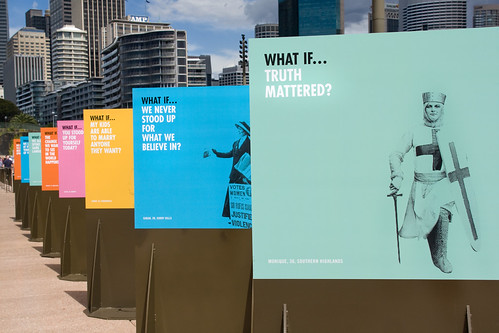
I like to remind myself that one of the roles of the Creative Strategist is to promote collaboration and innovation, to lead the improv disciplines of “what if’ and “yes and” (and make sure the creativity killing Nupski monster doesn’t get fed too much)
What if’s….
Sydney’s pretty full of ‘what if’s” right now. This year, Art & About Sydney put out a call, asking people across Australia to send their responses, in ten words or less, to that one simple question – what if? – two words that put the power of imagining back on the agenda, and inspire us all to think beyond the here and now.…(see the entire list here).
When it comes to creative and development, improv is critical….
Here’s another way of looking at it: Improvisation is all about viewing your failures (“I don’t like it” or “it doesn’t work they way it should”) as positives that lead you in newer and better directions. The messy, circular paths we have to take in order to reach our goals oftentimes show us things we normally wouldn’t have seen before. And that makes us a lot better at doing our jobs.
Build improvisation into your thinking. Saying “Yes” makes everyone into the good guy and gives you a better chance of delivering what you hoped to. It’s also more fun
Filed under: Experience
Baking is a wonderous thing. I’ve been doing it for more than 30 years (yikes!) It’s both a wonderful way to show off and a deeply satisfying exercise of creating something from not much.
The I’ve learned so much
- The importance of balance and ratios.
- The impact of temperature
- Context. Recipes are designed for specific cake pans, placement in the oven is important, fan forced makes a difference.
- How lightness is achieved through chemistry
- How overworking something can start to diminish the result
- How fragile things are when they’re just cooked
I know how to bake, I don’t need a recipe now (but I love reading them for inspiration) and I can look in a pantry and see a bakery of the potentials.
And as I’m preparing to be chief baker for a weekend away with mates, it’s got me thinking: how do I remember stuff? How do I pull together what I know and what I have to get a treat on the table?
I’ve asked a bunch of people what their process is, and the response has been varied from “I don’t know how I do anything” to the lucky duck who has an eidetic memory.
I’ve written about personal taxonomies, my Bowerbird ways, and general bricolage and pirate treasure pursuits for crafting creative strategy before and now I’m wondering how great the impact is of the things that I do (and not just the things that I see, read and save) that help me create delights.
“We become what we behold. We shape our tools and then our tools shape us.” Marshall McLuhan
I love the video below. How are your tools helping to shape how you understand your world?
Filed under: Great Stuff
To whoever is not listening to the sea
this Friday morning, to whoever is cooped up
in house or office, factory or woman
or street or mine or harsh prison cell;
to him I come, and, without speaking or looking,
I arrive and open the door of his prison,
and a vibration starts up, vague and insistent,
a great fragment of thunder sets in motion
the rumble of the planet and the foam.
… freedom and the sea
will make their answer to the shuttered heart.
– from “The Poet’s Obligation” Pablo Neruda
Filed under: Digital Strategy
- Is the idea to inform your reader or making him feel like a fucking dunce?
- Al Swearengen, Deadwood
- “But he hasn’t got anything on!” the whole town cried out at last. The Emperor shivered, for he suspected they were right. But he thought, “This procession has got to go on.” So he walked more proudly than ever, as his noblemen held high the train that wasn’t there at all.”
- Hans Christian Andersen, “The Emperor’s New Clothes”
- The aim of the poet is to inform or delight, or to combine together, in what he says, both pleasure and applicability to life. In instructing, be brief in what you say in order that your readers may grasp it quickly and retain it faithfully. Superfluous words simply spill out when the mind is already full. Fiction invented in order to please should remain close to reality.”
- Horace, “The Art of Poetry” (Ars Poetica) from his Epistles
Am loving catching up with Austin Kleon
Filed under: Experience
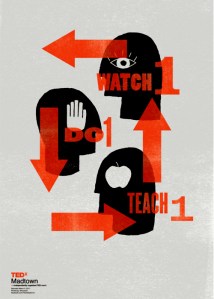
Creative strategy time management plan:
- Watch 1
- Observe, read, reflect, see patterns, notice gaps.
- “our job is to turn human understanding into business advantage for our clients”
“understanding of human behaviour is invaluable in creating advertising that truly works…we live lives full of irrationalities. The human brain is not the Oval Office, making authoritative decisions. It’s the press office — issuing post-rationalisations after the fact.” - Watch yourself too
- “Empathy is like a universal solvent. Any problem immersed in empathy becomes soluble.”
– Simon Baron-Cohen - Do 1
- Make stuff. Get your hands dirty. Experience the stuff you make. Walk it through to the end.
- Don’t just make friends with the creative team- be part of the creative team
- “efficiency is doing things right, effectiveness is doing the right thing.”
- Have experience of both
- Be active- see all kinds of music played live, watch plays, go to all kinds of markets, take every opportunity to taste what people are doing for fun and to express themselves. Participate in the culture of your city.
- Teach 1
- Share, present, mentor, write, and help people embrace new ideas
- One of my favourite ruminations at the moment is: “If you want to go fast go alone, if you want to go far go together”.
- There’s not much point in running ahead of the pack and streaking over the horizon if no one is with you.
- Embracing a teaching discipline will help you (and your project and your team) go far.
Filed under: Experience
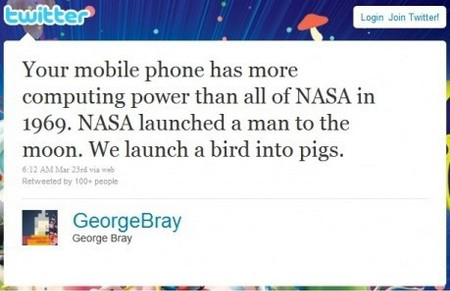
My inexhaustible crush on Jonathan Harris continues:
Data is extremely limited in what in can say about life. There is a popular belief nowadays that roughly goes, “Give me enough data, and then I will understand.” This is only true for certain kinds of superficial insights. There are other deeper, more essential and ineffable insights, which have to do with the heart and soul of things, and you will never find these hiding in data. They are to be found only through personal experience, solitude, and contemplation
I’d have to agree with Mr Shirky that we don’t have an information problem but I’m not sure that answer is merely filtering. It’s what you do with it that counts.
Filed under: Get Friendly
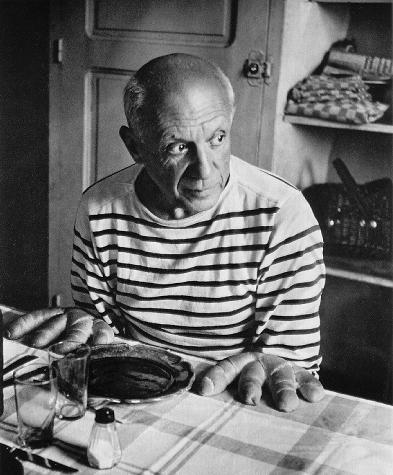
“I wanted to get into show business because I thought it would give me close proximity to monsters.”
– Stephen Tobolowsky
Something I tell the team quite often is: “it’s not show friends, it’s show business“.
And it is true. While it isn’t a fairy tale there are monsters, there are things lurking in the darkness in all kinds of show business. I’m liking the notion that we need to remind ourselves that trolls hide under bridges (and sometimes in daylight, and sometimes inside ourselves).
The only way to disarm a monster is to laugh at it. And silly is a wonderful way to invite the monster to join in on the fun.
Filed under: Great Stuff
The sound sculptures and installations of Zimoun are graceful, mechanized works of playful poetry, an interplay between the artificial and the organic. This piece is a study of complex behaviors in sound and motion, examining the creation and degeneration of patterns.
I love that it’s cardboard and dime store electronics. I love the shadows. I like that you can walk around it, get inside it and that the sound changes depending on where you stand. It’s remarkably simple but it gives you a contemplation of complexity.
And it sounds like rain.
Filed under: Great Stuff
The best video you will watch all day, no doubt.
And if that’s not diverting enough there’s hours of awesomness to be had on Flickr with Lunchbreath


