

Filed under: Digital Strategy, Innovation, Service Design | Tags: Innovation
Lovely thinking about the role of research, the scaffolding of teams with structure and principles, the necessity of focussing on adding value and the whole shebang being an iterative process
Link here: https://www.slideshare.net/mobile/adamconnor/design-thinking-finding-problems-worth-solving-in-health
Lovely find @markpollard
Filed under: Experience, Get Friendly, The Rules, Zeitgeist | Tags: generosity, psychology
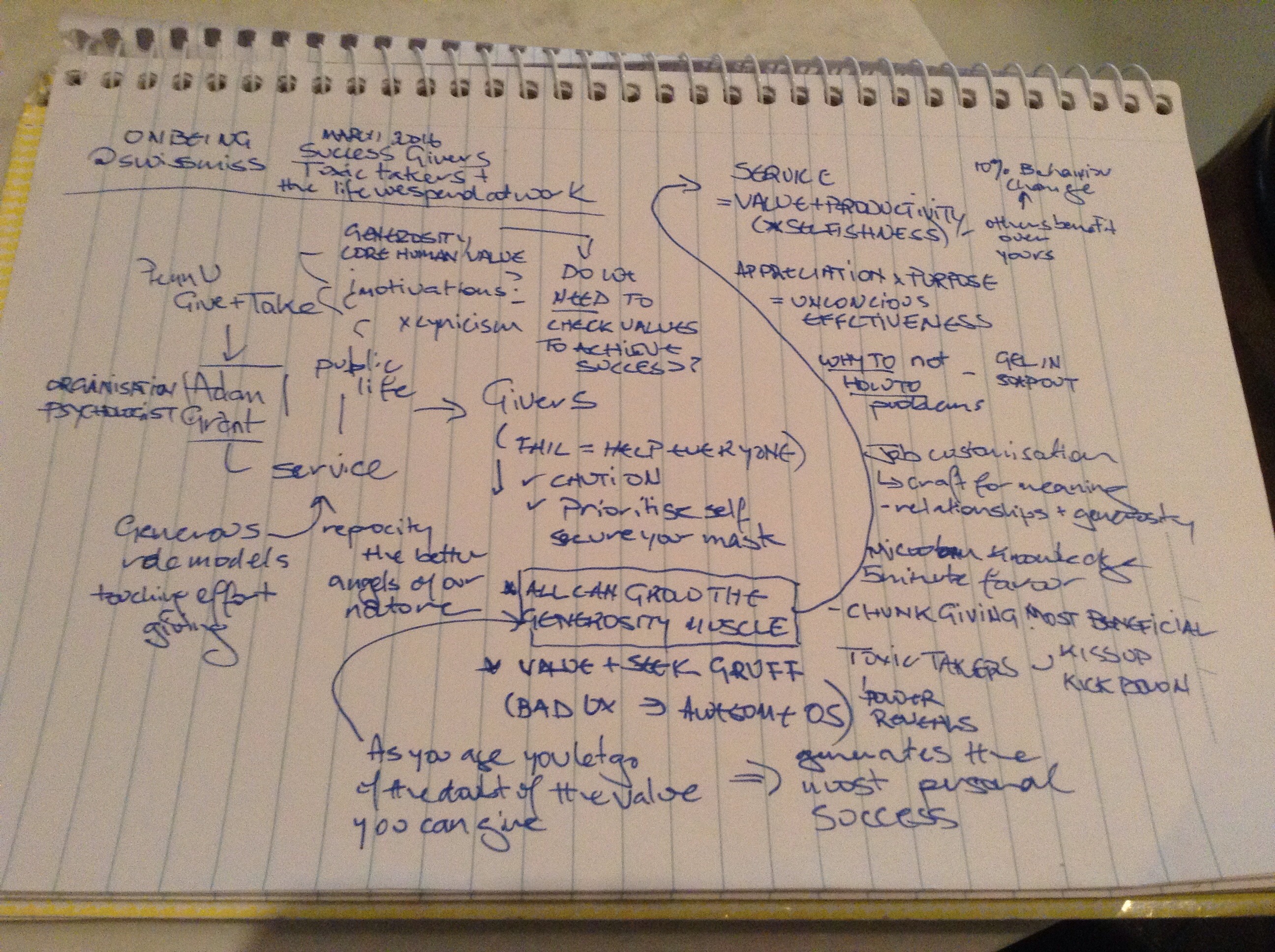 Wonderful interview with the organizational psychologist Adam Grant, who many know from his New York Times columns, describes three human orientations, of which we are all capable: the givers, the takers, and the matchers. These also influence whether organizations are joyful or toxic for human beings. His studies are dispelling a conventional wisdom that selfish takers are the most likely to succeed professionally. And, he is wise about practicing generosity in organizational life — what he calls making “microloans of our knowledge, our skills, our connections to other people” — in a way that is transformative for others, ourselves, and our places of work.
50 minutes well spent
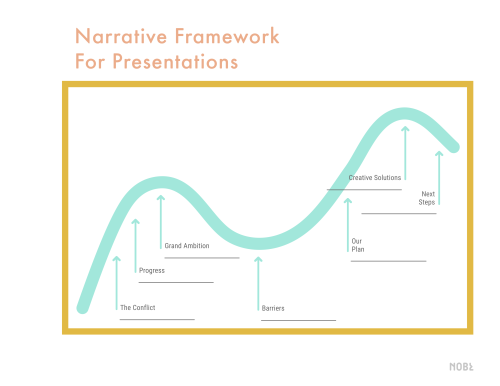
Found this useful frame work on the Katie Dreke’s fab tumblr obsessivecompulsive
- Start with conflict. Tolstoy once remarked, “All great literature is one of two stories; a man goes on a journey or a stranger comes to town”—and he knows a thing or two about narrative. Without a change in the status quo, there is no story, so make sure people understand the current situation and why it’s untenable.
- Explain your progress thus far. Your team may have been working on this problem for some time, but it will be new to your audience. Show the results from your customer research and competitive analysis; using quotes or images from real people for greater impact.
- Propose your grand ambition. Despite the challenges, reassure the audience that there’s reason to hope—and, in fact, a great opportunity for those willing to seize it. Lay out your team’s vision for the future, but then…
- Identify the barriers. Create drama by introducing new sources of conflict and explaining what’s stopping the organization from achieving its goals.
- Explain how to overcome those barriers. Make the audience the protagonists by explaining why their help is needed. If they feel like they are part of the solution, they will become powerful brand ambassadors for the new changes.
- Build excitement as you expose the creative solutions. Unveil your ideas and clearly illustrate how they will get you closer to the big vision.
- End smoothly with timing, costs, and next steps. Our last presentation tip now that the story is ending, is to take action. Translate the vision into tactical goals and clear responsibilities so that people can bring it to life.
Super. I’m a gonna use it now….
I was lucky enough to be in the audience at the Google Firestarters gig that Neil Perkin puts on all over the world. Great line up: Faris Yakob (founder Genius Steals), Angela Morris (Exec Planning Director, JWT Australia), Graeme Wood (Head of Strategy, M2M Australia) and a provocation about the intersection of data and creativity.
There was so much great stuff and interestingness. Effective too-it’s really got me thinking about where I think the sweet spots lie in the use of the digital discipline in the role of growing brands and business.
1. Start with conflict.
- Is digital storytelling content or experience?
- Where paid media is experiencing 84% avoidance and banners have a 0.06% CTR and 1 in 5 ad block it’s easy to say that the problem lies in the audience- that fantasitc ‘attention span of a goldfish’ 8 second span thing
- But we’re in a golden age of TV where long form content is king and people will watch an entire 13 hour series in one sitting
- Gamer’s sessions average over an hour
- Is it that audiences have less ability to focus, or that they’ve increased their ability to filter?
- Digital is a more effective cultural medium than an advertising context
- Our aim should be to get people off the couch
- The opportunity is to think broader than media property, bigger than passive content consumption and to start to play in culture.
2. Explain progress thus far.
- Cultural institutions seem to be leading the way in utilising digital to mean more and grow
- Museums and art galleries are exploring their reasons to be, to inspire and educate, and be Cathedrals of the Imagination
- Have a look at this great stuff: the work of the Culturelabel team, Seb Chan’s extraordinary Pen project for the Smithsonian, MONA, what’s going on at music festivals….
- Experiences are being designed to create new audiences, increase desire and attendance, increase dwell times, link the online data, content and curation with the physical world, build communities, and prompt repeat visitation
- This is happening as a result of working within the culture of audiences. Understanding their behaviour and seeking to provide experiences that add (not are ads)
3. Propose your grand ambition.
- Digital storytelling is creating a narrative in culture, driven by a protagonist on their own hero’s journey.
4. Identify the barriers.
- Paid Media magic beans= easier to buy than build
- I’ve got a hammer= the answer to everthing is paid media and all problems are solved with attention/engagement/ awareness
- Over kill and undercooked= using creativity to only make advertising is kind of like using Nuclear Power to heat water to make electricity
5. Explain how to over come the barriers
- Grown up business cases for innovation
- Define ambitious outcomes beyond traditional media metrics
- Involve decision makers beyond marketing
6. Build excitement as you expose the creative solutions.
- Working at the C level of an organisation and introducing all kinds of people to new ideas needs a skill set to manage complex stakeholder environments and the ability to both change people’s minds and help them build the skills to champion new ideas. Education is how you sell innovation
7. End smoothly with timing, costs, and next steps.

It was Ansel Adams birthday this week. As a lover of stillness, ligh† and high places his photographs are potentially responsible for introducing the urban dwellers of the 20th Century to the truly sublime potential of National Parks.
Or maybe just this one.
This is the track down to the Fairy Bower in the Nattai Gorge, well out of range of data or voice, but still has the ability to connect you to things a little more powerful than your news feed.
Anyhoo. Thanks Ansel.

Well, good folk, there’s nothing on earth
Like a genuine,
Bona fide,
Billion dollar,
Ideas boom.
Innovation!
What’d I say?
Innovation!
What’s it called?
Innovation!
That’s right! Innovation!
[crowd chants `Innovation’ softly and rhythmically]
I hear those things can make us proud
Don’t you build it in the cloud?
What about us brain-dead slobs?
You’ll be given cushy jobs.
Were you sent here by the devil?
No, good sir, I’m on the level.
I swear it’s Australia’s only choice…
Throw up your hands and raise your voice!
All: Innovation!
What’s it called?
All: Innovation!
Once again…
All: Innovation!
But your pathway seems seems quite frail and broken…
Sorry, ma’am, the mob has spoken!
Innovation! Innovation! Innovation!
[big finish]
Innovation!
Homer:Inno… D’oh!
There’s a notion I’m trying to catch in my trampoline mindscape of quotes and collectibles that’s hiding in the spaces between truth and trust. It was prompted by Scientists: Earth Endangered by New Strain of Fact-Resistant Humans
Scientists have discovered a powerful new strain of fact-resistant humans who are threatening the ability of Earth to sustain life, a sobering new study reports.
The research, conducted by the University of Minnesota, identifies a virulent strain of humans who are virtually immune to any form of verifiable knowledge, leaving scientists at a loss as to how to combat them.
“These humans appear to have all the faculties necessary to receive and process information,” Davis Logsdon, one of the scientists who contributed to the study, said. “And yet, somehow, they have developed defenses that, for all intents and purposes, have rendered those faculties totally inactive.”
As a truth seeker and trust builder I find this both perplexing and intriguing.
Love Ken Burns. He tells the truth. His work makes me cry. Probably not the work you may think –The National Parks: America’s Best Idea makes me lose it. And I love it. The video above is a snippet from a short documentary about the craft of storytelling, where he explains his lifelong mission to wake the dead:
You know the common story is one plus one equals two, we get it. But all stories are really, the real genuine stories, are about one and one equaling three. That’s what I’m interested in.
We live in a rational world where absolutely we’re certain that one and one equals two, and it does. But the things that matter most to us, some people call it love, some people call it God, some people call it reason, is that other thing where the whole is greater than the some of its parts, and that’s the three.
Jean Luc Goddard said cinema is truth 24 times a second. Maybe. It’s lying 24 times a second too, all the time, all story is manipulation. Is there acceptable manipulation? You bet. People say oh boy, I was so moved to tears in your film. That’s a good thing? That was, I manipulated that. That’s part of storytelling. I didn’t do it dis-genuinely, I did it sincerely, I am moved by that too, that’s manipulation. Truth is we hope a byproduct of the best of our stories and yet there are many, many different kinds of truths and an emotional truth is something that you have to build.
This is the phrase that leapt out at me, the bit about how story can be a reassuring vehicle of truth and connection about one of the hardest things that we all have to deal with- our mortality:
We have to keep the wolf from the door, you know, we tell stories to continue ourselves. We all think an exception is going to be made in our case and we’re going to live forever, and being a human is actually arriving at the understanding that that’s not going to be, story is there to just remind us that it’s just okay.
My brain made a leap to this interaction from So long, and thanks for all the fish by Douglas Adams
“Do you want to have a good time?” said a voice from a doorway. “I have a very special service for rich people …”
“Oh yes?” said Ford, intrigued but careful. And what’s that?”
“I tell them it’s OK to be rich.”
I want to be a champion of enabling the ability to perceive the truth, to feel it, to be moved by it and to be transformed by it. I need to find a way to craft a “tell” so that my audiences can read the difference between “a truth” (story) and “the truth” (fact/proof). But mostly a signifier to say that it’s OK. It’s OK to trust. It’s OK it to change.
“You what?” he said. The girl laughed and stepped forward a little out of the shadow. She was tall, and had that kind of self-possessed shyness which is a great trick if you can do it.
“It’s my big number,” she said. “I have a Master’s degree in Social Economics, and can be very convincing. People love it. Especially in this city.”
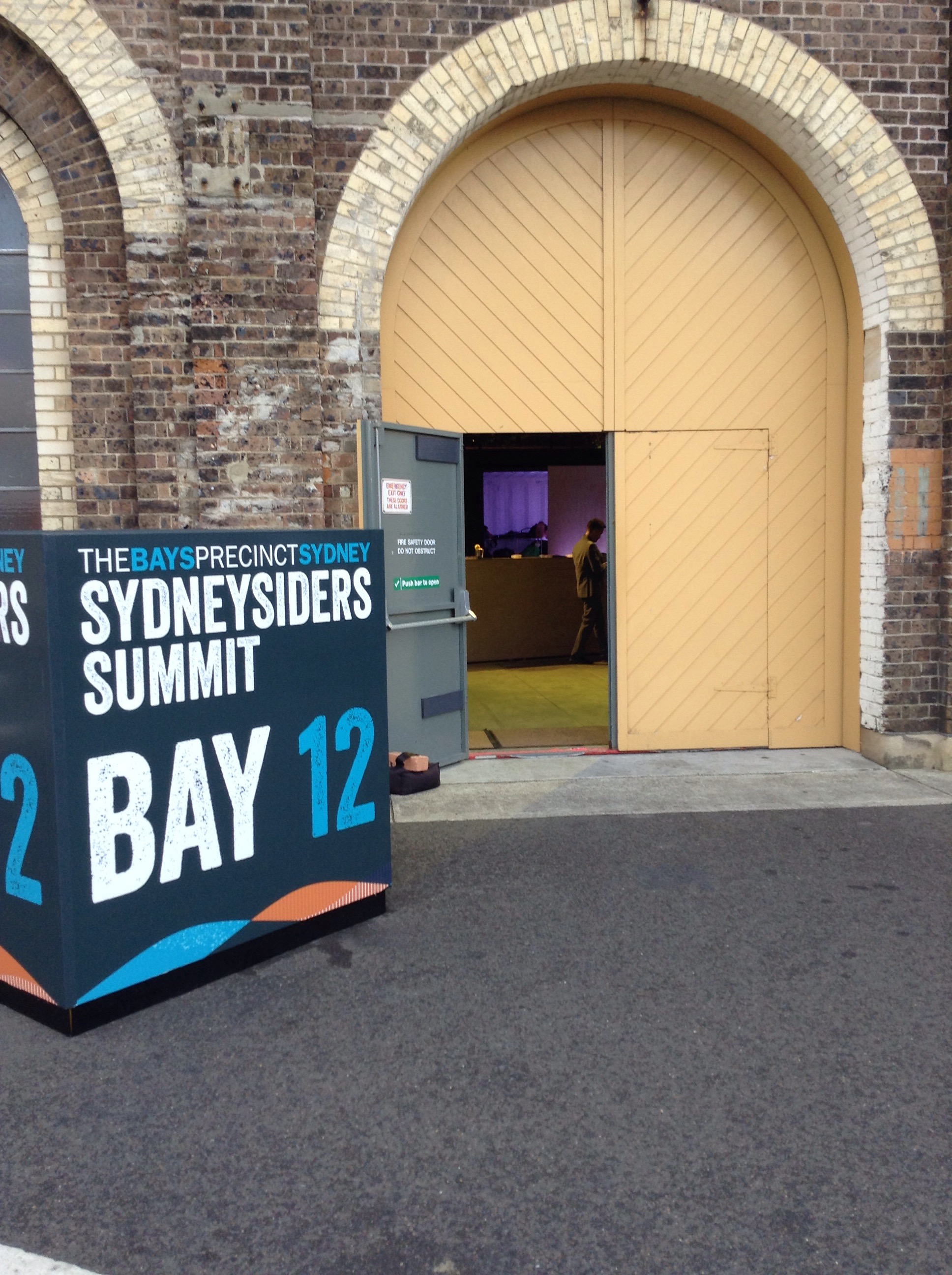
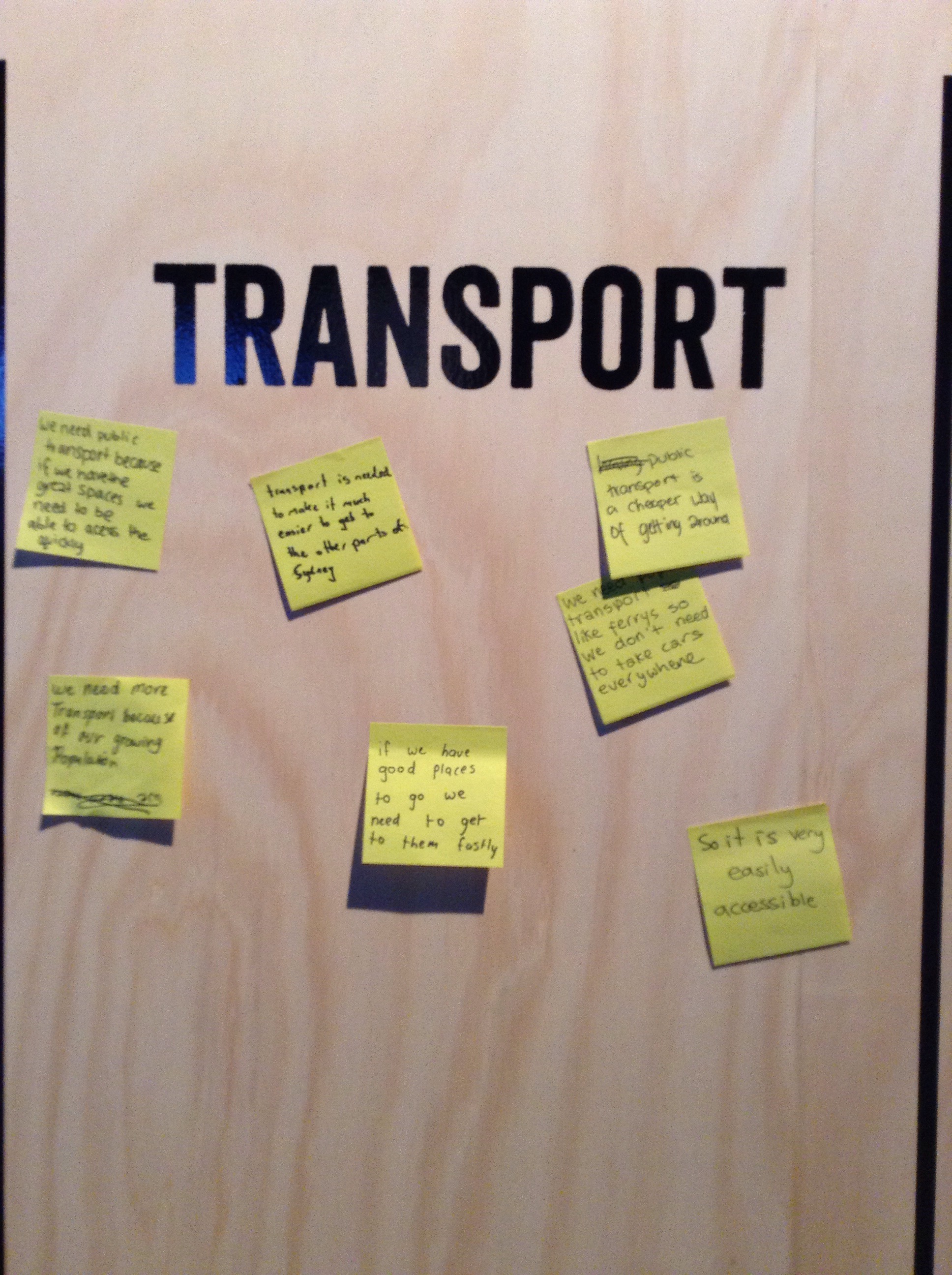
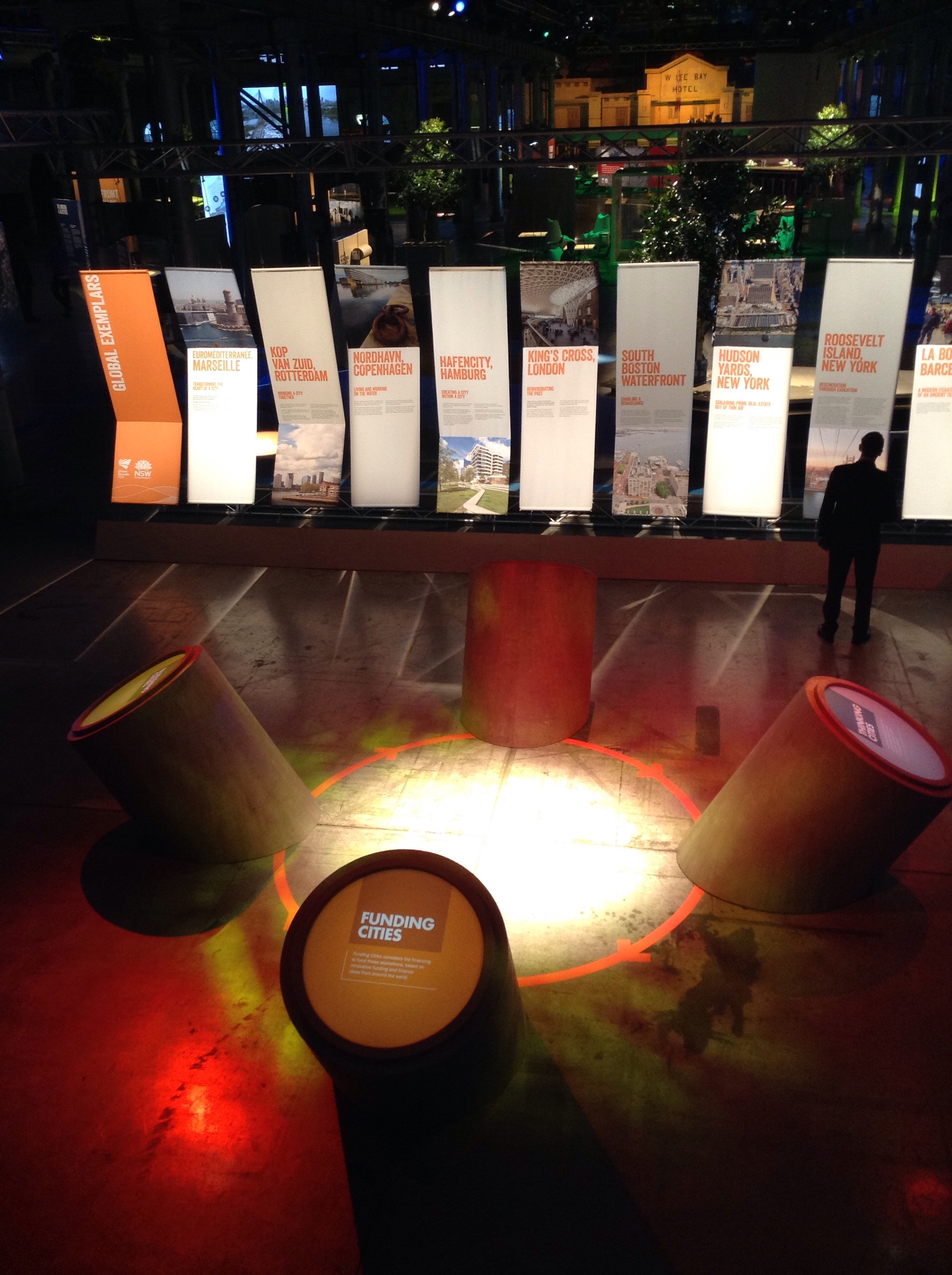
I’ve been privileged to be part of the team working with the NSW government on the urban regeneration of the Bays Precinct area. This weekend, the 16th and 17th of May there will be a summit that we’ve designed with a purpose of generating public awareness and input on one of the world’s biggest urban transformation project of its kind.
Love you to come, bring the kids and your neighbours. Lovely coffee, lush juices and fresh goodness to eat, and just so many opportunities to hear and co create what the future of this waterway district at the edge of the CBD will be.
Registration
The program and content will be made up of a series of short talks, ‘discovery’ displays and consultation exercises designed to be staggered throughout the day, allowing people to come and go as they wish.
This is a free event taking place at Australian Technology Park:
http://www.thebayssydney.com.au/events/sydneysiders-summit-16-17-may-2015.aspx
Background
In November 2014, Jack Morton worked with the NSW Executive Committee to conceive and develop The Bays Precinct Sydney International Summit. It was a unique undertaking, which brought together a broad range of local and international urban transformation practitioners, academics and policymakers, as well as community and not-for-profit representatives. The purpose for the Summit was simple; to create an environment for leading people in their fields to think, hear, discuss, and learn about what is possible and how. With a focus on forging relationships that will enable ongoing collaboration for both this and future urban transformation work.
https://www.youtube.com/watch?v=Fipa7o8gnWY#t=309

I’m looking at pattens at the moment and how they are formed and what meaning can be ascribed to them.
I loved coming across kintsugi and the notion that repair can be a process of adding both strength and beauty. It’s interesting that cracks themselves are openings that form in materials to relieve stress…the pattern of cracks indicates whether the material is elastic or not. A true break means tha the materials have failed under the strain.
I think elasticity, being able to change and adapt, is fundamental. And change is never going to be a one off, so perhaps plasticity is a more useful term to explore.Kintsugi can repair breakages- but you need gold, literally gold, to get the best results out of the process.
What about a golden notion though- one that allows an object to change and grow an adpt and self organise
The Golden Ratio is a universal law “…in which is contained the ground-principle of all formative striving for beauty and completeness in the realms of both nature and art, and which permeates, as a paramount spiritual ideal, all structures, forms and proportions, whether cosmic or individual, organic or inorganic, acoustic or optical; which finds its fullest realization, however, in the human form.”
– Adolf Zeising, 1854
The Golden Ratio, is very important in nature. Converted to an angle (as a proportion of one – =360 degrees – full turn), it equals 137.507764 degrees. Turns out that plants often use this angle to arrange leaves around the stem. This just happens to minimise the shading of leaves lower down the stem by leaves higher up so each leaf gets as much sunlight as possible (more than with other arrangements anyway).
Visually, the series typically appears as a spiral.
From the point of view of physics, spirals are lowest-energy configurations which emerge spontaneously through self-organizing processes in dynamic systems. From a biological perspective, arranging leaves as far apart as possible in any given space is favoured by natural selection as it maximises access to resources, especially sunlight for photosynthesis.
I really like these notions that systems just known when to turn, how to share and maximise the distribution of resources and grow in a way that is both strong and astheically pleasing.
Be wonderful to create these kind of self organising principles- I wonder if the trick is to bring propotion and a sense of proportion into the environment so that it can be easly seen and acted on.

Forget your perfect offering
There is a crack, a crack in everything
That’s how the light gets in.Leonard Cohen, Anthem
Kintsugi or Kintsukuroi is the Japanese art of fixing broken pottery with lacquer dusted or mixed with powdered gold, silver, or platinum. As a philosophy it treats breakage and repair as part of the history of an object, rather than something to disguise.
Part of service design is describing and inspiring people about the real challenges of change, the need to to fix things, to look at something broken and believe that not only can it be brought back to life but be both more beautiful and more valuable while retaining history and integrity.
I find it useful it to explore Mr Cohen’s insight that cracks provide illumination and how it intersects with this ceramic practice of renewal.
Not only is there no attempt to hide the damage, but the repair is literally illuminated… a kind of physical expression of the spirit of mushin….Mushin is often literally translated as “no mind,” but carries connotations of fully existing within the moment, of non-attachment, of equanimity amid changing conditions. …The vicissitudes of existence over time, to which all humans are susceptible, could not be clearer than in the breaks, the knocks, and the shattering to which ceramic ware too is subject.
—Christy Bartlett, Flickwerk The Aesthetics of Mended Japanese Ceramics
Mostly what this notion can tell us is that it’s ok. It’s ok to break, to have cracks and weaknesses. It’s natural and part of life and growth and of interacting with people. Even more than that, when you pick up the pieces, you can transform into something stronger, more resilient, utterly unique and desirable.

I’m constantly thinking about the creative brief and how to get it righterer.
I’ve written about my approach here on the notion of collaboration and the blank page one page brief
To me the planner’s role in giving a creative brief to a team is to tell team a the story, set up the protagonist/ the consumer, outline their obstacle and the part you have for them- the hero.
Give your story a beginning a middle and end. Allow the team to collaborate with you as you tell the story.
and shared Jasmine Cheng’s delightful exploration here (and whoop! it’s had +125,000 views since it got published).
I need to change it up again as I’m doing far less campaigns and far more service design projects. Far. More.
Building the bridge between a brand’s promise and it’s practice is kinda awesome and shifts the game from defining what you want to say to designing what you want people to do. It’s real, it really changes things, it’s difficult but not hard. It makes sense to me, and that’s my challenge because I need it to make sense to other people.
And a creative brief just doesn’t quite cut it. There are many reasons why. The diagnosis and the remedy are still very close bedfellows but you’re writing a solution for a stage, with scripts and blocking for the actors. It needs to be rehearsed and built by collaboration. It must have the space to be fueled by improv and deliver a sense of ownership to each and every player. And it must fundamentally delight audiences.
I came across this exploration Birdman: Writing A Screenplay Is Like Writing a Poem
“you need to write.. so that…every moment is so perfectly placed, so carefully visualized and realized on the page that anyone who reads it will immediately know: “Yes, I know this can to work. I know this can work because I saw it and I felt it and I imagined it and I heard it play…in my head as if it were real. I know it work because I’ve already seen it happen in my mind.”
There’s some great thinking there about balancing out ego and the need to tell the truth, exploring how to externalize the internal obstacles that you see and creating that safety net (for both the budget and the creatives) where you’ve really worked as hard as you can to ‘fix it on the page’.
I loved this:
we do need to strike that balance between the part of ourselves that wants to say something authentic and the part that needs to succeed. We also need to strike that balance between writing (what’s in) our hearts and shaping into a form that other people can understand.
Both our form and our function can work together to accomplish that goal to tell a true story in a true way, in a way that other people can connect to. And in a way that can get people in seats to see the story you’re trying to tell.
More than anything this piece is a call to action to write and re-write. The coolest thing about service design projects is that you shift from a six week cycle to at least a six month cycle. You need to think and re think the task, the tools and how the teams collaborate. I’m thinking that is time for a shift from a brief to a script.
‘.

Interesting to compare FastCo’s 25 Predictions of what marketing will look like in 2020 to the recent work by the The Economist Intelligence Unit.
Both spoke with marketing visionaries around the world and posed essentially the same question: “The world of marketers today has changed drastically from what it was ten years ago. What will it be like in 2020? And what do marketers need to forge a winning career path over the next five years?”
There is a bunch of great stuff in each report but I’m just looking at ‘what counts’ vs ‘what can be counted’.
FactCo’s short and sweet thought:
Metrics are all over the place. We had page views (which was essentially like tracking escalator use at a department store—i.e., how many times people had to do a thing that’s basically inconvenient), Facebook Likes (which are now of no lasting utility), video views (now an indicator primarily of paid investment), and click-through rates (which still fail to discern quality of traffic). None of them are good. Even engagement rates and dwell times are slippery. We are still yet to settle on a metric that is fit for purpose; one that is easily repeatable, undeniably valuable, demonstrably linked to ultimate effectiveness. I can’t help but feel that when we do, when we’re able to say, “Yes it achieved 19, and our benchmark is 12,” and we know for sure that means it worked, then we will be in a transformed place. Surely. Surely it’s going to happen soon.
Alex Hesz, director of digital, adam&eveDDB FastCo’s 25 Predictions of what marketing will look like in 2020
The more indepth EIU:
1. It’s all about engagement
Seth Godin believes that marketers who are serious about engaging the customer recognise that the most valuable moments are when the customer is actually in touch with you: using your product, on the phone with you, reading your content. If you are able to address your customers’ needs during those moments—rather than put them on hold while telling them how important their call is—you’re going to get engagement.
2. Get your own house in order.
An asset is an investment that generates value in the form of return on investment (ROI). Engaged customers fit the definition of an asset, but marketers often complain that their CFOs resist the idea of engagement as an asset worth investing in.
In fact, these marketers are wrong: the problem is one of data, logic and presentation. Many marketers don’t fully understand what drives engagement—and therefore they can’t present it in a compelling way to the CFO. “If you can quantify engagement, any CFO in the world will pay attention,” says Jim Stengel. And not just pay attention, but jump in and ask, “How can I help?” Too many marketers don’t understand what makes their company preferred over others.
3. Harden the soft.
Of all the factors that drive engagement, the most important may be a culture of customer centricity. Culture is often mistakenly considered to be a soft concept. It is a big concept, but it is not a soft one: it can be broken down into a very specific set of values and activities that are mirrored in incentives, salaries and promotions. Customer engagement needs to play a central role in the organisation’s culture. Otherwise the business will not be sustainable.
4. Passion trumps everything
John Hagel argues that passion is the single element most critical to success in marketing. Passion enables executives to put themselves in the customer’s shoes and advocate for the customer inside the organisation. It is not always a comfortable role. It requires confidence and courage. But in the end, passion determines whether or not a marketer is successful.
“If you have a passionate commitment to make an impact on the customer by being more and more helpful to them, you will either develop the skills yourself or you will find ways to connect to the skills wherever they reside,” says Hagel. “It may be in other functions within the organisation. It may be in third parties. If you have the passion, you will find a way.”
This same team (The Economist Intelligence Unit) has written a cracking report about the urgent need to restructure marketing to better support business. There’s thirty pages of goodness- but I’m really just focussing on two of their identified trends that need urgent change and support:
A broader view of customer experience: positive customer experience across all touchpoints is increasingly seen as a company’s most valuable asset. And, more than any other function, marketing is responsible for managing it across the customer life cycle and across channels, from initial awareness through loyalty and advocacy.The customer experience is increasingly seen as a key to competitive advantage in every industry. Slightly more than one-third of marketers polled say they are responsible for managing the customer experience today. However, over the next three to five years, 75% of marketers say they will be responsible for the end-to-end experience over the customer’s lifetimeMetrics for revenue and engagement: Effectiveness trumps efficiency, especially in a time of rapid change. Metrics will become broader and more comprehensive, focusing on top-line revenue and overall engagement more than efficiency and brand awareness.
It feels like the mapping marketing landscape of the next 25 years or even the next 5 can be nothing more than trying to see a mythical realm. Even Sir Isaac Newton attributed his success to standing upon the shoulders of giants. I’d like to think that if we can help marketers move from counting beans to planting magic ones that the future may just be fantastical indeed.
Filed under: Digital Strategy
A brilliant presentation from Scott Galloway on Amazon/Apple/Facebook & Google (The Four Horsemen) and who will win and who will lose in the digital business economy. It’s a rapid fire, 90 slide, 15 minute presentation that you MUST watch.
You will laugh and learn:
- Sales training for Facebook or Google…”I have more relationships than god and I’m on a mobile phone”
- Google Glass is not a wearable it’s is a prophylactic
- Brands are built at purchase…
- Why Apple will become the first trillion dollar brand
- Self-expressive benefit: (about his watch) this is not a timepiece, I have not wound it in five years, it’s vain my attempt to express Italian masculinity and signal that if you mate with me I am more likely to take care of your offspring than someone wearing a Swatch watch…
Filed under: The Rules
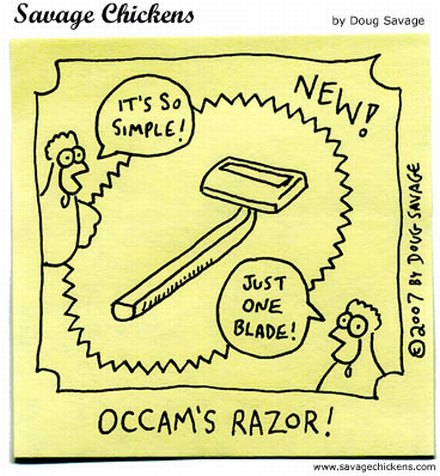
William of Ockham was an English monk, philosopher, theologian, who provided the scientific method with its key principle 700 years ago. ‘What can be done with fewer assumptions is done in vain with more,’ he said. That is, in explaining any phenomenon, we should use no more explanatory concepts than are absolutely necessary. Simplicity should never be despised.
Filed under: Experience
Have been lucky enough to be at the Spikes Festival of Creativity in Singapore. I’ve been involved in the forum sessions about creative talent and I presented on this:
Does your business value creative thinking? Of course it does, and you are almost certainly one of the 91% that believes it impacts directly on your company’s success. But are you one of only 26% of employees who strongly believe their working culture encourages creative thought? And where does this leave the future success of our businesses?
While we all know it’s important, one of the fundamental challenges organisations have is in developing a culture of innovation and inspiration. Jack Morton conducted research among employees across the globe which suggests the lack of understanding and consequent support for creative thinking could be hampering effective creative output and the ability of business to attract and retain talent.
This Forum discusses to what degree business across the globe is actively encouraging a culture and environment conducive to creative thinking and consider the success stories of those organisations that hold the nurturing and promotion of creative thinking close to their hearts.
I think that the case for change for our industry and for Enterprise is quite well-known. We know why we need to change (disruption) and we know we need to change (creativity and innovation be that digital, integration or whatever) the challenge is away going to be how.
In Andrew Ho’s session he spoke about a better marriage of strategy and creative and how the tools, perspective and approaches of each discipline works better in combination rather than pass (or parse) the parcel, and a question ‘will we ever run out of insight?’ really stimulated some reflection on the experience of presenting and facilitating my own session.
The questions around how we deliver great ideas, how we can innovate our process, how we can support people through this journey are tough to answer.
And here’s the journey to my refection. Jack’s creativity research puts forward 6 recommendations to help build more creative cultures: collaboration, play, freedom to fail, space to think, ego support and idea collection. The best kind of cultures have all of these aspects and I wanted to create an experience of what those six principles in action might look like. I love the haikugami tool
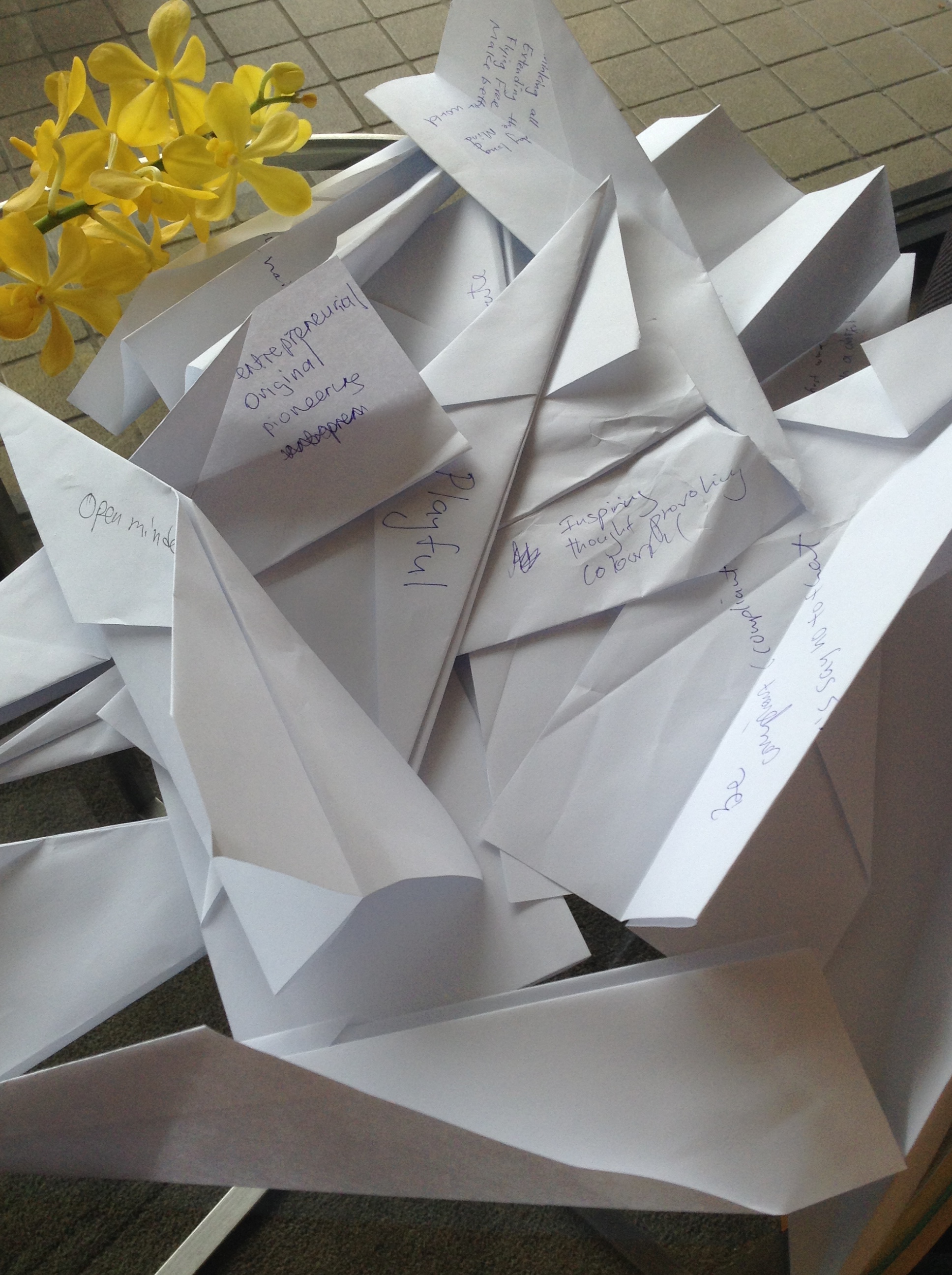
- as of freedom to fail I show a haiku written about my own work culture and attempt to demonstrate how to fold a paper plane- giving permission to people to make their version as imperfect and human as they like
- I tell them a story of collaboration, how I’ve sought out their participation by putting a sheet under each of their seats. I tell them about the goal- let’s make a hundred co-created wishes for creative culture fly. I want their thoughts and expression, but I want us to share and build on our thoughts
- I ask for playfulness a thought articulated in only 5 or 7 syllables, and line by line I ask them to stand up and let their thoughts fly across the room, and to jump and catch someone else s thought as it flies past
- ego support is about making the rewards of creativity real, fun and transparent, hopefully a room full of heads down and the energy of sharing reflects this notion
- the conference and the session itself is place to think, a context that is designed to open up different parts of the brain
- and I collect ideas and celebrate participation at the end. The photo above is just some of what I was given back from the audience
What did I learn? What thing did I see, what human truth did I observe, from delivering this experience to room full of punters wanting creativity, believing in creativity and eve working in creative fields?
It’s really award and uncomfortable to move from a passive state to one of participation.
It’s hard to know what’s the right thing to say when you’re asked to express your feelings.
And that’s the point- creativity feels chaotic and a bit weird if you’re not used to it. It’s the reason why there’s such a gap between the desire for these kinds of cultures and them grit it takes to deliver them. But the results! I have a hundred poems: inspiring, playful and brave that tell the story of what can happen in a room when you start to do things differently.
Peak insight? I think I’ve only just started to learn about the power and potential of human creativity.
Have been part of the Sydney Social Media week advisory board ( top geezers) on crafting how we can explore our theme of The Future of Now: Always On Always Connected.
For me creativity, and the future are inextricably linked. We just won’t make it unless we fully harness the limitless resource of our creative potential.
“As deep knowledge becomes a common asset, creativity will be the differentiating factor. Creativity is not a ‘nice-to-have’ attribute anymore, it’s a prerequisite for performance, development and growth—supporting us in our ability to innovate and drive change faster and better.” –Ben de Vries, Head of Brand Management, Ericsson
But we also won’t make unless we share, we collaborate and we inspire each other with our different perspectives. I believe that social technology and behaviors may well be one of the engines that will provide the forward momentum to allow creativity to really be embraced.
The team I’m part of have been doing some global research on this (on Slideshare here) talking more than 7,000 people in 11 markets and we found that creative thought was defined as: solutions to problems that are unexpected in any field of work, not just within traditionally creative fields such as writing, design or the performing arts.
Some of the key outtakes of the research (Collaboration, Play, Freedom to fail, Ego support, Space to think, and Idea Collection) are helping me build my approach to the panel sessions I’m involved in, and these are the notions I’m looking at:
- How can we achieve more through collaboration and co-creation?
- How can we facilitate meaningful conversations, practices for devoting time to creative thinking and mindful contemplation?
- How can we balance and preserve humanness — meaning the ability to listen, empathize, engage, focus and be present in the moment — despite the constant disruption that technology enables?
Would love to know if you find the research useful. Am looking forward to my own Eureka moment. All anecdotes welcome!
Filed under: Digital Strategy, Experience, Get Friendly, Great Stuff, passion, Zeitgeist
It’s Festival time in Sydney. While I’m super excited about taking my inner child by the hand and having a bit of a frolic on Sacrilege, the true sized inflatable bouncy castle Stonehenge in Hyde Park’s Festival Village, I was interested to read this in The Australian
FESTIVAL organizers measure success in terms of ticket sales and economic impact, but a new cultural metric may be tweets and pictures on social media. Last year, an enormous yellow duck was a hit of the Sydney Festival, where 1.7 million people could not have missed seeing it at Darling Harbour. Some 14,000 images were posted on Instagram using festival hashtags.
Mmmm. ‘Cultural Metric’. Good notion. Loads of tension in it:
- What is culture?
- How might culture be measured?
- How do we value it?
The NSW Government is investing more than $5 million to ensure the success of the 2014 Festival,
“Last year the Sydney Festival attracted more than 500,000 people with more than 120,000 tickets sold to paid events, including more than 33,000 people who attended events in Western Sydney. In 2012, it injected almost $57 million into our economy“
From that perspective an arts investment looks like a pretty good return to the taxpayers hereabouts. I wonder how they’d value those tweets.
Early last year MoMA curator of Architecture and Design Paola Antonelli led a discussion about Culture and Metrics, (which I’ve entirely re cut below):
- why bother?
- the reality is that cultures come and go over time. If we don’t know what’s valuable about a particular culture, we run the risk of losing it forever.
- not all art is concerned with culture, and not all culture is arts-based
- it’s the best way to create a future that human beings want to inhabit.
- MoMA has been one of the most important cathedrals of the imagination in my life since childhood, and envisioning it as a driver of R&D across society at large is extremely exciting.
- measurement
- Kate Levin, the Commissioner of The Department of Cultural Affairs for New York City: measuring culture, is mostly about objectives and outcomes. She used The Gates as an example of a valuable, measurable project funded by the Department for Cultural Affairs. Four million visitors to this 16-day installation created $254 million in revenue for NYC.
- Measuring culture will require us to think of new ways to measure and share the story of a project’s insights and impact.
- culture and value
- “For me, The Gates was never about whether the saffron curtains and plastic frames were art. Some people argued that it was a hideous monstrosity while others loved it. Instead, I just felt lucky to be part of the flow of conversation and people as we passed together through The Gates on a beautiful blue and gold day. I felt lucky to be a New Yorker. And that’s the point of culture. It gives us a sense of place while at the same time evoking a deeply personal experience of the universal. “
- “For me, The Gates was never about whether the saffron curtains and plastic frames were art. Some people argued that it was a hideous monstrosity while others loved it. Instead, I just felt lucky to be part of the flow of conversation and people as we passed together through The Gates on a beautiful blue and gold day. I felt lucky to be a New Yorker. And that’s the point of culture. It gives us a sense of place while at the same time evoking a deeply personal experience of the universal. “
As Rita observed, and who was at the MoMA talk, it brings to life one of Andy Warhol’s statements:
- “Being good in business is the most fascinating kind of art.”
Creating a deeply personal experience of an enterprise, creating a real and vibrant culture, feels like a bit of an art, and has the same kind of challenge:
Answer: With great difficulty.
Then again…. people are the only metric that really counts.
It’s hard. Really hard. Most companies can’t do it. The ones that can, make a fortune. Life is unfair.
Had an interesting question about the triangulation exercise– how long should it be?
In a true form I’d have to say: How long is the truth?
I’ve put the challenge forward with ‘manifest the outcome how you like…’
I do know that the blank page is the hardest to start with and the that structure is a fine tool to get the ball rolling….
So to help actually answer the question I can put forward some options on process and practice:
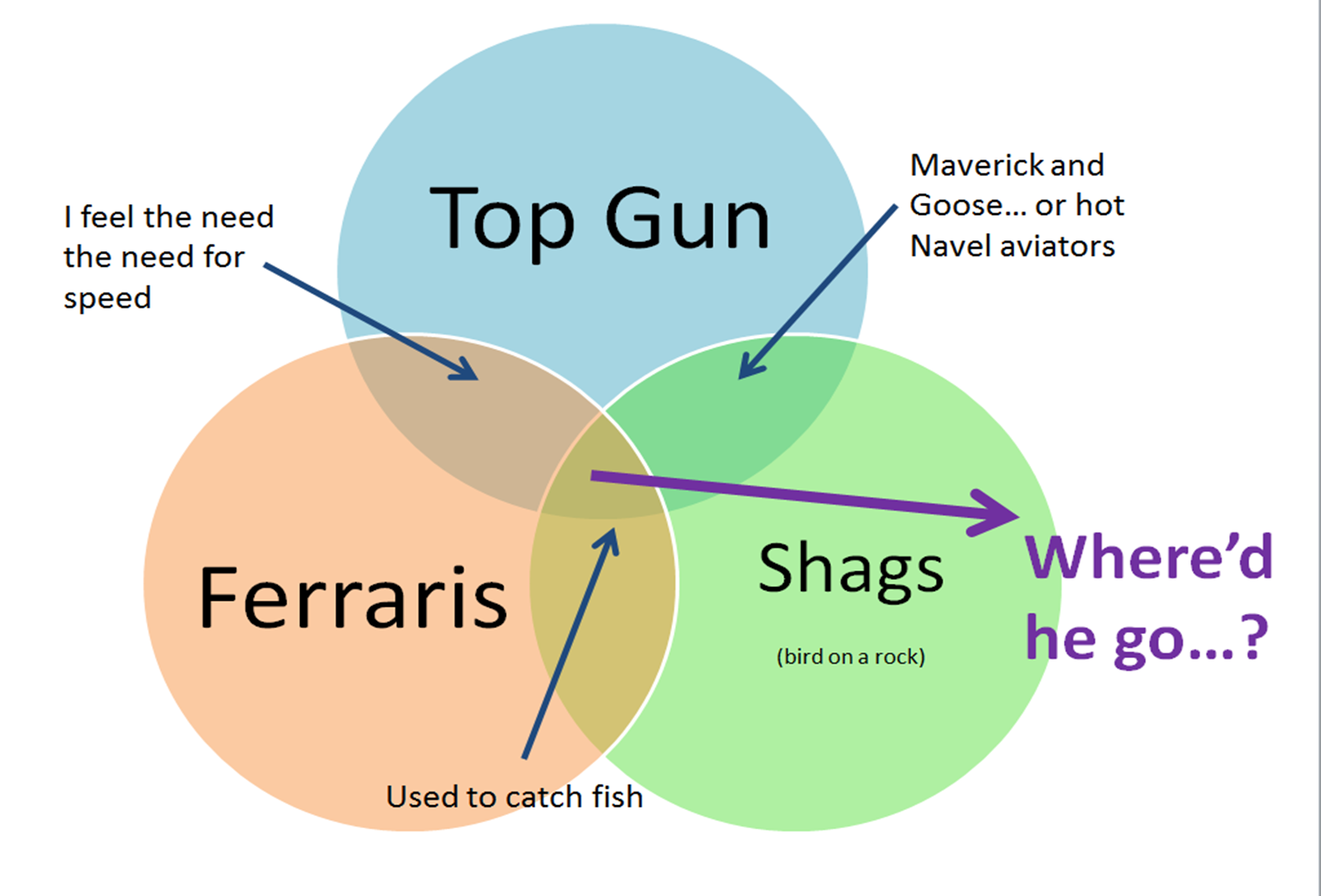
- I’m a big fan of visual thinking as a tool to explore intersection- to mine where commonality lies and to use it to find a singular point of truth
- the above was a bit of a joke for a mate (if you’re not a Top Gun fan- it means that the absolute truth between his three favourite things is that they FVROOM/ Doppler effect/or can disappear out of sight in a second)
- this was a while ago- today I’d say that the intersection could be brought to life by Archer
- this might mean that you could structure a deck like this:
- Demonstrate key learnings/ Identify themes: one chart each on the major themes of each of the articles
- Explore intersections: commonalities between each article
- The absolute truth- your key out take/ observation/ pov
- the above was a bit of a joke for a mate (if you’re not a Top Gun fan- it means that the absolute truth between his three favourite things is that they FVROOM/ Doppler effect/or can disappear out of sight in a second)
- When I started doing these exercises myself as blog posts I tried to keep them around 300 words
I’d love to see a podcast, an interpretive dance, a cartoon if that can take us on a journey of your thinking.
I’m as interested in what you see along the way as the destination of your journey.
Anyhoo- good luck, and thanks for asking.
Filed under: triangulation

In social science triangulation is defined as the mixing of data or methods so that diverse viewpoints or standpoints cast light about a topic.
You can use it to unpick bias in news reporting, and in design you’d use it to find ‘apparent truth’.
I like that term. Apparent truth. It feels like chocolate.
If you want a bit of substantiation here’s a paper full of fruit cake dense notions like ‘epistemological chasms’, ‘empiricist view points’ and ‘hypothetico- deductive methods’.
I’ve written about personal taxonomies, my Bowerbird ways, and general bricolage and pirate treasure pursuits for collecting stimulus. What I’m looking forward to exploring (with my team and you if you like) is how stimulus can used to grow perspective: both and the practice of developing perspective and the articulation of your thoughts.
Wassa?
So what’s going to happen here is a weekly challenge to triangulate three ‘cultural objects’.
How?
Randomly selected by me with the only selection criteria that I found it recently and I think there’s something interesting in the intersection.
Why?
- A group practice in order to generate a dialectic of learning
- Examine the contrasts between what seems self-evident, what seems to underlie the lay discourses, what appears to be generally true and what differences arise when comparing all these with ‘official’ interpretations.
- Build interpretation skills
- Move away from the fetishism of quantative research methods (ooo!)
- Deepen and widen your understanding of culture
So here’s the challenge
Read and form a perspective on what these three things say about ‘culture’:
- Society Tells Men That Friendship Is Girly. Men Respond by Not Having Friends.
- Tavi’s Super Heroine: An Interview With Lorde (and hello to you! Mr Gillespie)
Join in! Manifest it how you like- I’ll get back to you on the conversation this prompts at the end of the week and whatever objects are created…
Trying out the lovely Haiku deck….
These are my notes from a breakfast meeting with the lovely Megan Brownlow from PwC.
She spoke about their interesting report: PwC’s NextGen: A global generational study, Millennial Workers Want Greater Flexibility, Work/Life Balance, Global Opportunities
This comprehensive and global generational study conducted by PwC, the University of Southern California and the London Business School looks into the aspirations, work styles and values of “Millennial”/”Generation Y” employees (those born between 1980 and 1995).
The study, which included more than 40,000 responses from Millennials and non-Millennials alike, captures the various forces at play that are influencing the experience of Millennials. These include: workplace culture, communication and work styles, compensation and career structure, career development and opportunities and work/life balance.
I followed with these notes on how the existing behaviors and first language of millennial employees can be harnessed to meet both their needs and that of their employers.
Life just bites you on the ass sometimes.
I’ve been trying to write this for ages: since receiving the phone call a couple of days before Christmas; since working on releasing the shock and pain and disbelief at the news; since writing that first condolence card; since the first time I could get together with my oldest friends face-to-face to share the wtf-ness; since standing blacked up and bare faced nursing a whiskey and hearing his Dad desperate for some insight, any scrap, at the wake, as to why.
Since, since, since.
I lived my 20’s in a little run down terrace in what is now SOGO, but was then the cheapest place we could find. It was dark, falling to pieces and smelled in the damp, but filled with what became a chosen family, and for me, a true home.
None of us had money, but we were all working doing stuff we loved- art, music, architecture, design. We all were good at creating something out of nothing: the kitchen transformed from a peeling crack lab into a place where mermaids played; a bare wall turned into an ever moving pop gallery of avant cards; a back yard that hosted now famous ‘drinks by the pool’ parties where the blow up wader was just an excuse for ridiculous cocktails and costumes.
There was dancing. Cooking. A million late night conversations. A million bottles of red wine. One very scrappy cat. Sometimes the dishes didn’t get done. People peeled out as they met their partners, or their career took them off to different horizons and eventually the place got sold and we moved on.
That was sometime ago. It lasted about 7 years and felt like forever.
I thought everyone had grown up since then. Not me, obviously, but other people had mortgages and businesses and children and partners. Eventually I only saw some in back yards, with tired eyes and gentle, humorous self deprecating stories of the domestic hurdy-gurdy their lives had become. Tucked in, I thought. Safe, I believed. Happy, I dreamed.
I can’t remember the last time I told my friend I loved him. That he was important to me. That knowing him has made my life better every day since I met him. That his take on silly and serious and determined and disciplined was a benchmark for me. That I respected his work, was totally crazy about his choice of partner and his children, in awe of his practice and held deep affection for the past we shared and held a desire to co-create memories for the rest of our lives.
Now I won’t get that chance. He is gone. He took himself off the merry-go-round. I don’t know why. No one seems to. I will never understand. I’m trying to come to terms with that. I’m not looking for a silver lining. It’s just crap.
Sometimes we let go of the gold in our lives, the people that we love, to pan for shiny trash. Sometimes the people that we think we know are very very good at hiding their pain. Sometimes the things we don’t say haunt us.
Since. Sometimes. Say it.

