

Filed under: Experience
I’ve been quite challenged to draw an opinion about the question In 2050 what will we be nostalgic about?
It’s hard to be a futurist. As Matt Linderman at 37signals noted in expert opinions
the problem with experts: They’re experts on the past. No one is an expert on the future.
We can only draw on our experiences, see the signals of now and attempt to extrapolate….
I am very glad that when I was in my teens and 20s most people didn’t have a camera on them at all times and that there was no place to publish and share those photos.
I was young, I loved music, I managed bands and worked for record labels and I made very very bad decisions. I was not terribly kind to myself or others.
Thankfully I don’t remember to much of any of it. I have very few reminders. It’s a blessing.
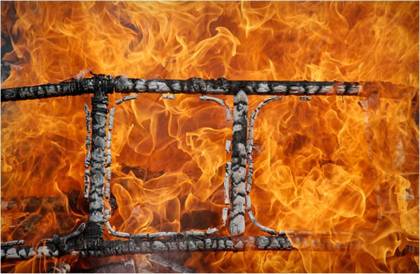
A song from that time, Deb Conway’s “She Prefers Fire” is introduced in concert with the comment ‘do you ever have the kind of days when you wish your house would burn down?
Everything that we have reminds us of what we have lost
Everything that we have echoes what we desire
Possessions, letters now just fuel for history
It’s important to not keep too much history fuel around. We all know that controlled burning can help prevent forest fires.
I can’t help but think that people going through that time of their life now and getting scars and breaking hearts and making infamous, funny prat falls can’t pick themselves up and burn the photos.
Or hide the blog posts, or box up the Facebook comments…
In 2050 being photographed and captured might well be ubiquitous.
Imagine all those bad hair days, terrible outfits, drunken behavior, spats with partners and nose picking moments being able to be tagged and shared and tracked back to you….
Or the happier moments that you’d prefer to keep in the past.
I think I’ll be nostalgic about being able to create my own ‘digital me’ and having some portion of control over it. And of having the luxury of being able to forget.
I wrote a piece a while back, ‘user pays’, that explored how artists can now use technology to directly pay for their work. This would seem to be a good thing and an example where you can put ‘good business’ into practice. You are the client when you consume art/content/stuff that someone else/an artist/musician has made. You expect to be paid for your work why shouldn’t artists?
It cause quite a bit of commentary:
How many artists have kids and a mortgage?? If it is an ‘artist’ – truly – then demographic stereotypes are shifty and illusory
Comment by lucy November 24, 2009
artists aren’t demographic stereotypes they’re people
I think the point might be: why shouldn’t artists have kids and mortgages? Why shouldn’t productive, creative, innovative people producing work that people want be able to have an income that provides a sustainable lifestyle?
Comment by katiechatfield November 25, 2009

Love micropayments – but nanopayments? LastFM pays $0.005 per play. As music lovers: where are our boundaries for this new kind of serfdom to music distributors?
I was on the phone with a dealer who’d reached out to me about some kind of business proposal. At the end of the conversation I thanked him and said that it was a nice change of pace to have someone reach out to me, because most dealers haven’t exactly been receptive to what we’re doing. And he said, “Are you kidding? I fucking hated what you were doing when I first heard about it. I thought it was horrible and bad for the art world. But the more I looked at what you were doing and how, I realized that it’s the future of the business.” That was awesome.
I want everyone to collect art. I want people to be embarrassed if they don’t have a collection that they’re proud of and can talk about. Because that means that their homes will be happier, and that artists are being supported on a grand scale which will make for a better society. And I believe it’s the first time in history that it’s possible.
I’m looking forward to seeing how projects like Fundbreak might seed a little change here. It’s a crowdfunding platform developed for artists, musicians, filmmakers, journalists, designers, entrepreneurs, inventors to raise funds and give the project creators the break they need to realise their goals and aspirations.
Again it will mean that artists will be asking you to fund art. Until then: maybe it’s time for a boundary check. How much does art contribute to your life? And how much are you willing to pay to keep it?
Filed under: Great Stuff
Love this piece created for Life In 2050 where emerging visual artists from around the world have imagined what the future holds in a contemporary art exhibition created for the 9th SCI-FI-LONDON Film Festival.
For this edition of the festival, we put LIFE IN 2050 under the spotlight. We have put together a series of themed LAB sessions in which to investigate the future of science, society and culture over the next 40 years.
Looking forward to the films created for the 48 hour film challenge and having a listen to the podcasts The Problem of SF film making with directors – Marc Caro (Delicatessen, The City of Lost Children), Cory McAbee (Stingray Sam), Gerald McMorrow (Franklyn), Stuart Hazeldine (Exam) and Richard Jobson (A Woman in Winter).
I’m intrigued by the thought starter for the festival:
In 2050 what will we be nostalgic about?
While one of my favourite pessimists immediately went to ‘seeing my feet’, I wonder if there’s something a little more to be explored in the question. Bruce Sterling talks about ‘future nostalgia’ which is a notion that describes one of the bittersweet experience of living in the 21st century. It’s the the ‘where’s my jet pack?’ view of what we thought our lives would be like now when we were children and how we feel about the dissonance between our imagination and the reality. You can see an outline of his thoughts about the cultural temperament of the coming decade here Where did the future go?
I was watching The Young Ones on ABC2 last night. The episode was Nasty and one of the key phrases in it is: Have we got a video? I got me thinking: mostly when I think about the passage of time, I think about the additions to my life. The additions of technology, the additions of freedom and independence, the additions of access to information. And I’m not sure that those additions will slow down in the next 40 years.
Nostalgia would seem to be perceiving subtraction. I can’t help but think I might have less stuff, but I’m happy to let that go. I can’t help but believe that I might not be able to jump on a plane whenever I like to where ever I want. There will be all the very human thoughts about the passage of time on the body…but what culturally will I miss?
Still thinking. Love to hear your thoughts.
You can see my attempt at an answer here: Fire and forgetting
Filed under: Experience
I love this. We don’t have the Tropicana Juice brand here in Australia and so all I can read is just the pure intention of creating an experience around the difference that starting your day with sunshine makes….
Nice one.
The contrast between that and this :
I can’t help but think that ‘designed to help’ is something that could be so much more powerful if were experienced, if it were actually delivered, rather than promised….
Filed under: Experience
My notes:
The theme: One of the fundamental challenges organisations have is in developing a culture of innovation and inspiration- and building the teams and behaviours that will share and collaborate in order to achieve this. Where do you start? And how do you feed the fire?
Chart 13:
Change management is a scary word
It’s difficult, lengthy and expensive
Is technological change environmental change?
Chart 14:
(from Mumbrella’s coverage of the APG Battle of the Big Thinking Battle of Big Thinking part 1: Creating unique brands; Changing the world; Perth vs Sydney
Speaker: Peter Williams – CEO, Deloitte Digital
Topic: The formula for changing the world
Quote: “Any match in the box can start a fire.”
His argument:
That rather than chasing influencers, brands need to understand that when a population is ready to go through a phase transition anything can be a trigger if you understand it.
Using a home experiment involving a bottle of beer from the freezer, he showed how once one molecule of beer freezes (or changes phase), the transition moves to the next.
He also challenged the audience to clap in unison, and with no other obvious organisation, the room fell into rhythm within about a second.
He argued that formula for changing the world is simply having a self-influencing population that is ready to make that phase transition, and a trigger.
Chart 15:
Phase transition is more than synchronicity
You need to design the ‘what’s next’- because you’ll lose momentum and the potential for shift if you stop supplying new triggers and adapting the rules.
This formula’s potential describes the building blocks of change
It’s a process- an organic model that lives. It’s not set and forget.
It’s about creating an environment and prompts for adapting the simple rules and the trigger
Because phase transition is a chain reaction- you need to keep feeding the loop
Chart 16:
“Any match in the box can start a fire.”
“The ability to combine knowledge and information in a new way is important. Just because you have knowledge and information does not mean you are a creative person. But it is also impossible to be a creative person without knowledge and information.”
http://knowledge.smu.edu.sg/article.cfm?articleid=1267
Chart 20
This exercise was inspired by Helen Hasan’s presentation at the NSW KM Forum – February Triple Threat.
At it’s heart:
- You ask participants to find someone they don’t know and negotiate a game of PSR
- (this can usually be seamlessly achieved
- Then you ask that ‘team’ to find another pair and negotiate another game (with no further explanation)
- What was a simple and explicitly understood task becomes a lot more complex….and chaotic
- …. what will happen next?
Helen Hasan is Associate Professor in Information Systems at University of Wollongong. She has been a member of the KM committee of Standards Australia since its beginning and is proud of her role in writing the Australian KM Standard released in 2005. Her research areas relate to an innovative aspect of KM that she now refers to as ‘Sensible Organisation’. She has published widely in academia and she has applied her research findings in numerous consulting projects.
Photo credits:
- http://www.flickr.com/photos/96224913@N00/4498976198/in/pool-connectnow
- http://www.flickr.com/photos/96224913@N00/4498976260/in/pool-connectnow
Chart 23
http://threexthree.wordpress.com/
Chart 24
Chart 26
The management team also used this structure to present quarterly back to the team
Chart 36
This diagram was created for my chapter of ‘Age of Conversation’
What it says is that you’re never more than 2 steps from disaster….
And with the tenure of marketers….why would they take that risk ?
Chart 39
Blog coverage: From State of Flux :
Can I explain what I do to my Mum? Katie Chatfield highlighted that we are working in a field that is quite complex and that has a new language. Don’t use jargon and discourse people don’t get, people need to understand your ideas to take them up. Use language as a tool to transfer your idea to the next person, when your trying to translate an idea to someone, it needs to be a story they can tell to other people.
Chart 43
Blog coverage: State of Flux:
Jack’s Show and Tell
Katie Chatfield introduced us to her company’s concept – Jack’s Show and Tell. This is cool! Company gets together to “build a titanium culture” recognises and awards work that changes the game. Gives people a chance to learn to tell great stories. Once a month, brought to you by the strategy, creative and design team. It is show and tell for grown ups and not a lot has changed since Year 3 at school. Simple stories, powerful experiences, transferring knowledge and a chance to look at how someone looks at the world
Chart 47
Ralph was inspired by the ancient (and, sadly, lost) art of haikugami, where the traditions of haiku are melded with those of origami to create beautiful and functional poetry.
In this entertaining and interactive presentation, Ralph shows what’s possible with 500 people, 5 minutes, and lots of pieces of paper!
See his fab presentation and some of the creations
Chart 49
Photo credits:
- http://www.flickr.com/photos/servantofchaos/4501397180/in/faves-51977763@N00/
- http://www.flickr.com/photos/servantofchaos/4500764251/in/pool-connectnow
- http://twitpic.com/1dqp70
- http://www.flickr.com/photos/96224913@N00/4498976552/in/pool-connectnow
Chart 50
Photo credits:
- http://www.flickr.com/photos/96224913@N00/4498977038/in/pool-connectnow
- http://www.flickr.com/photos/96224913@N00/4498976594/in/pool-connectnow
Filed under: Experience
I took some video notes a while back to prepare for ConnectNow a conference that is happening in Sydney next week.
I want to explore some of the programs that I’ve designed and facilitated that help build face to face storytelling cultures and share some of the outtakes.
And I’d love to give people some experience of what it’s like to participate in a grown up show and tell.
Where I’ve got to in designing the experience is something along these lines:
- knowledge exchange- exploring the potential of 200 units towards 40,000
- what can we learn from paper, scissors, rock
- simple rules + the notion of phase transition
- paper planes and storytelling
I’m hoping that people come prepared to play!

