

I’ve been thinking quite a bit about time recently: about how it seems to slow and speed; about how to utilise it as a medium; about memory and future memory; and about how people experience moments and experiences in different ways.
In my late teens I lived in Brazil and part of the acclimatization was getting used to a totally different time scale: Social time, one of the silent languages of a culture. What was once familiar and comfortable became unfamiliar and wrong. Notions of ‘tomorrowness’, the looseness of social meeting times and time appropriateness were all challenging to me. It did me the world of good to fundamentally understand that everyone’s internal metronome ticks differently.
It might have helped me greatly to have had access to the wonderful video above. In it Professor Philip Zimbardo conveys how our individual perspectives of time affect our work, health and well-being. Time influences who we are as a person, how we view relationships and how we act in the world.
What we have discovered in 30 years of research is that there are six main time zones that people live in: two focus on the past, two focus on the present, two focus on the future.
He goes on to segment them into:
– Past positive: focus is on the “good old days”, past successes, nostalgia, etc.
– Past negative: focus on regret, failure, all the things that went wrong
– Present hedonistic: living in the moment for pleasure and avoiding pain, seek novelty and sensation
– Present fatalism: life is governed by outside forces, “it doesn’t pay to plan”
– Future: focus is on learning to work rather than play
– Transcendental Future: life begins after the death of the mortal body
He notes that we all divide our experience into time categories; the difference is simply how. When you’re speaking with someone he or she might be thinking about past experiences, and ignoring the present. You might be doing a cost-benefit analysis and thinking about the future. Are you Past-Positive or a “Transcendental” Future-oriented person? Find out by taking his Time Perspective Inventory, then watch last year’s TED talk on the secret power of time.
Drawn by Andrew Park of Cognitive Media.
(I should note the listing of the 6 time zones is Jason Kottke’s.)
Fun fact: Zimbardo conducted the famous Stanford prison experiment in 1971
Filed under: Experience


ensconced in a blunt, jet-lagged haze I wound my way through Manhattan’s Central Park to the Museum of Modern Art on 53rd. , where I queued for five hours to sit opposite performance artist Marina Abramović. And stare at her.
In total, 1500 New Yorkers have queued – most of them from 4am – for this peculiar experience. Stacks of people cried, by the way. It was a big, beautiful experience to be in the room.
But this is the thing: in spite of all the mind-boggling options, Manhattanites mostly derive pleasure from brazenly not attending to them.
There are emu eggs out there to buy, but the best stories happen over a pastrami sandwich in a daggy diner. Or on the subway. Or on your stoop. In essence, there’s a focused appreciation for the minutiae of life, for the real moments that happen between people. Options are narrowed (mostly because you have to, to survive the onslaught of choice) and intimate neighbourhoods form (mostly because everyone lives on top of each other, not spread out over suburbs).This intimacy plays out in the press daily. Big news stories can be happening out there. But the most popular New York Times story of the day will be a 3000-word treatise on the dude who changes the light bulbs at Grand Central – what he eats for breakfast, how he spends weekends. In today’s paper there’s a feature story on two misfits who play ping-pong together. No exciting news angle. Just a quaint friendship dissected over 747 words.
But back to the queuing. Manhattanites are notorious for loving a queue. There are 18,696 eateries across the island, but locals queued for hours at the infamous Magnolia Bakery in West Village when it first opened. In the snow. For a damn cupcake. The queue for Shakespeare in the Park tickets each summer have become their own little subculture. People sit in a line all day, making friends and sharing their picnic with strangers, even though there are countless ways you can see live theatre in this city.
Sitting in the staring queue this week I realized this is how New York makes life better. Why do New Yorkers queue when there are countless other options to be experienced? Because queuing is about being a part of a something. Which is a reminder to us all that beyond the frenzy and excitement of life, mostly we all yearn for realness and intimacy and simplicity.
We all yearn to belong. I tend to find this comforting and exhilarating all at once.
Filed under: Experience
There’s a lot of talk about the kind of skill sets and team structures that are needed T Shaped and Sun Shaped People, and from BBH NY Voltron:
‘T-shaped people’ – awesome in (at least) one area, plus highly collaborative and at least literate in many other things. So blending both the right skills and the right attitude.
In addition to sketching out why these hybrid people are so important in creating new forms of creative product, I briefly touch upon the importance of the agency implementing the right kind of ’operating system’ (the processes, values and culture within a company) if the fancy new ’software’ is going to run smoothly. If the operating system is outdated, even the most impressive software is redundant. I show, in one slide, an overview of how BBH in New York is approaching the re-engineering of it’s OS.
I can’t help but think that the name ‘t-shaped’ is not something that people might identify themselves with. It doesn’t feel inspirational or aspiration or like a personal goal. And it being a hard angled space it, to me feels like a term that fights against the flow, organic and fluid nature of innovation.
And it’s just another made up word. It needs to be explained. With out the supporting deck it’s obscure and it can’t defend itself with out a chart. Must try harder.
I wonder if we can come up with a naming convention that works a little harder for us- but makes our audience fell like they know what the hell we’re talking about.
Something like this:
“What you need to learn is that being creative is not enough in this business. You have to become technical. Creative people are born creative – you’re lucky. Technical people however can never be creative. Its something they’ll never get. You can’t buy it, find it, study it – you’re born with it. Too many creative people don’t want to learn how to be technical, so what happens? they become dependent on technical people. Become technical, you can learn that. If you’re creative and technical, you’re unstoppable.”
– Robert Rodriguez (via feltron :: roomthily :: ronenreblogs)
I really like that notion of unstoppable. I like that there’s a personal goal there: what you need to do to be unstoppable. I like the promise that this idea might give a team.
I can’t believe that I’m going to argue against the following:
Mr. Ping: The secret ingredient is… nothing!
Po: Huh?
Mr. Ping: You heard me. Nothing! There is no secret ingredient.
Po: Wait, wait… it’s just plain old noodle soup? You don’t add some kind of special sauce or something?
Mr. Ping: Don’t have to. To make something special you just have to believe it’s special.
Because deep down we also know that this just isn’t true:
That’s where the big bucks are made my friend. Skadoosh.

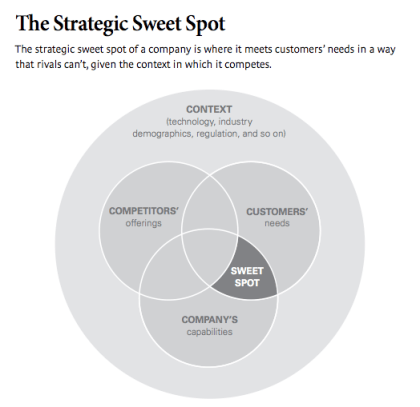
Image: from Can You Say What Your Strategy Is? Harvard Business Review
“Can you summarize your company’s strategy in 35 words or less? If so, would your colleagues put it the same way?”
I’ve never been able to find any strategist that has the same 35 words to describe what they do or what their output is. The role of advertising strategy is always a fun concept to bring to life with interpretive dance at a party. I find it quite a bit more effective than words. And it’s no more silly than the reality.
UPDATE: this afternoon I found a post Project in Progress: What is Strategy? where Bud Caddell is crowdsourcing the question “What is Strategy” and getting some great answers and nice charts from a bunch of people. He’s pout forward 6 definitions. In addition there are nearly 60 responses. All of them are differently articulated).
HBR maintain “Strategy creation is about doing the right things; implementation is about doing things right” but I’m not too sure about that split, if it’s true or if its possible. I personally like the tension between ‘doing the right things and doing things right’. It really all needs to work together if it’s going to get you to where you want to go.
Here’s what some smart people said about ‘doing the right things’ recently:
twitter.com/bud_caddell- strategy is the definition of purpose.
twitter.com/markpollard– in 4 words: an informed, measurable direction – (not always to succeed)
I’m thinking that this is the ‘where are we going and why’ bit of strategy.
I also like Andy Whitlock’s articulation of creative strategy, ‘ideas with purpose’, because it encompasses ‘doing things right’- and the ‘how are we going to get there and what do we do’ piece of the journey:
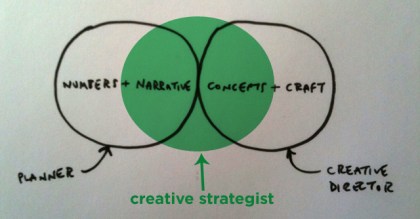
My thinking on What’s this Creative Strategy thing all about? can be found in my post How do you describe what you do?
I can’t help but think that there’s often a disconnect between the choice of the destination, the itinerary and the experience of the journey. Creative Strategy identifies and describes how all those elements might work together. So kind of like Passepartout’s Travel Bureau to Awesomeness.
Thanks also to Kate Kendall and her #strategyweek for a bunch of the thought starters.
Recently Wired had Clay Shirky and Daniel Pink sit down for a conversation about motivation and media, social networking, sitcoms, and why the hell people spend their free time editing Wikipedia.
I’m a huge Shirky fan, but of particular interest to me was the Wired contributing editor and the author of Drive: The Surprising Truth About What Motivates Us. I love Pink’s thinking about the power of the three drives that can be utilised in the workplace : Autonomy, Mastery and Purpose, and I’m also pretty sweet on the RSA Animate series that has brought it to life in the presentation above
Here’s a bit of the interview transcript:
Pink: We have a biological drive. We eat when we’re hungry, drink when we’re thirsty, have sex to satisfy our carnal urges. We also have a second drive—we respond to rewards and punishments in our environment. But what we’ve forgotten—and what the science shows—is that we also have a third drive. We do things because they’re interesting, because they’re engaging, because they’re the right things to do, because they contribute to the world. The problem is that, especially in our organizations, we stop at that second drive. We think the only reason people do productive things is to snag a carrot or avoid a stick. But that’s just not true. Our third drive—our intrinsic motivation—can be even more powerful.
Pink: Both of us cite research from University of Rochester psychologist Edward Deci showing that if you give people a contingent reward—as in “if you do this, then you’ll get that”—for something they find interesting, they can become less interested in the task. When Deci took people who enjoyed solving complicated puzzles for fun and began paying them if they did the puzzles, they no longer wanted to play with those puzzles during their free time. And the science is overwhelming that for creative, conceptual tasks, those if-then rewards rarely work and often do harm.
Shirky: You talk about the laws of behavioral physics working differently in practice from what we believe in theory.
Pink: Yes, often these outside motivators can give us less of what we want and more of what we don’t want. Think about that study of Israeli day care centers, which we both write about. When day care centers fined parents for being late to pick up their kids, the result was that more parents ended up coming late. People no longer felt a social obligation to behave well.
I think that the fundamental premise that organisations that link purpose and profit motives are more innovative and have greater long-term financial sustainability is a powerful one. Everybody needs to win when we’re designing what business goals looks like. Customers, employees and shareholders. And not a token ribbon for participation either. Everyone needs to feel like a winner, feel like they’ve backed one and are part of a winning team.
Time for some Seth Godin and his Simple five step plan for just about everyone and everything:
1. Go, make something happen.
2. Do work you’re proud of.
3. Treat people with respect.
4. Make big promises and keep them.
5. Ship it out the door.
When in doubt, see #1
Filed under: Get Friendly

Forgot to say: this should be sung to the tune of Mull of Kintyre, late at night, with the addition of toxic amounts of caffeine, sugar, trans fats and too little sleep. Loudly. Or it becomes the tune in your head for days. Or both.
Red Mullet with Thyme
A dish that I’m thinking
Might kill the desire
For chips and hard drinking
Red Mullet with Thyme
Crap have I munched on and bottles I’ve drunk
Late night fast food don’t feed brains that have shrunk
Pitching’s plate’s full of nutritional crime
As I dream of green beans with Red Mullet with Thyme
Filed under: Experience
Presented at the Retail Financial Lending Summit 14th May 2010
If everyone from supermarkets and search engines to phone companies and airlines offer banking services where does this leave banks?
- And what happens when we use less cash, if by 2018 less than half of all transactions will be paid that way?
- And this virtual currency thing- how does that change what a bank is- and what people might want from a bank?
- Australia’s big banks are failing to make the grade according to consumer ratings released by Mozo.com.au
- Yet innovation is coming from direct banks and credit unions.
- And players who have good retail understanding are encroaching on traditional territory.
Might focusing on your brand experience and your customers change the game?
- Zappos is powered by service
- The power of Repeat Customers & Word of Mouth
- Explicit core values that get translated into brand behaviors
- Recruitment is indoctrination into company culture- everyone gets a $2000 offer to leave. 1% take it.
- It sold for $1 billion
Why can’t complex organizations provide great brand experiences?
- Mike’s Hard Lemonade-Barry Schwartz call to defeat process over practical wisdom
- Best Buy’s Geek Squad turns the ordinary business of technology troubleshooting into a customer adventure
- Zip Car innovating the experience of car rental
What’s going on in the branch?
- That customers want to be served face-to-face. If banks are to move beyond acquisition – to retention and to wallet penetration – then they must reinvent the branch from a glorified transaction centre to a product sales and advisory service center.
- Up to 90% of customer relationships are formed – and lost – in branches.
- Banks will not succeed at maintaining and growing customer relationships unless they provide customers with quality sales and service in branches.
- The conundrum of customer centricity, however, is that most customers don’t see banks as providers of advice-based services. This is not surprising given the extent to which branches have been deskilled over the last decade. The perception map shows that banks deliver only on broad knowledge and bright smiles—not what is needed to deepen client relationships.
The reinvented bank
- There has been a lot of excitement recently around the “Gap-ification” of branches—making them look more like retail stores than like stodgy old branches. But a mere face-lift is not enough.
- The Umpqua Bank retail design strategy translated the culture of a small community bank into an integrated brand experience and helped Umpqua grow from $120M to $8B.
- “It’s all contrary to what you might find in a bank,” says Lani Hayward, executive vice-president for creative strategies at Umpqua. But deposits at the branches Umpqua has converted are up an average of 30% since the changeovers, and the average number of products sold to each household is double that at the traditional branches”
- ING Direct is an online bank, but management realized the bank needed some physical presence to reassure the public the bank was more than a billboard. So execs devised the ING café, which look like Starbucks; people can go have coffee, smoothies, use a free-wireless connection, and learn about ING if they choose. But the eight “branches” have no transactional ability whatsoever; people still must sign up and do transactions online. For example, the ING café in Chicago had “Bike to Work Week Specials” in mid-June. “Every bicyclist that rides to the ING DIRECT Café during Bike to Work Week will be treated to a free bike valet, beverage and tune up. While you’re there, ask a Café Associate about other simple ways to save your money.”
- WaMu rolled out its retail branch design with great fanfare in 2000, and used the new model as they moved into new markets such as Las Vegas and Atlanta. Later they remodeled existing branches to incorporate the new retail features. Before WaMu collapsed last September, they had spent roughly $1 billion on a branch-building binge.
- Some bankers are thinking along these lines, and they repeat a similar mantra: innovative branch design and technology must encourage engagement with employees, not to discourage human interaction. Executives at Barclays, Umpqua, Key Bank and TD Bank, to name a few, view the branch as the channel of choice to build customer relationships. “The biggest thing in banking is the relationship, and you can’t do that online,” says Lani Hayward, evp of creative strategies at Umpqua Bank. “You can make mistake after mistake after mistake, and the customer will stay with you if they believe you’ll take care of them.”
Aligning brand promises into brand behavior
- You can understand where you’re NOT delivering
- In order to work out where you can make improvements
- But you need to inspire your team’s BEHAVIOUR
- And understand that your team is made of different types of people
- Who have different engagement needs
- Warmth and Wisdom
- There are no miracles
Research compiled for this presentation can be found here: http://delicious.com/katiechatfield/banking
Filed under: Experience
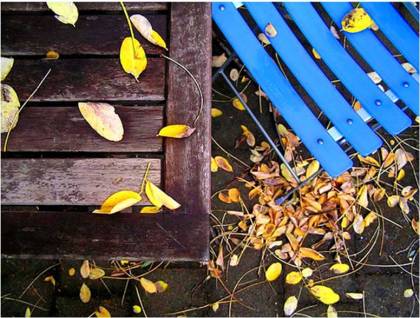
It’s Autumn and the golden light seems to have tinted everyone and everything. I still seem to be navel gazing around nostalgia – perhaps the weather is my excuse.
I’m intrigued by a string of sepia-toned, passage of time-y, wasn’t it better and isn’t life fleeting confections being used to hock pretty much any product or service you care to think about. I’m sure you can pull a few to mind but have a look at John Lewis’ Never Knowingly Undersold and Sunbeam.
The Sunbeam TVC had this comment on Youtube:
SugarBeeDee Not another freaking whimsical, faux happy moment ad!
The summery pastely hipster thing has been whored to death and rather than make me feel all shinyfuckinghappy, I want to bash my head on a wall or kick the TV.
The song is so tacky too.
Argh, take it off and make something that doesn’t rot out teeth from our skulls, please!
If you do a shallow dive into the meaning of nostalgia you get this:
The term nostalgia describes a yearning for the past, often in idealized form.
Idealization is dangerous it seems powerful but really what it delivers is propoganda. You can’t own it. You can’t prove it and you can’t deliver it.
I can’t help but think that a lot of this ‘past that never happened’ stuff seems to create an emotional connection, with Mumbrella and others calling the John Lewis ad The Most Powerful of the Year. I wonder how useful this construct is in creating an imperative to take action. Is the argument of this notion not more than : We’ve been there in the past? Is there a strong enough ladder to the plea: You should be with us in the future?
Pretty bland stuff.
In “The Wheel” the writers of Mad Men use that emotional ladder to create a need for a new product and tie it to a universal human need :
Don Draper: Nostalgia – it’s delicate, but potent. Teddy told me that in Greek, “nostalgia” literally means “the pain from an old wound.” It’s a twinge in your heart far more powerful than memory alone. This device isn’t a spaceship, it’s a time machine. It goes backwards, and forwards… it takes us to a place where we ache to go again. It’s not called the wheel, it’s called the carousel. It let’s us travel the way a child travels – around and around, and back home again, to a place where we know are loved.
Bud Caddell’s presentation There’s More Time Than The Present examins how we experience ‘time’ to help craft more effective opportunities for calls to action. I’m liking the tension in between nostalgia and ‘time machine’. And what I’m thinking about is don’t forget to find that pain. It’s where the moment of truth lies. These moments are ‘around and around’, in the past and the future and they bind us together. So instead of using a mirror to reflect something that never happened it might be more useful to become that centre of gravity- a carousel that will give you an experience, show you the future and the past and deliver you home.
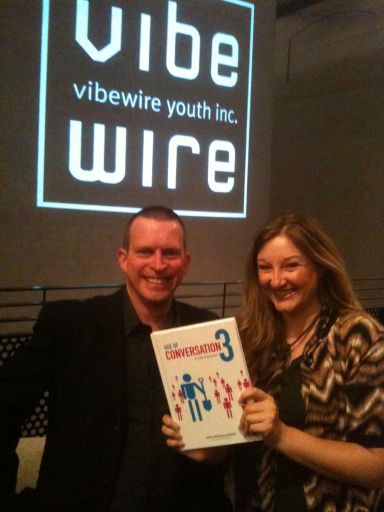
The proofs of the new Age of Conversation 3 have arrived in Australia with Gavin bringing one hot of the presses. He was kind enough share the hardcover version at Fastbreak on Friday.
Jye spoke about Innovation: Changing People’s Stories. He made me cry. It was awesome. (He also took the photo above.)
Just waiting on an announcement of when we all can order…should be soon.
And I believe that there were whispers of a launch party in Sydney….will let you know
I’ll be sharing company in the book with a bunch of smart thinkerers:
Filed under: Experience

I’ve been quite challenged to draw an opinion about the question In 2050 what will we be nostalgic about?
It’s hard to be a futurist. As Matt Linderman at 37signals noted in expert opinions
the problem with experts: They’re experts on the past. No one is an expert on the future.
We can only draw on our experiences, see the signals of now and attempt to extrapolate….
I am very glad that when I was in my teens and 20s most people didn’t have a camera on them at all times and that there was no place to publish and share those photos.
I was young, I loved music, I managed bands and worked for record labels and I made very very bad decisions. I was not terribly kind to myself or others.
Thankfully I don’t remember to much of any of it. I have very few reminders. It’s a blessing.
A song from that time, Deb Conway’s “She Prefers Fire” is introduced in concert with the comment ‘do you ever have the kind of days when you wish your house would burn down?
Everything that we have reminds us of what we have lost
Everything that we have echoes what we desire
Possessions, letters now just fuel for history
It’s important to not keep too much history fuel around. We all know that controlled burning can help prevent forest fires.
I can’t help but think that people going through that time of their life now and getting scars and breaking hearts and making infamous, funny prat falls can’t pick themselves up and burn the photos.
Or hide the blog posts, or box up the Facebook comments…
In 2050 being photographed and captured might well be ubiquitous.
Imagine all those bad hair days, terrible outfits, drunken behavior, spats with partners and nose picking moments being able to be tagged and shared and tracked back to you….
Or the happier moments that you’d prefer to keep in the past.
I think I’ll be nostalgic about being able to create my own ‘digital me’ and having some portion of control over it. And of having the luxury of being able to forget.
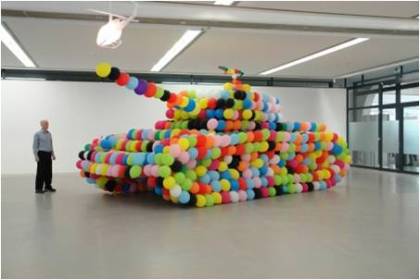
I wrote a piece a while back, ‘user pays’, that explored how artists can now use technology to directly pay for their work. This would seem to be a good thing and an example where you can put ‘good business’ into practice. You are the client when you consume art/content/stuff that someone else/an artist/musician has made. You expect to be paid for your work why shouldn’t artists?
It cause quite a bit of commentary:
How many artists have kids and a mortgage?? If it is an ‘artist’ – truly – then demographic stereotypes are shifty and illusory
Comment by lucy November 24, 2009
artists aren’t demographic stereotypes they’re people
I think the point might be: why shouldn’t artists have kids and mortgages? Why shouldn’t productive, creative, innovative people producing work that people want be able to have an income that provides a sustainable lifestyle?
Comment by katiechatfield November 25, 2009

Love micropayments – but nanopayments? LastFM pays $0.005 per play. As music lovers: where are our boundaries for this new kind of serfdom to music distributors?
I was on the phone with a dealer who’d reached out to me about some kind of business proposal. At the end of the conversation I thanked him and said that it was a nice change of pace to have someone reach out to me, because most dealers haven’t exactly been receptive to what we’re doing. And he said, “Are you kidding? I fucking hated what you were doing when I first heard about it. I thought it was horrible and bad for the art world. But the more I looked at what you were doing and how, I realized that it’s the future of the business.” That was awesome.
I want everyone to collect art. I want people to be embarrassed if they don’t have a collection that they’re proud of and can talk about. Because that means that their homes will be happier, and that artists are being supported on a grand scale which will make for a better society. And I believe it’s the first time in history that it’s possible.
I’m looking forward to seeing how projects like Fundbreak might seed a little change here. It’s a crowdfunding platform developed for artists, musicians, filmmakers, journalists, designers, entrepreneurs, inventors to raise funds and give the project creators the break they need to realise their goals and aspirations.
Again it will mean that artists will be asking you to fund art. Until then: maybe it’s time for a boundary check. How much does art contribute to your life? And how much are you willing to pay to keep it?
Filed under: Great Stuff
Love this piece created for Life In 2050 where emerging visual artists from around the world have imagined what the future holds in a contemporary art exhibition created for the 9th SCI-FI-LONDON Film Festival.
For this edition of the festival, we put LIFE IN 2050 under the spotlight. We have put together a series of themed LAB sessions in which to investigate the future of science, society and culture over the next 40 years.
Looking forward to the films created for the 48 hour film challenge and having a listen to the podcasts The Problem of SF film making with directors – Marc Caro (Delicatessen, The City of Lost Children), Cory McAbee (Stingray Sam), Gerald McMorrow (Franklyn), Stuart Hazeldine (Exam) and Richard Jobson (A Woman in Winter).
I’m intrigued by the thought starter for the festival:
In 2050 what will we be nostalgic about?
While one of my favourite pessimists immediately went to ‘seeing my feet’, I wonder if there’s something a little more to be explored in the question. Bruce Sterling talks about ‘future nostalgia’ which is a notion that describes one of the bittersweet experience of living in the 21st century. It’s the the ‘where’s my jet pack?’ view of what we thought our lives would be like now when we were children and how we feel about the dissonance between our imagination and the reality. You can see an outline of his thoughts about the cultural temperament of the coming decade here Where did the future go?
I was watching The Young Ones on ABC2 last night. The episode was Nasty and one of the key phrases in it is: Have we got a video? I got me thinking: mostly when I think about the passage of time, I think about the additions to my life. The additions of technology, the additions of freedom and independence, the additions of access to information. And I’m not sure that those additions will slow down in the next 40 years.
Nostalgia would seem to be perceiving subtraction. I can’t help but think I might have less stuff, but I’m happy to let that go. I can’t help but believe that I might not be able to jump on a plane whenever I like to where ever I want. There will be all the very human thoughts about the passage of time on the body…but what culturally will I miss?
Still thinking. Love to hear your thoughts.
You can see my attempt at an answer here: Fire and forgetting
Filed under: Experience
I love this. We don’t have the Tropicana Juice brand here in Australia and so all I can read is just the pure intention of creating an experience around the difference that starting your day with sunshine makes….
Nice one.
The contrast between that and this :
I can’t help but think that ‘designed to help’ is something that could be so much more powerful if were experienced, if it were actually delivered, rather than promised….
Filed under: Experience
My notes:
The theme: One of the fundamental challenges organisations have is in developing a culture of innovation and inspiration- and building the teams and behaviours that will share and collaborate in order to achieve this. Where do you start? And how do you feed the fire?
Chart 13:
Change management is a scary word
It’s difficult, lengthy and expensive
Is technological change environmental change?
Chart 14:
(from Mumbrella’s coverage of the APG Battle of the Big Thinking Battle of Big Thinking part 1: Creating unique brands; Changing the world; Perth vs Sydney
Speaker: Peter Williams – CEO, Deloitte Digital
Topic: The formula for changing the world
Quote: “Any match in the box can start a fire.”
His argument:
That rather than chasing influencers, brands need to understand that when a population is ready to go through a phase transition anything can be a trigger if you understand it.
Using a home experiment involving a bottle of beer from the freezer, he showed how once one molecule of beer freezes (or changes phase), the transition moves to the next.
He also challenged the audience to clap in unison, and with no other obvious organisation, the room fell into rhythm within about a second.
He argued that formula for changing the world is simply having a self-influencing population that is ready to make that phase transition, and a trigger.
Chart 15:
Phase transition is more than synchronicity
You need to design the ‘what’s next’- because you’ll lose momentum and the potential for shift if you stop supplying new triggers and adapting the rules.
This formula’s potential describes the building blocks of change
It’s a process- an organic model that lives. It’s not set and forget.
It’s about creating an environment and prompts for adapting the simple rules and the trigger
Because phase transition is a chain reaction- you need to keep feeding the loop
Chart 16:
“Any match in the box can start a fire.”
“The ability to combine knowledge and information in a new way is important. Just because you have knowledge and information does not mean you are a creative person. But it is also impossible to be a creative person without knowledge and information.”
http://knowledge.smu.edu.sg/article.cfm?articleid=1267
Chart 20
This exercise was inspired by Helen Hasan’s presentation at the NSW KM Forum – February Triple Threat.
At it’s heart:
- You ask participants to find someone they don’t know and negotiate a game of PSR
- (this can usually be seamlessly achieved
- Then you ask that ‘team’ to find another pair and negotiate another game (with no further explanation)
- What was a simple and explicitly understood task becomes a lot more complex….and chaotic
- …. what will happen next?
Helen Hasan is Associate Professor in Information Systems at University of Wollongong. She has been a member of the KM committee of Standards Australia since its beginning and is proud of her role in writing the Australian KM Standard released in 2005. Her research areas relate to an innovative aspect of KM that she now refers to as ‘Sensible Organisation’. She has published widely in academia and she has applied her research findings in numerous consulting projects.
Photo credits:
- http://www.flickr.com/photos/96224913@N00/4498976198/in/pool-connectnow
- http://www.flickr.com/photos/96224913@N00/4498976260/in/pool-connectnow
Chart 23
http://threexthree.wordpress.com/
Chart 24
Chart 26
The management team also used this structure to present quarterly back to the team
Chart 36
This diagram was created for my chapter of ‘Age of Conversation’
What it says is that you’re never more than 2 steps from disaster….
And with the tenure of marketers….why would they take that risk ?
Chart 39
Blog coverage: From State of Flux :
Can I explain what I do to my Mum? Katie Chatfield highlighted that we are working in a field that is quite complex and that has a new language. Don’t use jargon and discourse people don’t get, people need to understand your ideas to take them up. Use language as a tool to transfer your idea to the next person, when your trying to translate an idea to someone, it needs to be a story they can tell to other people.
Chart 43
Blog coverage: State of Flux:
Jack’s Show and Tell
Katie Chatfield introduced us to her company’s concept – Jack’s Show and Tell. This is cool! Company gets together to “build a titanium culture” recognises and awards work that changes the game. Gives people a chance to learn to tell great stories. Once a month, brought to you by the strategy, creative and design team. It is show and tell for grown ups and not a lot has changed since Year 3 at school. Simple stories, powerful experiences, transferring knowledge and a chance to look at how someone looks at the world
Chart 47
Ralph was inspired by the ancient (and, sadly, lost) art of haikugami, where the traditions of haiku are melded with those of origami to create beautiful and functional poetry.
In this entertaining and interactive presentation, Ralph shows what’s possible with 500 people, 5 minutes, and lots of pieces of paper!
See his fab presentation and some of the creations
Chart 49
Photo credits:
- http://www.flickr.com/photos/servantofchaos/4501397180/in/faves-51977763@N00/
- http://www.flickr.com/photos/servantofchaos/4500764251/in/pool-connectnow
- http://twitpic.com/1dqp70
- http://www.flickr.com/photos/96224913@N00/4498976552/in/pool-connectnow
Chart 50
Photo credits:
- http://www.flickr.com/photos/96224913@N00/4498977038/in/pool-connectnow
- http://www.flickr.com/photos/96224913@N00/4498976594/in/pool-connectnow
Filed under: Experience
I took some video notes a while back to prepare for ConnectNow a conference that is happening in Sydney next week.
I want to explore some of the programs that I’ve designed and facilitated that help build face to face storytelling cultures and share some of the outtakes.
And I’d love to give people some experience of what it’s like to participate in a grown up show and tell.
Where I’ve got to in designing the experience is something along these lines:
- knowledge exchange- exploring the potential of 200 units towards 40,000
- what can we learn from paper, scissors, rock
- simple rules + the notion of phase transition
- paper planes and storytelling
I’m hoping that people come prepared to play!
Filed under: The Rules

Elvis at home with Barbara Hearn, a high-school girlfriend
From this vanity fair article on photographer Al Wertheimer, who shadowed Elvis in 1956, the year Elvis-mania hit. Wertheimer on what made Elvis different:
“He dared to move….Singers just did not move onstage in those days. You stood there like Frank Sinatra or Perry Como, and you sang from the waist up. Elvis broke all the rules. He moved his hips. He charged the microphone. He was introducing something that was just not acceptable to grown-ups and the more conservative groups. I have the William Morris guys getting him into a corner, and they’re giving him advice: ‘Now, Elvis, look, you get up there, you sing your song, but don’t move too much.’ Elvis dutifully listened. He wouldn’t argue with them. But once he got onstage he did what he wanted. And it created such a sensation. Not because you could hear him sing—there was too much screaming going on. The kids loved it. And the kids were the ones who bought the 45s.
Via Matt Linderman at 37signals, who says,
Funny to imagine those experts sitting Elvis down and telling him that he’s got to stop moving onstage. Shows you the problem with experts: They’re experts on the past. No one is an expert on the future.
Filed under: Digital Strategy
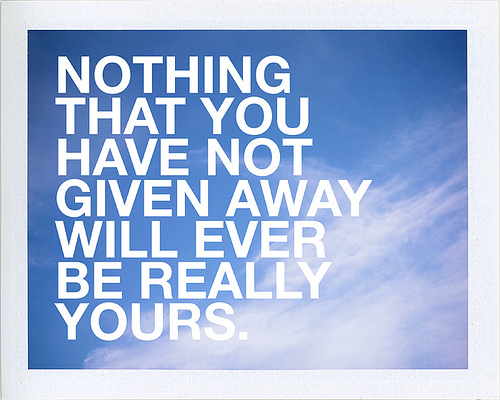
The baker’s dozen of posts that you all really liked in the last year:
- Social media measurement notes
- Where did the future go?
- everyday acts of innovation
- curating resonant agents
- The future belongs to the few of us still willing to get our hands dirty
- more = betterer
- Tell me and I’ll forget; show me and I may remember; involve me and I’ll understand.
- How frickin’ awesome are cardboard boxes…
- Plan, Flow and Discover
- foundations of taxonomy
- how do you describe what you do?
- people and stories
- user pays
My favourite, one of the most important things I’ve ever done and one of the hardest things I’ve ever had to share:
And so what’s the outtake from this year? This blogging thing, this tweeting thing – it’s not about technology.
If you’re not using it to fundamentally try to understand all that what being human is like you’re missing the point.
You can make the invisible visible.
You can preserve and protect the fragile and ephemeral from disappearing.
You can inspire people to do things.
You can create places where people can listen and share; laugh, collaborate and hope; and support and grieve.
My lessons in this fourth year of Get Shouty have been about the real costs of committing to real communities.
And the real value of participating in them.
Thanks everyone.
So many thinkering Sydney events this week. It’s always great to get away from behind your desk and fill up the inspiration tanks a little.
While I usually broadcast my experiences of these things while I’m out and about, I’m starting to become very much aligned with Tim Burrows thinking outlined in Why I’m over live blogging (and I’m not sure about live tweeting either) as I believe it reduces your ability to absorb what’s actually going on in the room, or as Tim puts it:
Often, the temptation to be first, or even instantaneous, is at the expense of proper thought…often, I don’t think the process does anyone much justice.
I attended some Adtech keynotes and Breakfast sessions as well as a new event put on by the APG this week. My focus was not only to get information and inspiration, I was trying to see the value of ‘being in the room’. Seeing people do their stuff and chatting in between sessions is a great way to get a sense check of the barometer of the industry and the strength of your personal network.
With so much digital content and opinion being generated swirling around the live moment and the speaker I think that, if you can’t be present yourself, you need to have a rock in the audience. Someone you know, someone you trust, someone who can make you think and put their own ego aside to contextualize what’s going on.
So I’ll let some of my rocks, people who I really respect and admire, to give their opinion and outtakes:
From Ad:tech- which focuses on all aspects of digital marketing and advertising
Mark Pollard’s experience
- Social media campaign vs commitment: short-term or long-term? Ad:tech Sydney
- Reputation management in the digital space: challenges and opportunities – Ad:tech Sydney
- What does ‘return’ mean in today’s digital landscape? Ad:tech Sydney
- How and why CEOs are driving digital media in their businesses – Ad:tech Sydney
- Going beta: What ‘being brave’ can do for your advertising message and medium – Ad:tech Sydney
- Channel Planning: How to weave advertising messages through different platforms – Ad:tech Sydney
- How relevant is the concept of a ‘big idea’ in today’s interactive landscape? Ad:tech Sydney
From the Battle of the Big Thinking- put together by the Australian Planning Group, fifteen people speak for fifteen minutes each in five topics. You can see the whole list here.
- Tim Burrow’s outline of the first section: Big Business Ideas Battle of Big Thinking part 1: Creating unique brands; Changing the world; Perth vs Sydney
- Tim Noonan’s presentation Voices, Relationships, Trust and Time Travel – Notes and Resources
- Richard Sauerman (who won the match) has a YouTube channel where you can see a number of his presentations
Filed under: Experience
I love the brevity and the passion of video case studies. I love their structure: an insight, the experience and the results.
What I think is food for thought for all of us is the notion that the journey of our work is a story in itself.
And I love that ‘the idea is everything’- and yet almost all of the tippytop winning entries all have ‘live’ as a large component of the work.
Have a stroll through the video case studies below, be inspired, and have a think about how we can all better tell the stories of what we do and what can be done:
- Cannes Lions 2009THE HOUSE OF IMAGINATION (Silver)
- WHOPPER SACRIFICE 2009
- (Case Study Tooheys Extra Dry 5 Seeds –
- (Case Study) ING DIRECT – Professional Fan
- Nike Plus – Titanium Lion – Cannes 2007
- Earth Hour – Titanium Lion – Cannes 2007·
- Titanium Grand Prix 2008 UniQlo Uniqlock
- Tap Project – Titanium Lion – Cannes 2007
- Lynx Jet wins at the Cannes Lions Festival 2006
- Cannes Lions 2009 – Titanium & Integrated Lions Grand Prix – Obama for America
- Cannes Lions 2009: THE GREAT SCHLEP (Titanium Lion)
- Cannes Lions 2009 OASIS DIG OUT YOUR SOUL
- Cannes Lions 2009TRILLION DOLLAR CAMPAIGN (Gold)
Filed under: Experience
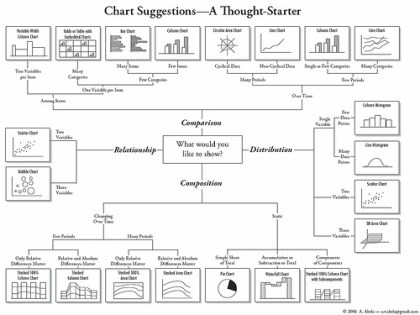
How to Pick the right Chart by Amit Agarwal on Flickr found on Swiss Miss
Useful, perhaps, for presenting information- but how are you presenting insight? How are you embedding knowledge? How are you facilitating the transference of ownership of your ideas to your audience?
Now compare that ‘thought starter’ to this:
I love this video of Oliver Jeffers’ process: ‘The pictures define the words and the words define the pictures’.
I wonder what would happen to our ability to educate and motivate one of our most important audiences, our clients, if we stopped thinking about ‘charts’ and ‘decks’ and even ‘presentations’.
What if we thought: ‘story books’?
The purpose of story books are multiple: curated moments between parent and child; almost unconscious educational experiences where children don’t even know that they’re learning to read; and potentially building the foundation of a lifetime relationship with the power of the imagination and the delight of the written word. They live beyond the duration of the mechanics of reading aloud and they are designed to be retold. Powerful stories you can bring to life years afterwards, in their entirety, and without the book in front of you.
Now those are benchmarks!


